Proceedings · Session S-877 · filed November 16, 2026
Physical Sciences ResearchSession paper
Refractory Alloy NbTaTiHf Stays Ductile at 20 K, Oxford-LBNL Team Reports
Oxford and LBNL researchers report that the refractory alloy NbTaTiHf resists fracture down to 20 K, challenging the assumption that BCC metals must embrittle in extreme cold.
By Rebecca Stone3 min read691 words
Summary
- NbTaTiHf, a BCC refractory alloy, stays tough and ductile down to 20 K, Oxford and LBNL researchers report in Nature.
- Conventional refractory HEAs show ductile-brittle transition temperatures above 1200 °C; NbTaTiHf's DBTT sits below 20 K.
- Ductility comes from deformation nanoscale twinning plus a local phase transformation that generate new dislocations.
- The same alloy previously showed exceptional fracture resistance up to 1200 °C.
- Cost, oxidation resistance, cyclic loading and long-term thermal exposure remain untested, the authors acknowledge.
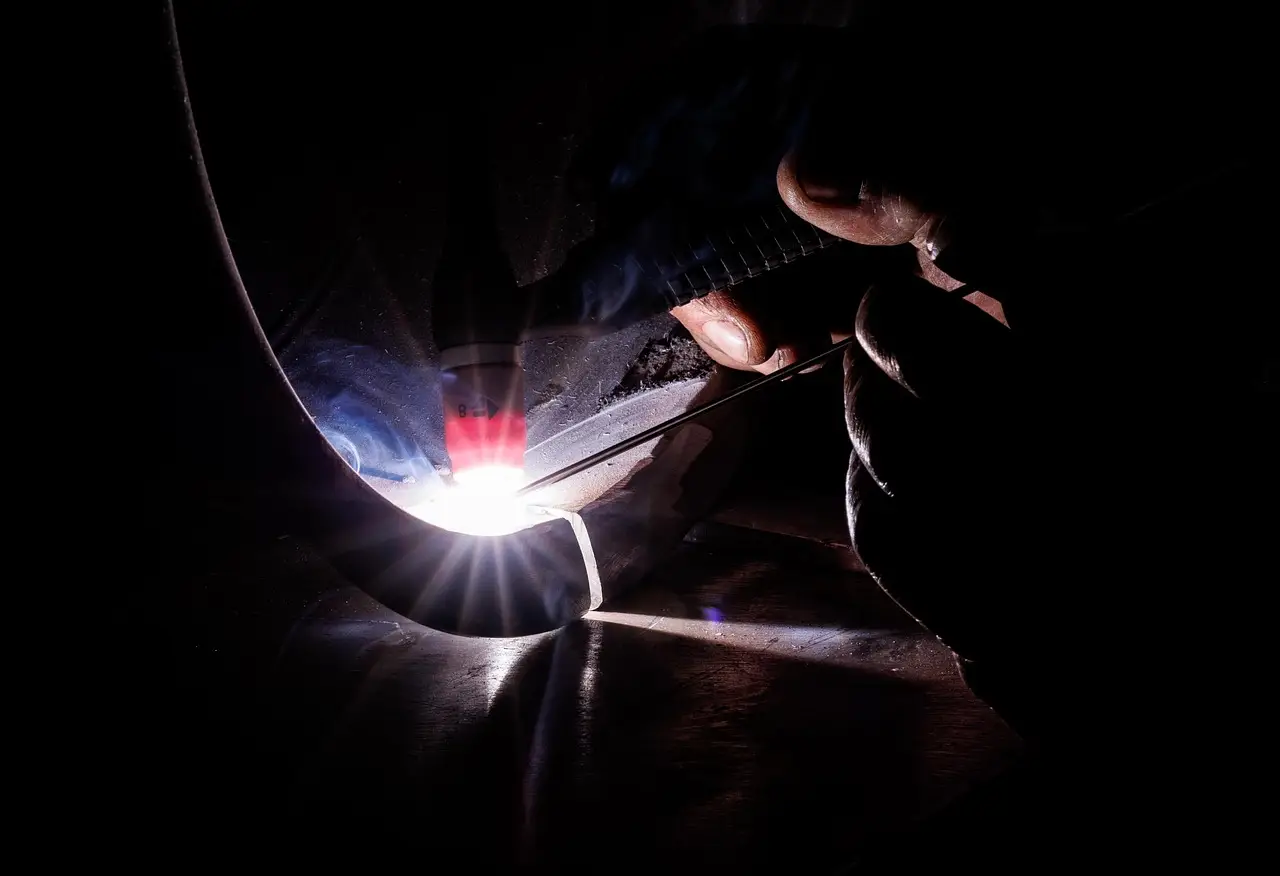
A niobium-tantalum-titanium-hafnium alloy retains toughness and ductility at 20 K (-253 °C), researchers at the University of Oxford and Lawrence Berkeley National Laboratory (LBNL) report in Nature. The result overturns the assumption that metals with a body-centred cubic (BCC) structure — a lattice of cubes with an atom at each corner and one in the centre — must turn brittle in extreme cold.
The finding matters directly to R&D portfolios in superconducting magnets, fusion energy systems and rocket engines, where structural components face cryogenic fuels alongside intense heat. For materials managers, it marks the first credible candidate in a class long dismissed as unusable: refractory high-entropy alloys (HEAs), multi-principal-element metals whose BCC variants typically show ductile-brittle transition temperatures (DBTTs — the point below which a metal fractures rather than deforms) above 1200 °C.
Why BCC metals fail in the cold
When a metal bends, line-like lattice defects called dislocations move through the crystal and blunt any cracks, keeping the material ductile. In BCC metals at low temperature, this motion freezes. Cracks then propagate instead of being blunted, and the metal shatters. That mechanism has anchored decades of alloy design.
The Oxford/LBNL team, led by Dong Liu, Robert Ritchie and Punit Kumar, had previously shown that the alloy NbTaTiHf resists fracture up to 1200 °C. They decided to test the same material at the opposite end of the thermometer. Instead of embrittling, the alloy stayed ductile down to 20 K — the lowest temperature tested.
What keeps it tough?
Two mechanisms operate in tandem, the researchers found. The first, deformation nanoscale twinning, involves small regions of the lattice reorganising into mirror-image orientations. The second is a local phase transformation of the crystal structure. Together, these processes generate new dislocations and sustain plastic deformation, so the material resists cracking even when dislocation mobility is minimal.
"This is exciting because it challenges the conventional view that low-temperature toughness in BCC alloys is controlled mainly by how easily dislocations can move," Liu, a materials engineer at Oxford, said. "Our results suggest that the ability to generate new dislocations may be equally important."
Linking macroscopic mechanical behaviour to these nanoscale mechanisms was the team's hardest task. The work combined mechanical testing across a wide temperature range with advanced electron microscopy and detailed microstructural characterisation. "Capturing what happens inside the material during deformation at temperatures as low as 20 K is not straightforward, and understanding the interactions between twinning, phase transformation and dislocations required a combination of experimental approaches," Liu explained.
What remains unproven
The measured result is a DBTT below 20 K for NbTaTiHf. The application claims are projections. The researchers themselves flag open questions on cost and oxidation resistance, and the alloy's behaviour under cyclic loading and prolonged thermal exposure remains untested. "We also need to evaluate the performance of this alloy under repeated loading and prolonged exposure to extreme temperatures," said Kumar, a postdoctoral researcher at LBNL during the study and now at Nanyang Technical College in Singapore.
Ritchie, who leads an LBNL group on metal failures, frames the study within a larger US Department of Energy-funded programme on medium- and high-entropy alloys. His assessment of the class's prospects is blunt. "Refractory HEAs have been regarded as the next generation of ultrahigh-strength alloys for extreme environments, such as aerospace and hypersonic applications, but up to now their extreme brittleness meant they were dead on arrival," he said. "The NbTaTiHf alloy is certainly not brittle — indeed, it is super tough and ductile — but we still need to raise its strength somewhat more, which is our next challenge."
The team's roadmap extends beyond BCC systems. Liu says the group is also examining stainless steels, aluminium alloys and other advanced alloy systems with major engineering applications. "Ultimately, we want to understand how different deformation mechanisms emerge and how these mechanisms can be engineered to improve damage tolerance in extreme environments," she said.
For now, the next milestone is quantitative: raising the alloy's absolute strength while preserving the dual twinning-and-transformation mechanism that works from 20 K to 1200 °C.
via science.org (Original)
Filed under
- nbtatihf
- refractory-high-entropy-alloys
- cryogenic-materials
- bcc-alloys
- deformation-mechanisms
More from Rebecca Stone
Show full bio
Market editor covering regulation, policy and their impact on research and development at Hypothesis Wire.
274 articles
References
- Ames Lab Bets on Physics-Informed AI to Break the Materials Bottleneck
- Titanium metamaterial stays buoyant in seawater at 0.15% mass loss
- Quantum Vacuum Fluctuations Boost Superconductor Critical Temperature by 5.4%
- In-situ XAS decodes activity-durability trade-off in MXene-supported Pt alloys
- Quantum Design Oxford acquisition advances quantum scale-up