Proceedings · Session S-625 · filed November 14, 2026
Physical Sciences ResearchSession paper
Polymer nanospheres push flexible perovskite cells to 26.02% efficiency
50 nm polymer nanospheres at a perovskite interface delivered 26.02% efficiency, a 0.845 fill factor, and survival of 5000 bending cycles at a 6-mm radius.
By Tom Whitfield4 min read739 words
Summary
- Flexible perovskite solar cells with 50 nm polymer nanospheres reached 26.02% power conversion efficiency and a 0.845 fill factor.
- Devices maintained initial performance after 5000 bending cycles at a 6-mm radius and kept over 95% efficiency after 200 thermal cycles from −60 to +80 °C.
- Optimal nanospheres covered approximately 12% of the interfacial area between Me-4PACz and the perovskite FAPbI3.
- Dong-Mei Li of the Chinese Academy of Sciences in Beijing led the work, published in Chinese Physics Letters.
- Large-area processing, module integration and radiation resistance remain unvalidated, according to Li.
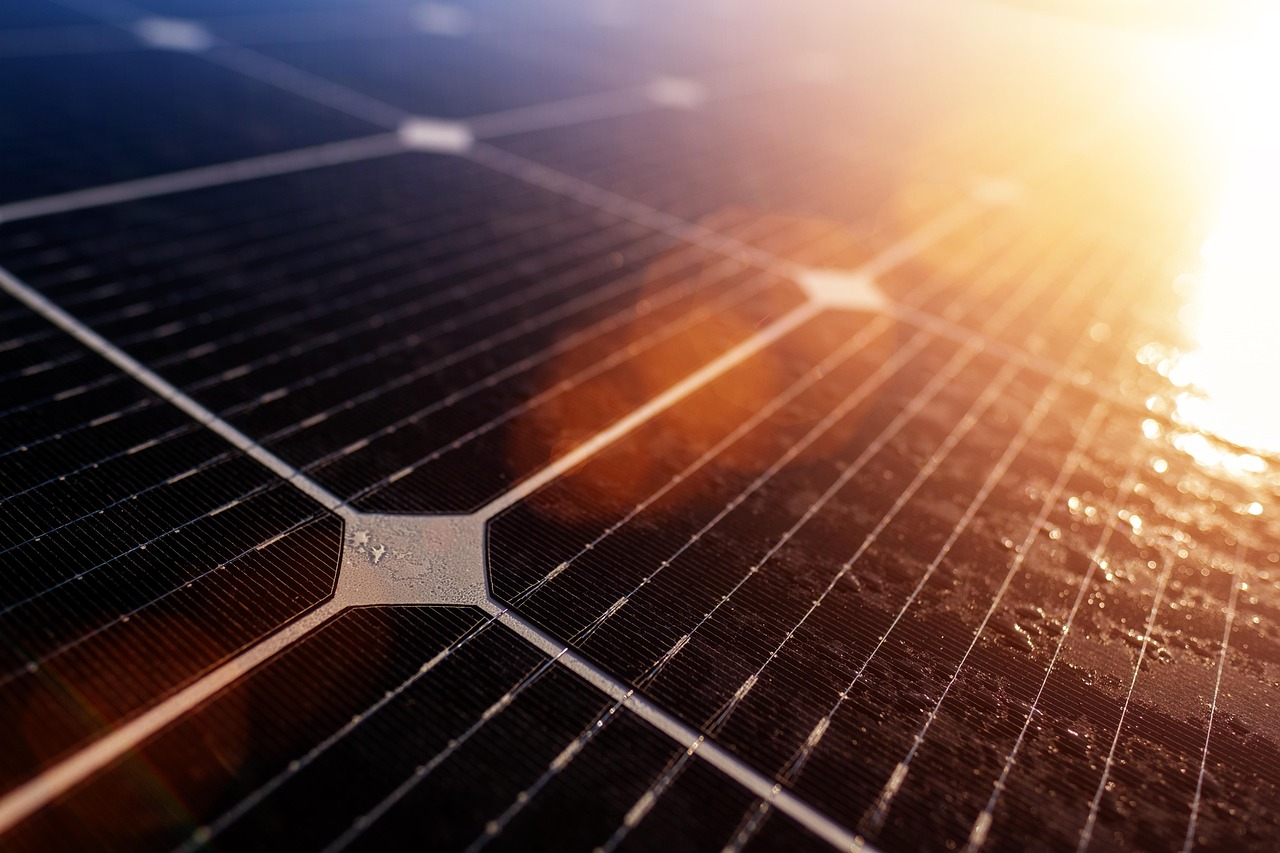
Flexible perovskite solar cells stabilized with 50 nm polymer nanospheres have reached a power conversion efficiency of 26.02% — while surviving 5000 bending cycles at a 6-mm radius without losing initial performance. Dong-Mei Li of the Chinese Academy of Sciences in Beijing and colleagues published the work in Chinese Physics Letters, and the numbers matter for anyone tracking flexible photovoltaics toward wearable and portable power.
Why flexible perovskites keep cracking
Flexible perovskite solar cells (f-PSCs) promise next-generation wearables and portable energy sources, but they share a structural weakness. The devices stack polycrystalline thin films with different elastic moduli and mismatched coefficients of thermal expansion. Daytime heating and nighttime cooling build residual stress at every cycle.
The materials are brittle. Microcracks form readily. Eventually the perovskite light-absorbing layer peels away from the layers that carry electrons and holes to their electrodes, and photovoltaic performance degrades.
The physics is unforgiving. A solar cell absorbs a photon, an electron/hole pair forms, and those carriers must separate and travel to opposite electrodes before recombining. Cracks and delamination cut those journeys short.
What went wrong with polymer fixes before
Researchers have tried reinforcing the interfaces between layers with polymers. The trade-off is electrical: most soft materials insulate. Polymers also tend to aggregate at grain boundaries or form continuous physical barriers at the interface.
Those barriers block extraction of photogenerated charge carriers and slow them down. The measurable casualty is the fill factor (FF) — how close a cell comes to its theoretical maximum power. The field's challenge has been finding a material that relieves stress without blocking electrical pathways.
How the nanosphere network works
Li's team incorporated nanospheres of carboxyl-functionalized polymethyl methacrylate into the interface between Me-4PACz — a self-assembled monolayer routinely used in some perovskite and organic solar cells — and the perovskite FAPbI3.
Size mattered, and they tested it. Across various diameters, nanospheres of 50 nm covering roughly 12% of the interfacial area performed best under their experimental conditions.
"Instead of forming continuous insulating barriers," Li explains, "these nanospheres self-assemble into a discontinuous nano-island network, so preserving abundant unobstructed pathways for efficient cross-interfacial hole extraction. The elastic polymeric spheres also act as mechanical buffers to effectively dissipate concentrated stresses induced by repetitive bending and thermal mismatch."
There's a second mechanism. The negatively charged carboxyl surfaces electrostatically repel electrons, adding a field-effect barrier that suppresses interfacial recombination and accelerates hole extraction.
Measured results versus what remains projected
The measured results are strong. Power conversion efficiency came in at 26.02%, with a fill factor of 0.845 — which Li notes is remarkably high for a flexible device. On durability: the cells maintained initial performance after 5000 bending cycles at a 6-mm radius, and retained over 95% of efficiency after 200 thermal cycles spanning −60 to +80 °C.
"Our technique provides a new way to improve f-PSCs," Li says. "A polymer interlayer is therefore not only a passive mechanical cushion, it can also preserve electrical pathways in these materials thanks to the utilization of suitable functional groups."
The caveats sit on the scale-up side, and Li is explicit about them. "Commercially available nanospheres and solution-based deposition provide a practical starting point, although large-area processing and module integration still require validation," she says. "We also need to look into other stability issues, such as radiation resistance (for space-based applications), and assess the durability of the finished devices under mission-relevant conditions."
In other words: lab-scale efficiency and cycling data are in hand; module-scale validation, radiation hardness and real-world durability are not. The efficiency figures also come from the team's own experimental conditions — the paper does not report independent certification.
Where the technique could travel
Li argues the same principle extends beyond perovskite photovoltaics to other flexible thin-film devices. For the solar cells themselves, the listed application targets are wearable power sources, portable solar chargers, deployable photovoltaic modules and energy harvesting on curved surfaces.
The study also notes that perovskite solar cells can be completely recycled — a factor for portfolio planners weighing perovskite routes against silicon.
For R&D managers, the practical takeaway is that a commercially available material — carboxyl-functionalized PMMA nanospheres — plus solution-based deposition gives a low-barrier entry point. The open questions are large-area processing and module integration, which the Beijing group itself flags as unvalidated.
via researchgate.net (Original)
Filed under
- perovskite-solar-cells
- flexible-photovoltaics
- polymer-nanospheres
- photovoltaic-durability
- power-conversion-efficiency
More from Tom Whitfield
Show full bio
Senior reporter covering technology and product news in research and development at Hypothesis Wire.
253 articles
References
- Graphene oxide bilayer lifts all-perovskite triple-junction cells to 27.3%
- UNSW Lands AUD 18M for Perovskite Module Field Test, Targets 2031
- Polymer additive pushes underwater perovskite cell to 34.71% efficiency
- Nanorod-Embedded Perovskite Cell Hits 38.49% Laser-to-Power Efficiency
- KIT–Stanford Hybrid Collector Cools 6.5 °C Below Ambient While Generating Power