Proceedings · Session S-998 · filed November 16, 2026
Physical Sciences ResearchSession paper
Heavy trucks emit 35% of road CO2 on 8% of fleet: review maps electrification
Heavy-duty vehicles emit over 35% of road transport CO2 on 8% of the fleet; a new Progress in Energy review argues trucks, chargers and grids must be planned as one system.
By Priya Raman3 min read587 words
Summary
- Heavy-duty vehicles cause over 35% of road transport emissions despite being about 8% of the vehicle fleet.
- The review is published as Liu et al. 2026, Progress in Energy, vol. 8, article 042006.
- Authors span Beihang University, Chalmers University of Technology and Fraunhofer ISI.
- Megawatt charging during mandatory driver breaks is identified as critical for long-haul viability.
- Limited grid capacity and long connection queues are cited as the field's biggest barriers.
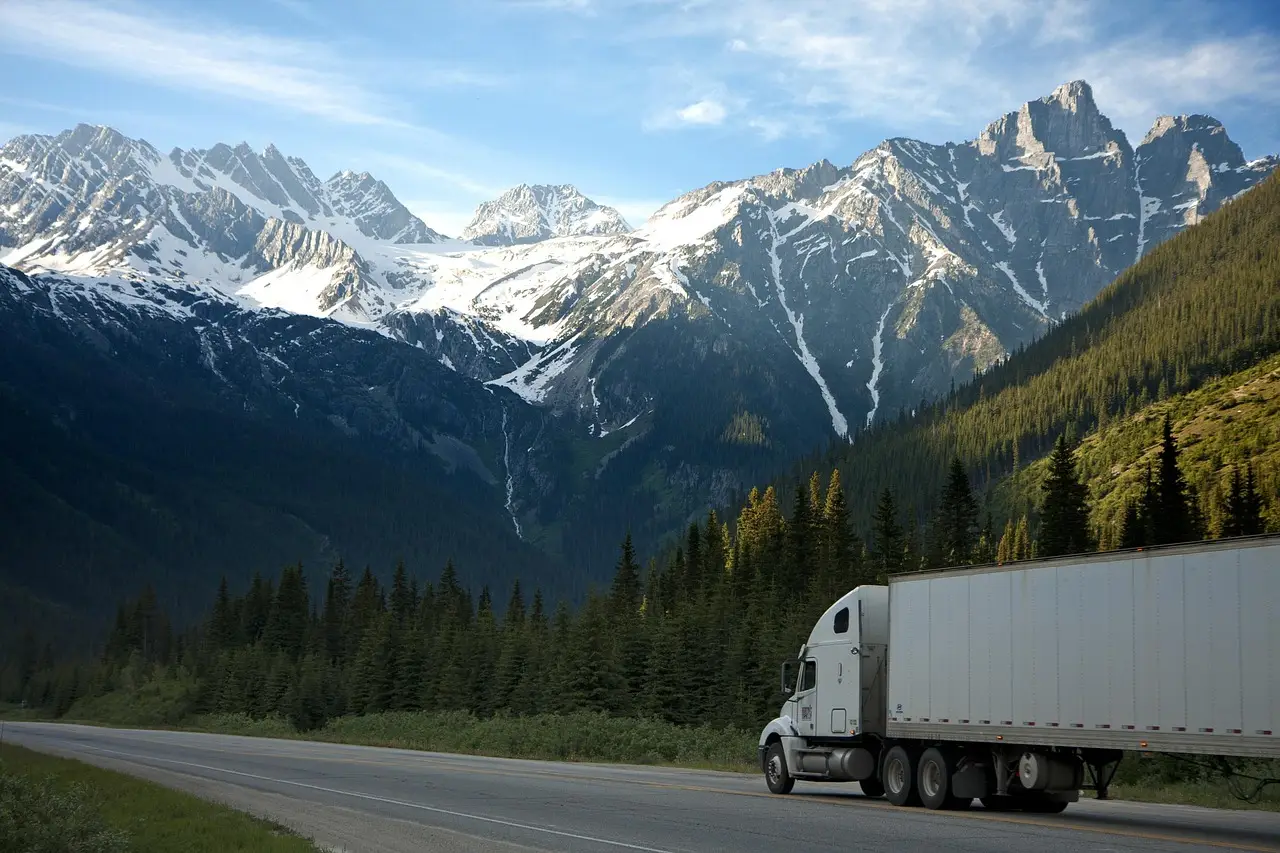
Heavy-duty vehicles account for more than 35% of road transport emissions while making up only around 8% of the vehicle fleet, according to a new review published in Progress in Energy (Liu et al. 2026, vol. 8, article 042006). The review, written by a five-author team spanning China, Sweden and Germany, argues that freight truck electrification cannot be evaluated one component at a time: it must be treated as a coupled transition across vehicle technology, charging infrastructure, electricity grids and fleet operations.
The stakes for R&D managers are budgetary as much as environmental. Battery energy density, lifetime, cost and charging performance jointly determine driving range and economic viability, the authors write. Powertrain efficiency, aerodynamics and thermal management shape energy consumption. And battery mass introduces a trade-off that fleet buyers know well: larger batteries extend range but reduce payload, cutting the freight capacity that generates revenue.
What makes charging the bottleneck?
Long-haul operations face the hardest constraints. Megawatt charging could replenish energy during scheduled stops and mandatory driver breaks, but only if charger availability, reliability and queuing times align with delivery schedules, the review finds. A charger that works half the time is not an asset in a timetable-driven business.
The grid adds a second constraint. Simultaneous charging by multiple trucks can impose substantial local electricity demand, requiring coordinated charging strategies, on-site storage or grid upgrades. The authors single out limited grid capacity, long connection queues and delays in securing grid access as the field's most pressing challenges, given the high-power infrastructure heavy-duty transport demands.
Which breakthroughs do the authors want?
The review identifies three priorities:
- Batteries: higher energy density, longer life, lower cost and reliable fast charging, while preserving payload and surviving intensive commercial use without compromising safety or durability.
- Coordinated planning: charger locations and power ratings chosen jointly with freight routes, delivery schedules, driver breaks and grid capacity; coordinated routing and charging, supported by renewables and storage, could cut peak demand and raise infrastructure utilisation.
- Autonomous driving: extending electric trucking from ports and logistics yards to long-haul routes, with predictive control and platooning improving efficiency, contingent on demonstrated safety and reliability in mixed traffic.
The authors' central claim is that these advances reinforce one another, and that integrated field demonstrations are the mechanism for translating technical progress into dependable, economically viable and scalable electric freight services.
Who is behind the work?
The author team brings complementary positions. Xiaolei Ma is a Professor of Transportation Engineering at Beihang University, working on data-driven methods for lower-carbon mobility. Xiaohan Liu, a postdoctoral researcher at Chalmers University of Technology, focuses on transport electrification and coupled transport-energy systems. Sonia Yeh, Professor of Transport and Energy Systems at Chalmers, contributes expertise in energy economics, energy system modelling and sustainability standards. Patrick Plötz heads the Department of Energy Technology and Energy Systems at the Fraunhofer Institute for Systems and Innovation Research ISI in Germany, researching transport electrification and carbon mitigation policies. Yunpeng Wang, a Professor at Beihang and a member of the Chinese Academy of Engineering, works on intelligent transportation systems, including vehicle-road-cloud integration.
The group states it is now conducting research on heavy-duty trucks in mining, ports, regional and long-haul transport, and autonomous driving. Their review, published open in Progress in Energy, signals that the next phase of work will test whether coordinated charging strategies, local flexibility and tighter coupling between transport and energy systems can overcome the grid-access delays now slowing deployment.
via iopscience.iop.org (Original)
Filed under
- electric-heavy-trucks
- freight-electrification
- battery-technology
- megawatt-charging
- transport-energy-systems
More from Priya Raman
Show full bio
Staff writer covering money, funding and market shifts around research and development at Hypothesis Wire.
281 articles
References
- ERCOT Grid Study: Demand Source, Not Just Volume, Shapes 2050 Build-Out
- WeLion's 824 Wh/kg cell tops lithium-ion by 4x in 2025 lab test
- Maxwell's M1 Hybrid Amphibian Targets 1,150-Mile Hauls on Diesel and Six Electric Minutes
- QuantumScape Claims Minutes-Long Ceramic Firing as Solid-State Race Tightens
- ANU Atlas Counts 820,000 Pumped Hydro Sites, 200 Times Global Need