Proceedings · Session S-756 · filed November 16, 2026
Physical Sciences ResearchSession paper
ANU Atlas Counts 820,000 Pumped Hydro Sites, 200 Times Global Need
ANU's global atlas lists 820,000 off-river pumped hydro sites with 86 million GWh of storage, 200 times the level a decarbonised world needs.
By Amara Osei4 min read751 words
Summary
- ANU's global atlas lists 820,000 pumped hydro sites (2-5,000 GWh each) totalling 86 million GWh, or about 200 times estimated global need for 10 billion people.
- 99% of atlas sites are off-river, located in mountainous terrain away from watercourses.
- Australia's Snowy 2.0 will provide 350 GWh of storage, equal to 7 million EV batteries, at roughly one cent per person per day over 150 years.
- Blakers argues existing technologies enable a 70% emissions cut, with electrolysers adding 10-20% more.
- The review is Blakers et al 2025, Prog. Energy 7 022004; Blakers shared the 2023 Queen Elizabeth Prize for PERC solar cells.
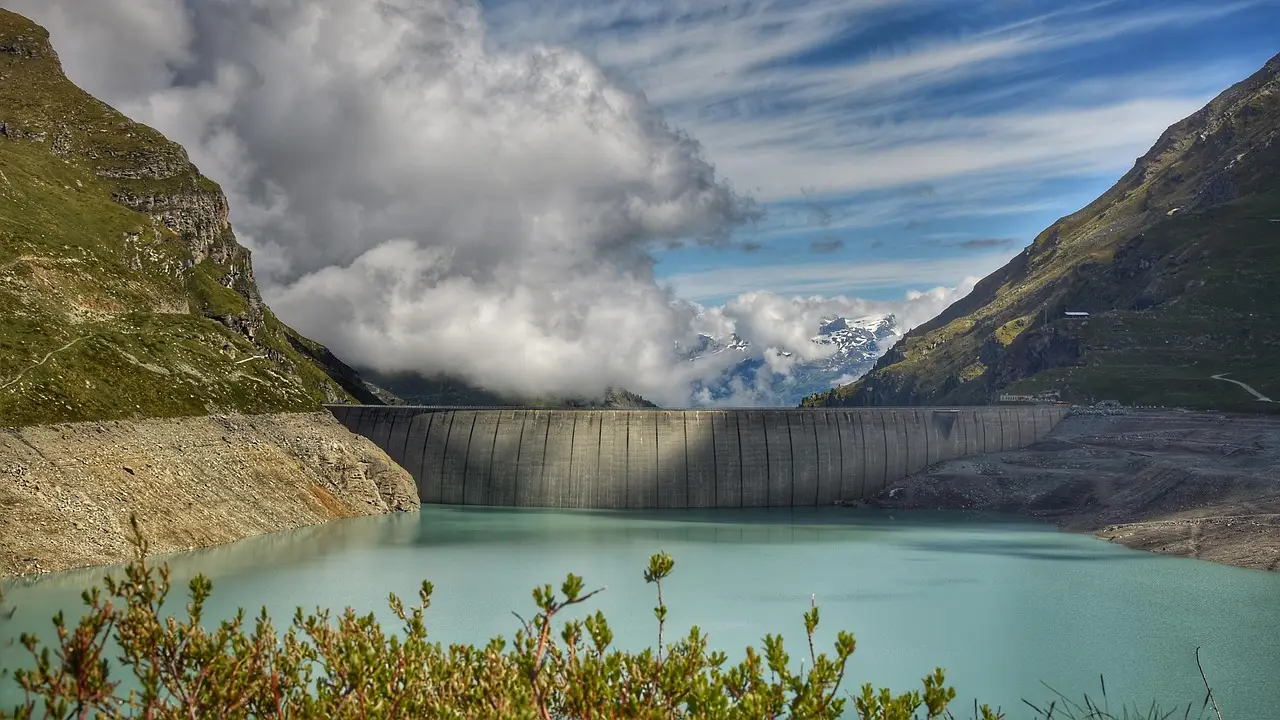
Researchers at the Australian National University have catalogued 820,000 potential pumped hydro sites holding a combined 86 million gigawatt-hours of storage capacity, roughly 200 times what they estimate is needed to supply 10 billion fully decarbonised, affluent people. The figure comes from the ANU team's high-resolution global Atlas of pumped hydro, published at re100.eng.anu.edu.au, which Professor Andrew Blakers describes in a new review article in Progress in Energy (Blakers et al 2025, Prog. Energy 7 022004).
The atlas covers sites in the 2 to 5,000 GWh size range. For scale, Blakers frames the total potential as equivalent to 2 trillion electric-vehicle batteries. The comparison is instructive for grid planners: batteries deliver storage measured in hours, while pumped hydro covers overnight, multi-day, weekly and seasonal horizons.
How much of the resource sits off-river?
Almost all of it. Blakers states that 99% of the global landscape lies away from rivers, and 99% of the atlas sites are therefore off-river installations in mountainous terrain. The distinction matters politically as well as technically, because, in his words, some people wrongly equate pumped hydro with new dams on rivers. Off-river systems avoid that objection by using paired reservoirs that recycle water between elevations rather than impounding watercourses.
The claim that pumped hydro uses less land and water than equivalent batteries, requires no mining and carries high local economic content is the author's characterisation, presented in a review he co-authored; the piece does not cite independent cost benchmarks for those comparisons. What the article does supply is one concrete project figure.
What does Snowy 2.0 say about cost?
Australia's Snowy 2.0, now under construction, will deliver 350 GWh of storage, which Blakers equates to 7 million EV batteries. He puts its capital cost at about one cent per person per day spread over the project's 150-year lifetime. Readers should note that a 150-year amortisation frame flatters the daily-cost figure, and the article does not break out construction overruns or operating costs for the project.
China, India and Australia are all building large pumped hydro systems to support rapid deployment of solar and wind. The context is stark: solar and wind generation capacity, Blakers writes, is being installed four times faster than everything else combined, and electrification of transport, heating and industry is extending renewables into nearly every part of the fossil fuel economy.
Are breakthroughs still needed?
Blakers' central argument is that they are not, at least for the first tranche of decarbonisation. Existing technologies, in his assessment, allow a 70% reduction in greenhouse emissions across electricity, land transport, heating and cooling, and electric industrial furnaces. A further 10 to 20% reduction, he argues, would come from improved electrolysers enabling competitive clean hydrogen, chemicals and steel. Atmospheric carbon capture powered by extremely cheap solar might become viable by mid-century, though he marks this as speculation rather than projection.
The review is an advocacy-tinged synthesis by a researcher with a long stake in the field. Blakers began his PhD in silicon solar cells in 1979 and was joint winner of the 2023 Queen Elizabeth Prize for PERC solar cell technology, a design with cumulative panel sales of US$200 billion that he credits with mitigating 3% of global greenhouse gas emissions through coal displacement. He also won the 2024 Clunies Ross Technology Innovation Award and the 2026 Abdullah Bin Hamad Al-Attiyah International Energy Award for lifetime achievement in renewable energy advancement.
His current work at ANU includes hour-by-hour modelling of national and regional 100% renewable energy systems, plus analysis of storage options. Among the challenges he lists: improving generation, storage and integration technology; accelerating uptake of solar, wind, pumped hydro, batteries, HVDC transmission, EVs, heat pumps, electric furnaces and electrolysers; and, in his words, countering the continual wave of fossil fuel propaganda. He also notes the puzzle of people who dismiss warming and renewables as fraudulent while raising children who will live with several degrees of warming.
For R&D managers, the takeaway is a portfolio claim worth interrogating: off-river pumped hydro plus batteries already constitute, in Blakers' phrase, a complete off-the-shelf energy storage solution, with site-selection data available at global resolution. His team's stated priority now is making 90-100% solar and wind systems work well, a target he expects to pursue through the same hour-by-hour system studies that produced the atlas.
via re100.eng.anu.edu.au (Original)
Filed under
- pumped-hydro
- energy-storage
- renewable-energy
- grid-decarbonisation
- off-river-pumped-hydro
More from Amara Osei
Show full bio
News editor covering money, funding and market shifts around research and development at Hypothesis Wire.
253 articles
References
- U.S. hyperscale data centers used an estimated 68–99 TWh in 2024–25
- Heavy trucks emit 35% of road CO2 on 8% of fleet: review maps electrification
- One in Four Data Centers Sits in a Water-Stressed Basin, Study Finds
- WeLion's 824 Wh/kg cell tops lithium-ion by 4x in 2025 lab test
- Google signs 50 MW deal for superhot geothermal power