Proceedings · Session S-356 · filed November 18, 2026
Corporate & Industrial R&DSession paper
Google signs 50 MW deal for superhot geothermal power
Google has agreed to buy 50 MW of continuous power from Quaise's Oregon superhot-rock geothermal project, targeting data center infrastructure in The Dalles as early as 2030.
By Rebecca Stone4 min read865 words
Summary
- Google agreed to purchase 50 MW of continuous power from Project Obsidian in Oregon.
- Power may begin supporting The Dalles data center infrastructure and grid as early as 2030.
- Quaise targets drilling as deep as 12 miles (20 km), where temperatures can reach 932°F (500°C).
- At 705°F (374°C), water enters a supercritical state that Quaise says can yield up to 10 times more energy per well.
- Phase 1 uses conventional drilling, while Phase 2 would use Quaise's proprietary millimeter-wave rigs.
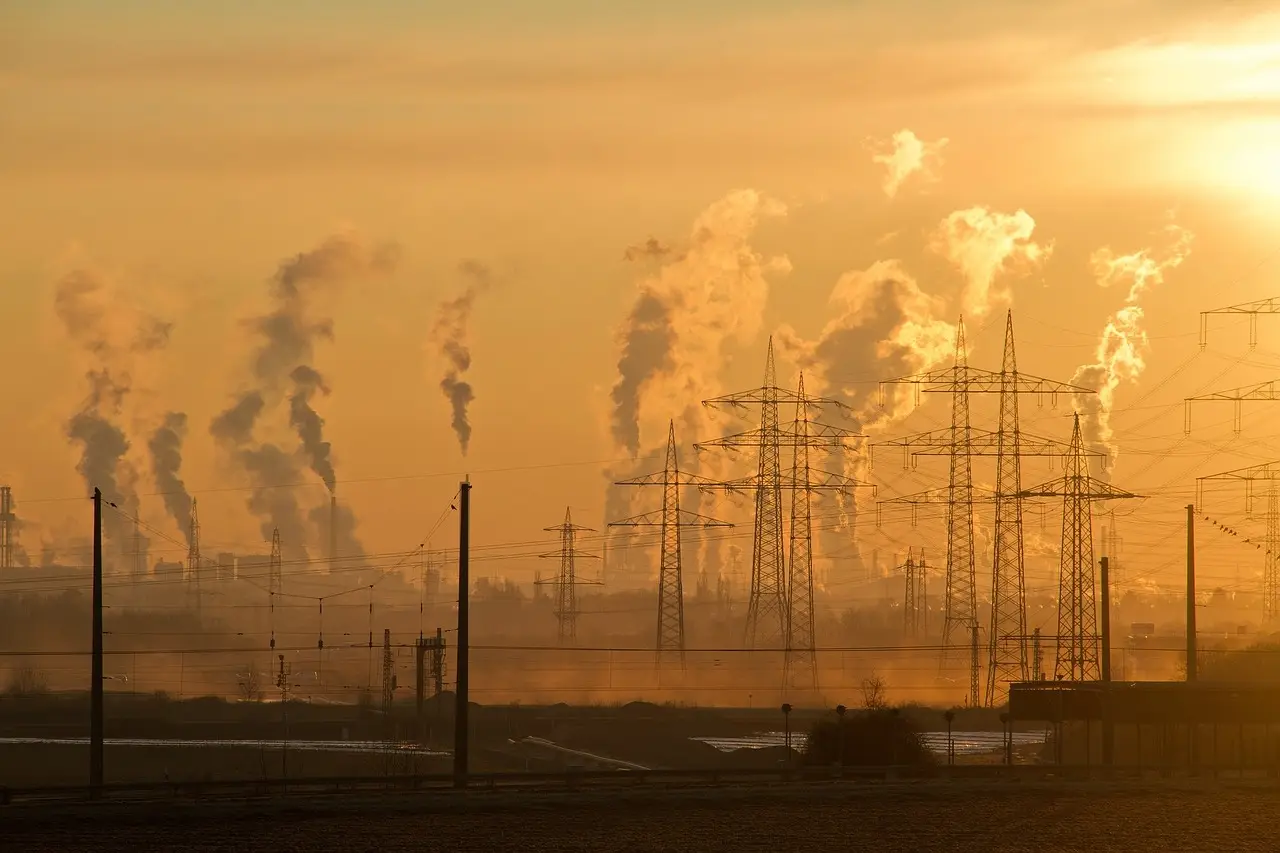
Google has agreed to buy 50 MW of continuous power from Quaise Energy’s Project Obsidian superhot-rock geothermal plant in Oregon, with support for Google’s existing data center infrastructure in The Dalles and the surrounding grid beginning as early as 2030.
Quaise characterizes the agreement as world-first and says the purchase will put its utility-scale concept on a commercial path. The disclosure identifies capacity and an earliest start date, but it omits the contract price, term, financing, plant cost and any full-scale power-generation result.
Why does the 50 MW purchase matter?
Data centers have operated since the 1970s, when miniaturization and desktop computing moved processing away from individual mainframes toward local networks. The internet, server technology, cloud computing and AI later drove growth into installations that can require hundreds of megawatts; the global sector now consumes tens of thousands of megawatts of continuous power.
Grid planners built energy plans around strict environmental targets, a transition away from fossil fuels and nuclear toward renewables, and an assumption of flat demand. Data center operators also face local objections to new supply. Some technology companies have committed to building or restarting nuclear plants, while Google’s agreement with Quaise takes a different route.
For comparison, Google’s contracted 50 MW is smaller than the hundreds of megawatts cited for some individual campuses. The announcement does not say which The Dalles loads the power will serve, whether it replaces grid purchases, or how much remains available for the surrounding grid.
How does Quaise drill beyond conventional limits?
Conventional geothermal development has concentrated in locations where heat from Earth’s mantle rises close enough to the surface to tap. A plant generally seeks higher temperatures, which means drilling into hard crystalline rock.
Conventional rigs encounter sharply diminishing returns at roughly 400–500°F (200–260°C), usually two to three miles (3–5 km) down, where heat destroys drill bits, seals and downhole electronics placed inside the well.
Quaise is working to bore as deep as 12 miles (20 km), where temperatures can reach 932°F (500°C). It also identifies 705°F (374°C) as the threshold for a supercritical state (a high-temperature water condition). Quaise describes that condition as hyper-efficient and says it can yield as much as 10 times more energy per well.
The 10-fold figure is a projection, not a measured field result. Quaise argues that its drilling approach could eventually place geothermal plants almost anywhere on Earth. The announcement provides no test-well count, output dataset or third-party validation, so it cannot yet support an assumption that a commercial well will deliver either gain.
Quaise’s drilling system centers on a gyrotron (a high-power vacuum tube). Soviet scientists developed the device, and researchers at MIT later adapted it to heat plasma in nuclear-fusion reactors. Quaise’s version generates millimeter-wave radiation (high-frequency electromagnetic radiation) that heats molecules within crystalline rock until the rock melts and vaporizes.
A purge-gas system then clears the hole, allowing the drilling approach to advance without a physical drill bit touching the rock. That mechanism is the proposed technical bridge beyond the temperature limit of conventional rigs.
What must happen before the 2030 target?
Project Obsidian, Quaise’s flagship utility-scale facility, sits on the southern flank of Oregon’s Newberry Volcano. The commercial plan separates access to heat from the drilling method:
- Phase 1: Conventional drilling will reach superhot conditions, using heat that sits closer to the surface around Newberry Volcano.
- Phase 2: Operations will transition to Quaise’s proprietary millimeter-wave rigs.
The always-on plant would provide baseload (continuous generation) to Google’s existing data center infrastructure in The Dalles and the surrounding grid, beginning as early as 2030. The announcement sets no separate deadline for either construction phase.
The agreement links 50 MW of proposed output to a named buyer. The announcement gives no construction or commissioning status, and “as early as 2030” sets a target rather than a guaranteed start.
Quaise and Google present themselves as partners building the commercial foundation for superhot geothermal. The announcement does not identify project funding sources, each party’s contribution, or whether the power price and drilling schedule are fixed. It also omits permitting status, well productivity, plant availability, emissions measurements, community consultation results and third-party verification.
“We started Quaise to make the Earth’s most abundant energy source universally accessible — and this agreement marks a critical next step, not just for Quaise but for the entire clean energy sector,” said Carlos Araque, CEO and President of Quaise Energy.
“Together with Google, we are building the commercial foundation for superhot geothermal and cementing the United States as the global leader in geothermal power.”
Araque describes the purchase as a step toward universal access to geothermal and United States leadership in the sector. Those are strategic claims; the immediate project test is narrower: demonstrate phase-one drilling at Project Obsidian, secure the commercial structure and meet the earliest 2030 support date.
The next proof points are phase-one well data and disclosed costs; without them, the 2030 start remains a target rather than an operating schedule.
via newatlas.com (Source)
Filed under
- superhot-rock-geothermal
- millimeter-wave-drilling
- data-center-power
- project-obsidian
- quaise-energy
More from Rebecca Stone
Show full bio
Market editor covering regulation, policy and their impact on research and development at Hypothesis Wire.
274 articles
References
- AI data centers drive $26B climate-tech surge, carbon removal left behind
- U.S. hyperscale data centers used an estimated 68–99 TWh in 2024–25
- Technology transfer and unsubsidised power to become conditions for data centre investment
- Virtual Power Plants Face a Scale-and-Evidence Test
- AI Data Center Buildout Runs on Debt: Nearly $500 Billion Issued