Proceedings · Session S-526 · filed October 30, 2026
Research InfrastructureSession paper
One in Four Data Centers Sits in a Water-Stressed Basin, Study Finds
25% of 9,347 data centers worldwide sit in water-stressed basins; at 3°C warming that hits 33%. Most U.S. states still don't track how much water they draw.
By Sophie Lindqvist4 min read857 words
Summary
- 2,315 of 9,347 data centers globally (about 25%) sit in basins where water demand exceeds supply at least one month a year; at 3°C warming the share rises to about 33%.
- The U.S. hosts 3,619 data centers (39% of the global count); 764 (21%) are in water-scarce areas, rising to 1,269 (35%) under 3°C warming.
- A planned Google data center in Virginia will use 2 million gallons of water a day, up to 8 million if expanded — nearly eight times a Coca-Cola bottling plant's use.
- In Texas, 233 of 334 data centers in state records from 2020–2025 never filed the mandatory water-use survey; the attorney general demanded data from 156 projects on Oct. 15.
- New Jersey, California, Utah and Virginia have enacted data center water-reporting laws; a federal Data Center Transparency Act introduced Jan. 8 sits in committee.
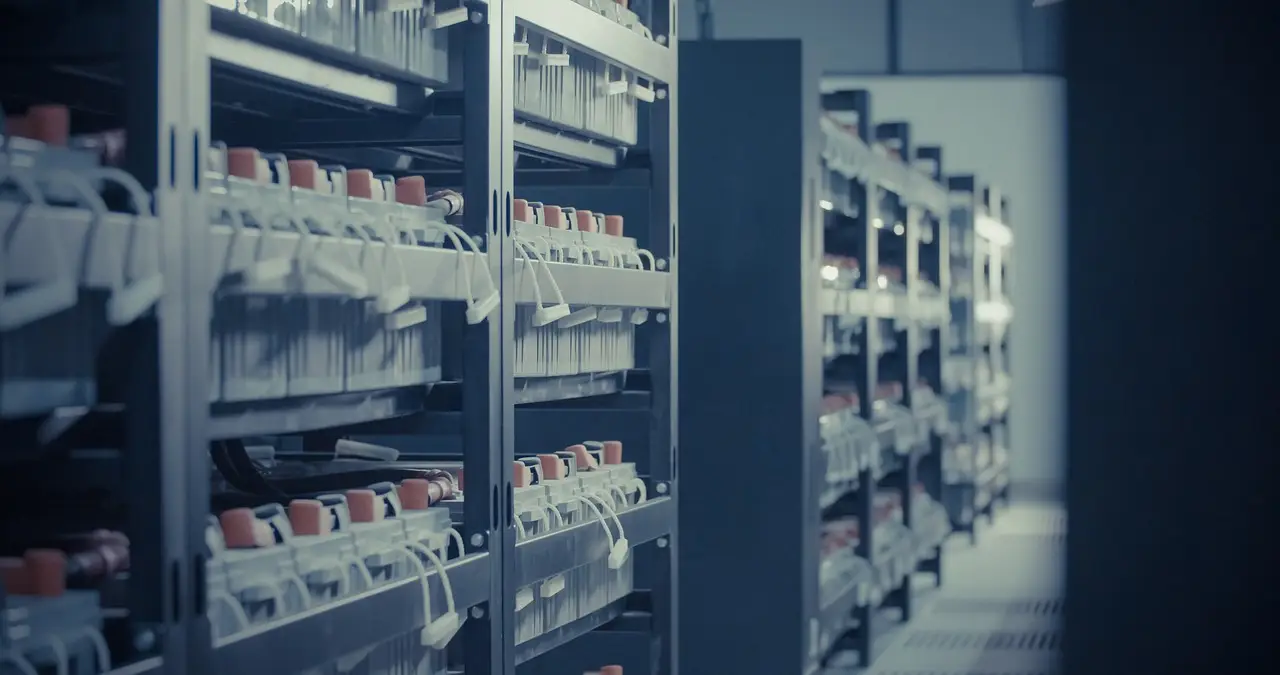
A peer-reviewed global study has found that 2,315 of 9,347 data centers worldwide — about 25% — sit in basins where water demand already exceeds renewable supply at least one month a year, and the researchers warn the real risk falls on farms and cities sharing those basins, not on the facilities themselves.
The study, published in Environmental Science & Technology, mapped facility locations against 2001–2010 water conditions. Under a high-emissions scenario in which global temperatures rise 3°C above preindustrial levels — a threshold the authors' climate models reach between roughly 2039 and 2068 — the exposed share climbs to about 33%.
The U.S. hosts 3,619 of the counted data centers, or 39% of the global total. Of those, 764, or 21%, are in water-scarce areas today. At 3°C of warming, that rises to 1,269, or 35%.
Whose water is actually at risk?
The authors, led by Lorenzo Rosa, a water-scarcity researcher at the Carnegie Institution for Science, frame the exposure question carefully. Data centers, they wrote, "typically have the financial capacity and institutional priority to secure water supplies whenever water is available," so "the primary risk may not be to data center operations themselves but to other water users within the same basins."
Because allocation rules often favor data centers over farms and ecosystems during shortages, the authors argue, current assessments likely understate effects on "less economically or politically powerful users."
"These facilities are not landing in empty landscapes. They are landing on top of the water supply of cities and farms," Rosa said in a statement.
What the study cannot measure
The researchers had no access to data on capacity, cooling type or water use. Instead of estimating facility-level consumption, they measured exposure: whether each data center sits where demand outstrips supply. They call their water-shortfall estimates an upper bound, because the model omits reservoirs, water transfers, desalination and water rights.
The facility count itself carries caveats. The authors relied on a proprietary list from Saoradh Enterprise Partners that "likely underestimates the true global count, particularly for undisclosed, smaller, or newly constructed facilities."
Virginia: 8 million gallons a day, revealed by lawsuit
Operators have resisted disclosing consumption. The Western Virginia Water Authority redacted how much water a planned Google data center would use, citing a nondisclosure agreement. A local news outlet sued, and after repeated rulings the authority released the project's planned use in February: 2 million gallons a day, and up to 8 million gallons a day if the project expands.
The initial figure is nearly eight times what the authority's largest current customer, a Coca-Cola bottling plant, uses. Before the release, Google's lawyers joined the authority in asking an appeals court to block a judge's order; the court declined. Authority director Mike McEvoy said it was the first time a confidentiality agreement had stayed in force after a project was announced.
Which states now demand the numbers?
Reporting mandates are spreading, unevenly:
- New Jersey: A law signed Aug. 27 requires semiannual reports to the Board of Public Utilities on total and peak daily water use and sources, including whether water is potable or reclaimed. The board must publish the data within 30 days of receiving it.
- California: A law Gov. Gavin Newsom signed Sept. 21 requires data centers to report actual prior-year water use, under penalty of perjury, when renewing local business licenses.
- Utah: New large data centers must report annual water withdrawals to the state, which publishes them; existing and smaller facilities are exempt.
- Virginia: Water suppliers will report monthly volumes delivered to data centers, effective Jan. 1, 2027.
Texas: 233 of 334 facilities never filed
Texas requires reporting, but compliance is thin. Of 334 data centers in Texas Water Development Board records from 2020 through 2025, obtained by The Texas Tribune, 233 have never submitted the board's mandatory water-use survey. Non-response is a Class C misdemeanor with a fine of up to $500. The state's utility commission ran a voluntary survey that fewer than a third of contacted companies answered. The attorney general opened an investigation on Sept. 24 covering hundreds of projects across at least 18 counties, and on Oct. 15 sent letters to 156 data center developments demanding "up-to-date and accurate information" about their water use.
At the federal level, Rep. Rob Menendez (D-N.J.) and Rep. Greg Casar (D-Texas) introduced the Data Center Transparency Act on Jan. 8. The bill would require the EPA to report to Congress at least quarterly on how much water U.S. data centers consume, how much they reuse and how they affect local water systems, with public online posting. It has sat in the House Energy and Commerce Committee since referral.
Even where states mandate reporting, the study authors caution that "the situation evolves quickly and actual water consumption can differ substantially from design specifications." New Jersey's first reports, from data centers operating for at least a year, are due in late November — the first real test of whether disclosure laws can produce data the global study lacked.
via acs.org (Original)
Filed under
- data-centers
- water-scarcity
- water-use-disclosure
- climate-change
- data-center-regulation
More from Sophie Lindqvist
Show full bio
Correspondent covering money, funding and market shifts around research and development at Hypothesis Wire.
208 articles
References
- AI data centers drive $26B climate-tech surge, carbon removal left behind
- Waters lifts lower end of 2025 profit outlook on lab demand
- Climate feedbacks could add 0.4 °C that UN models ignore
- US National Labs Coordinate Multi-Agency Solar Cybersecurity Standards
- Waters Raises Annual Forecast on Lab Equipment, Diagnostics Demand