Proceedings · Session S-749 · filed November 9, 2026
Lab Technology & MethodsSession paper
Graphene harvester powers a battery-free temperature sensor
Arkansas and Michigan researchers built a graphene harvester that powers a nanowatt temperature sensor from AC wiring; they report 24-hour stored-charge operation, but cold start remains unresolved.
By Priya Raman4 min read710 words
Summary
- The prototype combines a graphene-and-steel-core inductor, a Cockcroft-Walton converter, three capacitors and a nanowatt-scale temperature sensor.
- The target U.S. wiring current is 60 Hz, supplying the changing magnetic field used for induction.
- The researchers cite sensor consumption about 30 million times lower than that of one AirPod.
- Researchers report at least 24 hours of stored-charge operation and describe one week as possible.
- The paper appears in the Journal of Vacuum Science and Technology; no funder, publication date, device count or cold-start result appears in the account.
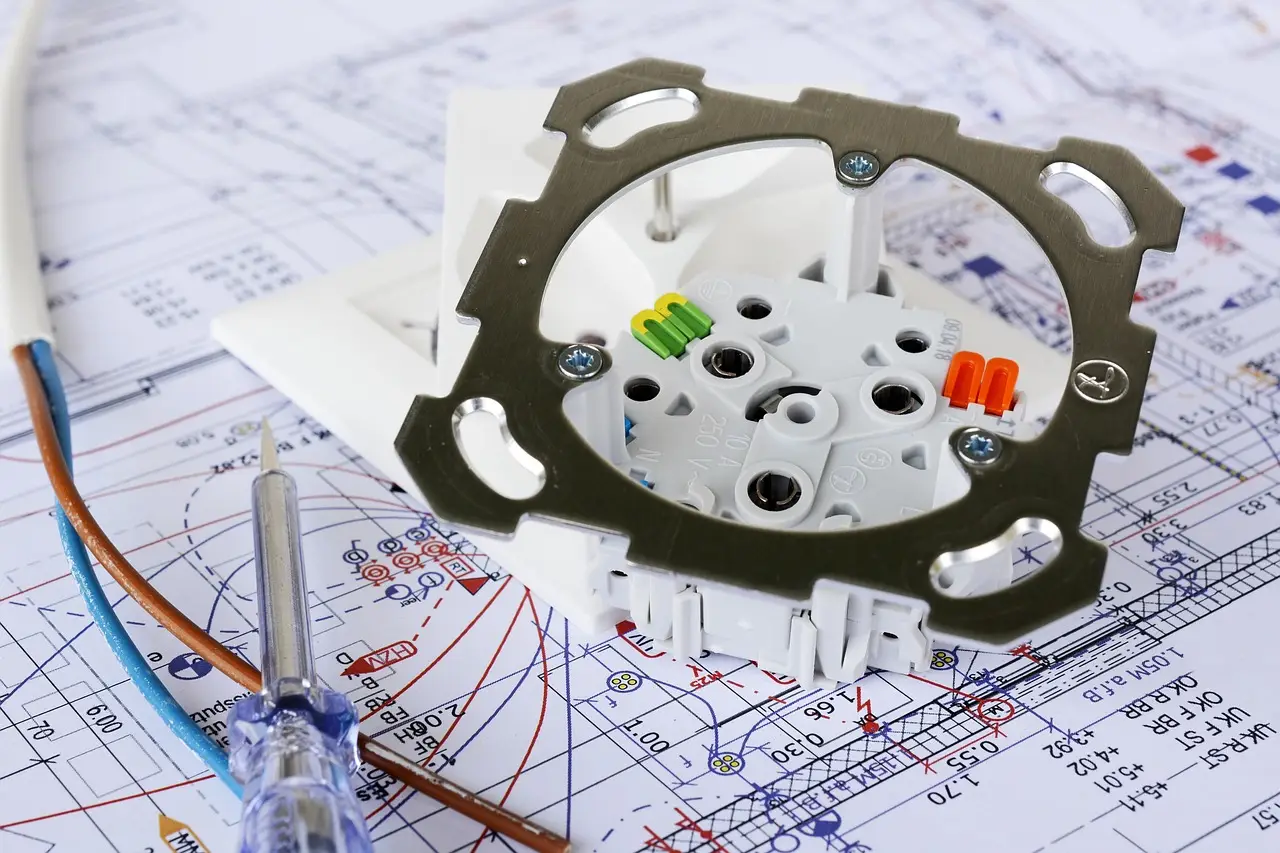
A graphene-based, battery-free temperature sensor developed by researchers at the University of Arkansas and the University of Michigan consumes power in the nanowatt range and is designed to run for at least 24 hours once its capacitors are charged, the researchers report.
The harvester works close to live alternating-current wiring. Current in U.S. wiring oscillates at 60 Hz, so the surrounding magnetic field continually changes strength and direction. A graphene inductor fitted with a steel core captures part of that field; electromagnetic induction produces a tiny alternating voltage across it.
The researchers describe the assembly as wireless and battery-free. Its four parts are:
- A graphene-and-steel-core energy harvester that converts nearby electromagnetic energy into alternating current.
- A Cockcroft-Walton voltage multiplier that rectifies alternating current into direct current and progressively raises the voltage.
- Three capacitors that accumulate the harvested charge.
- An ultra-low-power temperature sensor that serves as the load.
The induced voltage cannot power electronics directly because it alternates and remains too weak. The conversion circuit addresses both problems, while the capacitors store charge gradually. The steel core improves the inductor’s ability to capture the changing magnetic field.
Because the harvester replenishes the stored charge faster than the sensor consumes it, the researchers say the system can operate indefinitely while nearby wiring remains energized. If the electricity supply stops, the capacitors bridge the interruption.
What can the prototype actually power?
The sensor operates at the nanowatt scale, consuming just billionths of a watt. The researchers cite consumption about 30 million times lower than that of a single AirPod. That figure applies to the dedicated sensor, not to the amount of energy available for conventional electronics.
The stored charge could keep the system running for at least 24 hours and possibly for a week. Prof. Paul Thibado, inventor of the graphene energy harvester, said: “The way ours are set up, it can easily last 24 hours – probably a week even.” The available account presents the week-long duration as an estimate rather than providing a documented endurance test.
Where could the system fit in an industrial deployment?
A large industrial facility with thousands of temperature sensors monitoring machinery, pipes and its environment currently faces two options: wired power supplies or batteries that eventually require replacement. The prototype is intended to remove both deployment constraints by supplying each sensor without a local power cable or routine recharge.
The temperature sensor remains a proof of concept. The team sees possible applications in low-power devices for “product tracking, atmospheric monitoring, logistical fleet management, soil and wearable fitness monitoring, and medical tracking.”
What limits the result?
The harvester needs sufficiently strong changing magnetic fields near electrical wiring and cannot produce electricity anywhere. Its nanowatt-scale output also cannot power standard electronics, so the demonstration does not support claims that phones or similar devices can charge themselves from the environment.
The researchers have not demonstrated a cold start from a completely discharged state. The capacitors were initially charged and the processor programmed before operation. Deployment plans must therefore account for initial energy provisioning and programming, even if they eliminate later battery replacement.
The research account does not state how many devices or trials were tested. It also omits cable distance, magnetic-field strength, induced voltage, harvested power, recharge time and unit-to-unit variation. The 24-hour and possible-week claims indicate the intended endurance, but the account lacks run logs and a full measurement method for comparing designs.
The account does not identify a funder, commercial partner or publication date, and it gives no details of the wireless data protocol. The paper appears in the Journal of Vacuum Science and Technology. Those omissions matter because R&D managers need the energy budget, test conditions and operating reliability before changing battery schedules or power-distribution designs.
The group is also working on harvesting acoustic, nonlinear, solar, thermal, kinetic and ambient radiation, with the goal of autonomous sensors that draw power from several environmental sources. No timetable or performance target accompanies that work. The next decisive test is a repeatable, self-starting array measured at defined distances from industrial wiring, with device-level power, charge time and runtime data reported before the technology informs deployment budgets.
via newatlas.com (Source)
Filed under
- graphene
- energy-harvesting
- battery-free-sensors
- temperature-sensors
- electromagnetic-induction
More from Priya Raman
Show full bio
Staff writer covering money, funding and market shifts around research and development at Hypothesis Wire.
264 articles
References
- X-ray imaging catches oxide coatings halving graphene fields
- Higher Vinylene Carbonate Loadings Extend Life of LFP/Graphite Cells at 70°C
- Wireless Implant Restored Normal Glucose in Diabetic Mice Within an Hour
- ETH Zurich implant clears glucose via electrocatalysis, no drugs
- DOE launches four-lab BattMan accelerator to de-risk battery scale-up