Proceedings · Session S-952 · filed October 30, 2026
Corporate & Industrial R&DSession paper
DOE launches four-lab BattMan accelerator to de-risk battery scale-up
DOE's BattMan accelerator, announced Oct. 28, 2026, unites four national labs to catch battery manufacturing failures before they reach commercial production.
By Sophie Lindqvist3 min read684 words
Summary
- DOE announced the BattMan Battery Manufacturing Accelerator on Oct. 28, 2026, led by PNNL with Argonne, Oak Ridge and the National Laboratory of the Rockies.
- Northvolt delivered about 80 MWh in the first nine months of 2023, roughly 0.5% of its 16 GWh target, and filed for bankruptcy in Sweden on March 12, 2025.
- Recycler Ascend Elements filed Chapter 11 on April 9, 2026 after DOE canceled a $316 million award; it had received $206 million.
- BattMan's near-term toolkit includes high-throughput experimentation, automated synthesis and machine learning; longer term, autonomous pilot lines.
- Five universities — Washington, Binghamton, Alabama, Arizona State and Michigan-Dearborn — are founding partners.
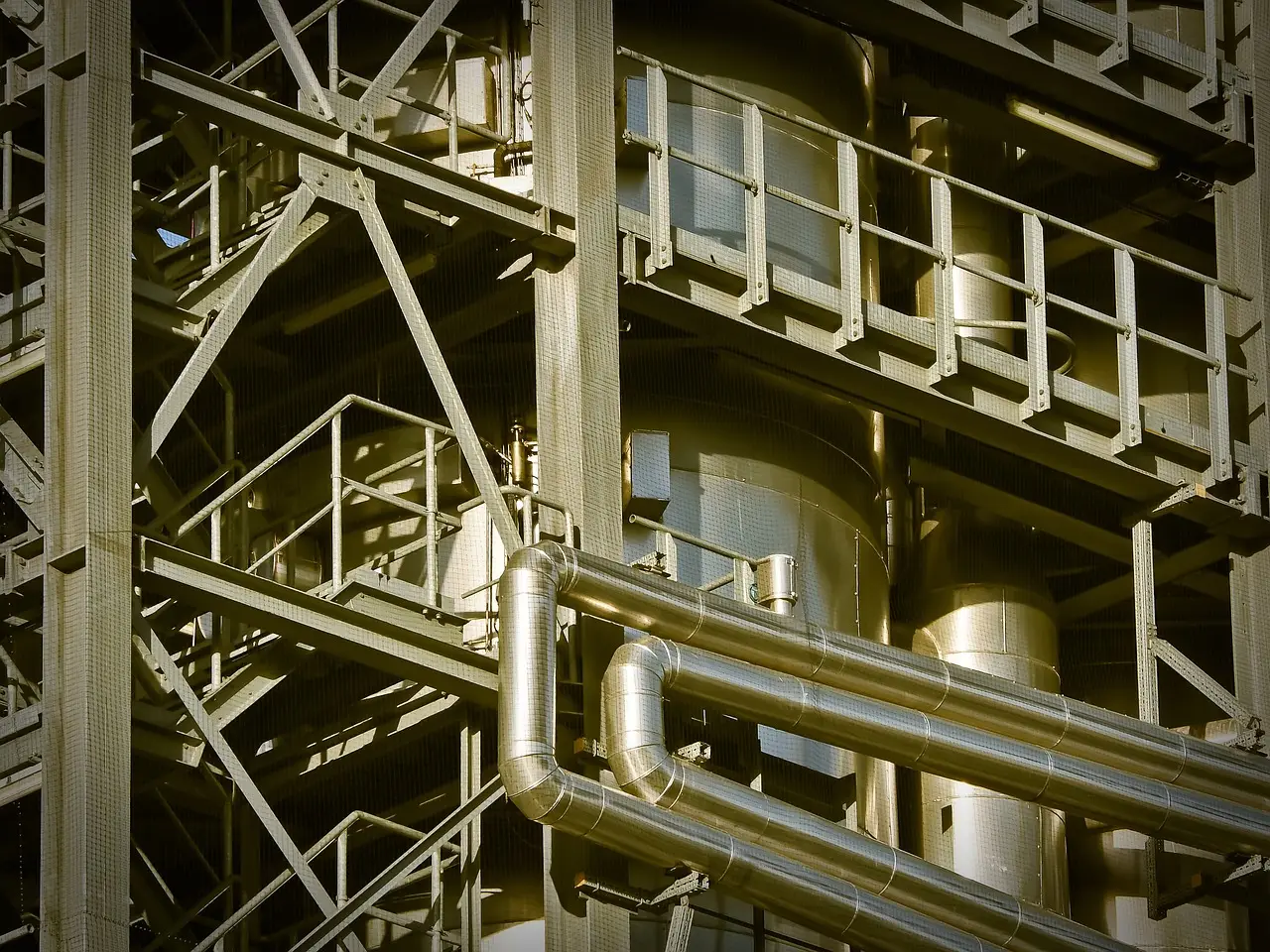
The Department of Energy announced the Battery Manufacturing Accelerator, or BattMan, on Oct. 28, 2026, a four-lab program that pairs manufacturing research with machine learning and digital twins to catch scale-up failures before they consume capital.
Pacific Northwest National Laboratory leads the effort. Argonne, Oak Ridge National Laboratory and the National Laboratory of the Rockies join as core partners. DOE's Advanced Materials and Manufacturing Technologies Office, inside the Office of Critical Minerals and Energy Innovation, funds the program.
The accelerator exists because scaling new battery chemistries carries manufacturing and financial risks that have already destroyed two high-profile companies.
What went wrong at Northvolt and Ascend?
Northvolt, the Swedish cell maker, delivered about 80 MWh of battery cells in the first nine months of 2023, according to Norran's reporting on figures reviewed by Dagens Industri. That output was roughly 0.5% of the eventual 16 GWh annual production target for its first two production blocks. Installed capacity reached 16 GWh at the end of 2023 — the plants existed, the yield did not.
The commercial consequences followed fast. In June 2024, BMW canceled a €2 billion ($2.15 billion) order amid reported delivery delays and quality problems. Northvolt filed for Chapter 11 protection in the U.S. on Nov. 21, 2024, then filed for bankruptcy in Sweden on March 12, 2025, citing production ramp-up difficulties alongside financing and market pressures.
Ascend Elements, a lithium-ion battery recycler, illustrates the construction side of the risk. It filed Chapter 11 petitions on April 9, 2026 in the U.S. Bankruptcy Court for the Southern District of Texas. In October 2025, E&E News reported that DOE had canceled a $316 million award; the company said it had already received $206 million and would lose the roughly $110 million remaining.
Ascend's first-day bankruptcy declaration attributed its troubles partly to cost overruns, construction delays and contractor disputes at its Apex 1 project in Kentucky, which stood about 60% complete. Contractor Turner-Kokosing claimed roughly $138 million for Apex 1 work; Ascend disputed the claim. The declaration separately listed more than $145 million in asserted statutory liens across the Apex 0 and Apex 1 sites, including potentially overlapping contractor and subcontractor claims.
How does BattMan attack the problem?
"Processes that work at small scale can behave very differently at larger volumes," said Claus Daniel, associate laboratory director for Argonne's Advanced Energy Technologies directorate. BattMan's answer is staged testing and validation at increasing scales, so manufacturing uncertainties surface before commercial commitments do.
The division of labor across the labs is specific:
- PNNL applies manufacturing science to demonstrate that new materials and processes can scale.
- Argonne validates feasibility and raises production volumes on its pilot lines, while generating synthesis and scale-up data, training machine learning models and using active learning to find optimal processing conditions.
- Oak Ridge receives materials — powders and electrodes — from PNNL and Argonne for smart coating process development.
- The National Laboratory of the Rockies leads advanced characterization, physics-guided quality control and digital materials design, feeding results back to project partners.
Five universities are founding partners: the University of Washington, Binghamton University, the University of Alabama, Arizona State University and the University of Michigan-Dearborn.
Near term, the labs plan high-throughput experimentation, automated synthesis and characterization, and digital manufacturing tools to improve data quality, reproducibility and process consistency across sites. Longer term, BattMan wants to build on autonomous laboratory concepts and develop autonomous pilot lines: self-optimizing manufacturing systems combining real-time data, digital twins and closed-loop control, with the stated aim of cutting scale-up time and cost.
The program targets three measurable outcomes: lower manufacturing costs, shorter development timelines, and battery materials built from more abundant domestic elements — a supply-chain consideration for any portfolio weighing U.S.-based cell production.
BattMan is now establishing collaborations with companies across battery and materials manufacturing; interested organizations can contact the program directly. Whether the accelerator can convert lab-scale yield into gigawatt-hour economics will be tested against the failure modes that took down Northvolt and Ascend.
via energy.gov (Original)
Filed under
- battery-manufacturing
- manufacturing-scale-up
- digital-twins
- machine-learning
- national-laboratories
More from Sophie Lindqvist
Show full bio
Correspondent covering money, funding and market shifts around research and development at Hypothesis Wire.
212 articles
References
- QuantumScape Claims Minutes-Long Ceramic Firing as Solid-State Race Tightens
- WeLion's 824 Wh/kg cell tops lithium-ion by 4x in 2025 lab test
- Sandia develops microwave process for spent battery cathode upcycling
- 110 Sustainability Levers Target Particle Accelerator Energy Footprint
- Sandia turns to microwave chemistry to recover battery metals