Proceedings · Session S-352 · filed November 9, 2026
Lab Technology & MethodsSession paper
Robot moth grows a wing sensor from UV-reactive artificial blood
A Tartu-IIT robot moth circulated 3 ml of UV-reactive fluid through printed veins, formed a conductive wing sensor and kept it working after four months in storage.
By Rebecca Stone4 min read886 words
Summary
- About 3 ml (0.1 fl oz) of artificial blood circulated through printed veins, with fluid seeping 0.01 mm into the plastic.
- Ultraviolet light and a light-activated additive converted pyrrole into conductive polypyrrole in a stenciled wing patch.
- The wing sensor remained functional after four months and required about five minutes to settle after each UV flash.
- Initial tests powered the onboard microprocessor from reagents in the circulating fluid; the moth still cannot fly.
- Prior milestones include Cornell's 2022 self-healing optical-sensing robot and Cornell's 2025 robot-blood energy storage.
By Rebecca Stone
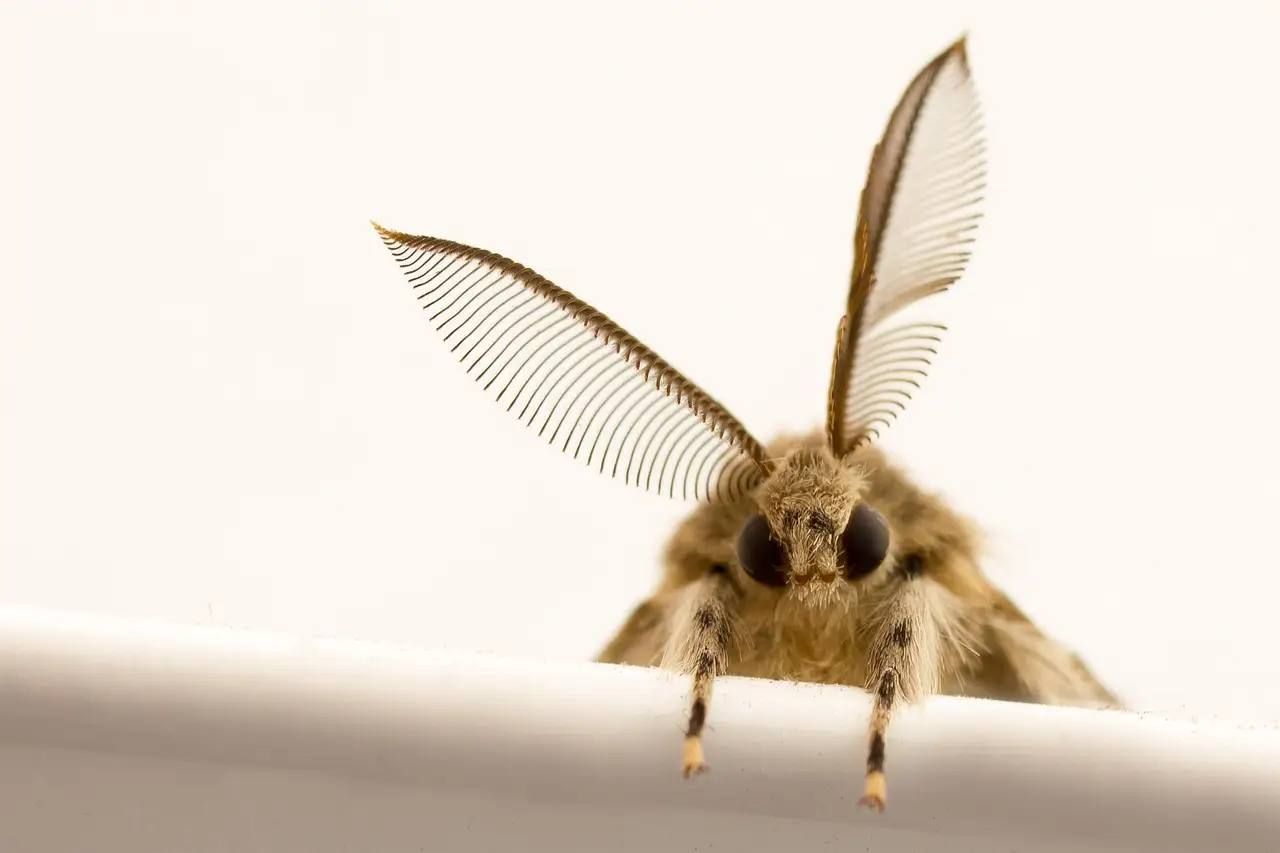
A 3 ml charge of artificial blood can create a light-sensitive sensor in a 3D-printed robot moth, and the sensor still responded after four months in storage. Engineers from the University of Tartu in Estonia and the Italian Institute of Technology built the prototype with translucent plastic, printed veins, gold electrodes and a small circulation pump.
Software can alter how a robot uses fixed hardware, but this system adds physical sensing material that the body lacks at manufacture. The advance matters most for environments where no engineer can specify every instrument position in advance, including collapsed buildings and other planets. That use case remains prospective rather than a demonstrated mission.
How does the moth create a sensor?
The moth’s see-through body contains tiny veins. A small pump moves roughly 3 ml (0.1 fl oz), about a teaspoon, through those channels. The fluid seeps about one hundredth of a millimeter into surrounding plastic, carrying pyrrole, a starting chemical for polypyrrole, an electrically conductive plastic.
Ultraviolet light activates a light-activated additive and converts pyrrole in the exposed plastic into conductive polypyrrole. A stencil determines which wing patch receives the light, and that patch turns black. Gold wires that the team embedded during printing collect the electrical change, so the robot grows sensing material rather than a wired sensor.
When ultraviolet light later strikes the patch, its electrical resistance drops temporarily. An onboard chip detects that change and either blinks an LED or activates the wings. The same light therefore serves two functions: it fabricates the receptor and tests it.
Kadri-Ann Pankratov, a PhD student at Tartu and first author of the Advanced Science paper, said: “Growing the receptor on site means the environment itself can pattern the robot, based on what is actually happening at that time.” She contrasted this with a ready-made photodiode, a light-sensitive semiconductor component that requires engineers to determine its position before deployment.
In the reported experiment, however, a researcher-set stencil, rather than the environment, selected the wing patch. Software can reprogram the chip, but it cannot add a physical receptor that the manufacturing process did not place in the body.
What did the prototype demonstrate?
The team reported that the sensor remained functional after four months in storage. Each ultraviolet exposure made it more sensitive as unused pyrrole continued reacting, but the patch needed about five minutes to settle after each flash.
The source gives no device count, trial count, sensitivity range, repeatability statistics or direct photodiode benchmark. The result therefore establishes feasibility rather than performance parity.
The moth cannot fly. A nitinol wire, a shape-memory alloy that returns to a preset shape when heated, bends the wings, and an external power supply provides the heat.
Pankratov said batteries could power the wings, but the more useful route would store energy in the artificial blood. Initial tests already powered the onboard microprocessor from reagents in the fluid. Released videos show the circulation operating and the wings flapping under ultraviolet light.
Can the robot place sensors without supervision?
No. Researchers, not the moth, decided when to fill the veins, and the stencil determined where the reaction occurred. The chemical conversion cannot be reversed. Pankratov identified coverage, rather than the number of sensors, as the practical limit: fluid and ultraviolet light must reach the relevant body regions.
Fresh precursors, the starting chemicals consumed in the reaction, can be pumped through the veins. The team also envisage collecting some from the environment, although the source presents that as future work. The same circulation could carry other chemicals, including possibly reversible formulations, but the moth has not demonstrated those capabilities.
How does it compare with prior self-building robots?
Earlier work establishes that self-making and self-repair are not new goals. In 2022, Cornell engineers demonstrated a soft robot with optical sensors that detected damage and healed itself.
IIT’s FiloBot 3D-prints its own body while climbing, while Cornell’s 2025 robot-blood work stored energy for soft jellyfish and worm robots. The Tartu system differs by adding a function the body did not originally possess.
The circulatory system also offers a route to flushing and reusing the same chemical mixture or switching to another one. That feature could matter if missions must adapt to different environments, but the source reports neither operation in the moth demonstration.
What should R&D managers test next?
For portfolio planning, the decisive next evidence is not another demonstration of material growth. It is a quantified test of sensing range, response time, energy balance, spatial coverage and repeatability over repeated cycles. Teams also need flushing and reversible chemistry if field maintenance matters.
The research material names the Estonian Research Council but gives no grant amount, grant number or device sample size. It also reports no quantified sensitivity, power budget or field test. Those omissions limit comparisons of development cost, reproducibility and scale-up readiness with a conventional photodiode.
Pankratov set a ten-year horizon: “In 10 years, I hope artificial robot blood and circulatory systems will be an obvious choice for some applications, with several material systems as the state-of-the-art setup.” For R&D leaders, that prospect depends on turning a manually placed, irreversible sensor into a measured and repeatable field process.
via newatlas.com (Source)
Filed under
- soft-robotics
- artificial-blood
- polypyrrole
- uv-sensing
- 3d-printing
More from Rebecca Stone
Show full bio
Market editor covering regulation, policy and their impact on research and development at Hypothesis Wire.
245 articles
References
- Wireless Implant Restored Normal Glucose in Diabetic Mice Within an Hour
- ETH Zurich implant clears glucose via electrocatalysis, no drugs
- Terasaki Institute Lens Measures Serotonin in Tears
- MIT Team Grows Steerable Blood Vessels Using Magnetic Forces
- LLNL gamma-ray sensor en route to Phobos aboard Japan's MMX mission