Proceedings
Corporate & Industrial R&DSession paper
AYK cuts ferry battery weight from 700 to under 400 tonnes for 40-knot Kattegat run
Molslinjen's three Incat catamarans will carry 55 MWh of AYK LFP batteries each, cut from 700-plus tonnes to under 400, to run 40-knot Kattegat crossings from 2028.
By Sophie Lindqvist3 min read627 words
Summary
- Three Incat catamarans for Molslinjen will each carry 55 MWh of AYK Energy LFP batteries, up from the China Zorrilla's 43 MWh.
- Pack weight fell from over 700 tonnes per ship to under 400 tonnes (AYK figure; Molslinjen says ~406 tonnes).
- First ferry enters service Q1 2028 between Jutland and Zealand; two more follow in 2028 and 2029.
- Each crossing consumes 27–28 MWh of the 46.5 MWh usable; charging draws up to 54 MW in about 30 minutes.
- Two 118-MWh shore battery parks in Aarhus and Sjællands Odde, built by BOS Power, will buffer grid demand.
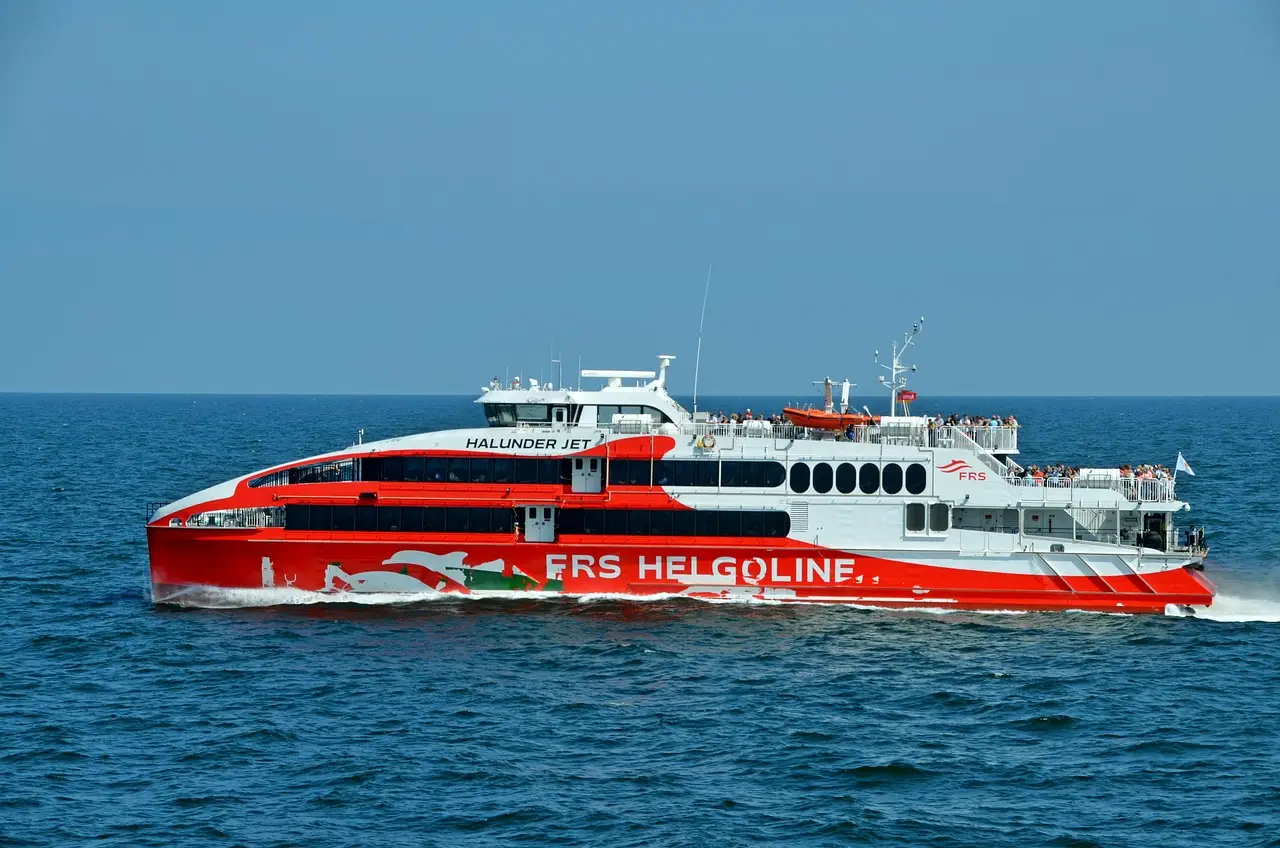
Molslinjen has ordered three battery-powered catamarans whose packs weigh less than 400 tonnes per ship — down from the more-than-700-tonne units AYK Energy first quoted almost two years ago — and the Danish operator expects them to cross the Kattegat at up to 40 knots (74 km/h).
The weight cut decided the deal. Each of the 423-ft (129-m) ferries, built at Incat's yard in Tasmania, will carry 55 MWh of lithium iron phosphate batteries from Andorra-based AYK Energy. AYK puts the pack weight below 400 tonnes (441 US tons); Molslinjen's own fact sheet says about 406 tonnes. Either figure sits well under the original quote.
"We are pushing the boundaries of technology here, and the combined weight of the vessel and its batteries will be crucial to operating such large vessels at high speed across the Kattegat," Molslinjen CEO Carsten Jensen said. "So when AYK managed to significantly reduce the weight of its batteries without compromising power, that tipped the balance."
The stakes are visible in the fleet's predecessor. The Argentine-Uruguayan ferry China Zorrilla, which began carrying passengers in October, carries a 43-MWh pack weighing roughly 286 tonnes — and the catamaran, originally designed for 37 knots, settled for a service speed of 25.
How did AYK shed the weight?
AYK says it redesigned the pack from scratch, pairing new cells inspired by manufacturing techniques borrowed from the car industry with a lighter, stronger aluminium structure. The chemistry switched from the nickel-cobalt-aluminum (NCA) cells in the China Zorrilla to lithium iron phosphate (LFP).
That trade cuts energy per pound but copes far better with overheating, one of the biggest dangers of the technology. "This is not a car where the driver can simply step out onto the road if there is a fire," AYK founder Chris Kruger said.
What can the ferries actually do?
Each vessel is set to carry up to 1,500 passengers and 500 vehicles between Jutland and Zealand, drawing on the three-ship fleet's combined 165 MWh. The first is due to enter service in the first quarter of 2028; the other two follow in 2028 and 2029.
Not all of the nameplate capacity is available. Molslinjen lists 46.5 MWh of usable energy per ship and expects each crossing to consume 27 to 28 MWh.
The figures are vendor and operator claims, not sea-trial results. AYK supplied the weight numbers; Molslinjen supplied the usable-energy and consumption figures. Independent verification will come only when the vessels sail.
Who solves the charging problem?
Charging is the harder constraint. Each ferry is meant to top up in roughly half an hour between crossings, drawing up to 54 MW — by Molslinjen's maths, the equivalent of 216 Teslas charging at 250 kW simultaneously. The local grid cannot absorb that load every time a ferry docks.
The operator's answer is two 118-MWh shore-side battery parks, one in Aarhus and one at Sjællands Odde, which BOS Power will build. They charge from the grid while the ferries are at sea, then feed the vessels alongside grid power at the berth.
"We can't simply charge directly from the grid on every crossing," Jensen said in June, when the company hired BOS Power. "In the batteries we can store three to four ferry crossings if the grid supply acts up."
What happens next?
The first battery should reach Incat's Tasmania yard around the turn of the year. After fitting out, the first ferry still faces a delivery voyage of almost 15,000 miles (24,000 km) to Denmark before it carries a single passenger across the Kattegat — a passage that will itself test how the oversized packs behave at sea.
via newatlas.com (Source)
Filed under
More from Sophie Lindqvist
Show full bio
Correspondent covering money, funding and market shifts around research and development at Hypothesis Wire.
251 articles
References
- ANU Atlas Counts 820,000 Pumped Hydro Sites, 200 Times Global Need
- WeLion's 824 Wh/kg cell tops lithium-ion by 4x in 2025 lab test
- Heavy trucks emit 35% of road CO2 on 8% of fleet: review maps electrification
- Sandia develops microwave process for spent battery cathode upcycling
- DOE launches four-lab BattMan accelerator to de-risk battery scale-up