Proceedings · Session S-218 · filed November 19, 2026
Corporate & Industrial R&DSession paper
Sila signs billion-dollar anode deal with Panasonic, backed by $1.4B Pentagon loan
Sila's first mass-market deal, valued by the company at over $1 billion, commits Panasonic to silicon anode material as the US battery sector recovers from bankruptcies.
By Amara Osei4 min read780 words
Summary
- Sila says its Panasonic supply deal could be worth more than $1 billion over time
- The US Defense Department committed a $1.4 billion loan to Sila earlier this year
- Sila opened its Moses Lake, Washington factory in September 2025 after a $100 million DOE grant in 2022
- Battery firms 24M and ESS Tech, each once valued at $1 billion, went bankrupt in the past year
- China controls over 90 percent of global graphite production
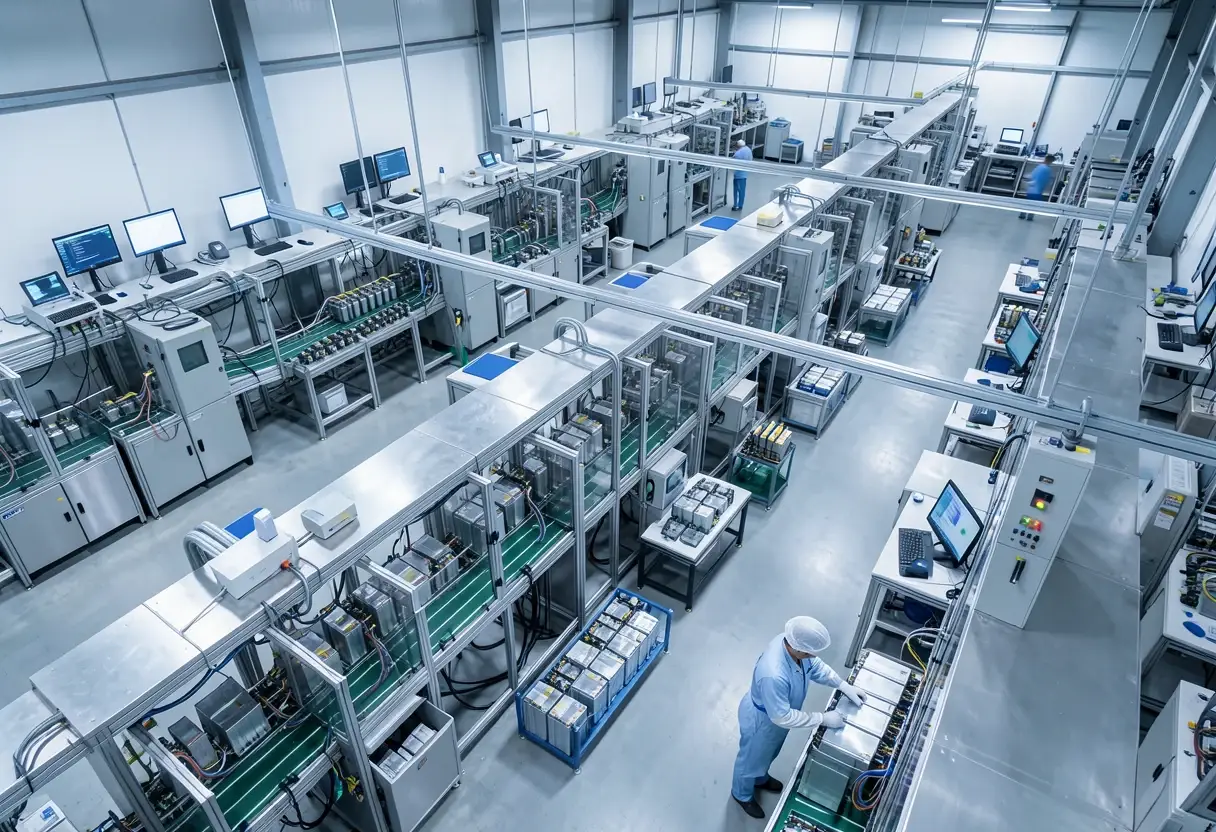
Sila says its new supply agreement with Panasonic Energy could be worth more than $1 billion over time — the first mass-market deal for the US silicon-anode maker and a rare positive signal for a next-generation battery sector that has shed two billion-dollar companies to bankruptcy within the past year.
The deal, announced by Sila, commits Panasonic to buying tens of thousands of tons of Sila's silicon-carbon anode material, according to cofounder and CEO Gene Berdichevsky. Sila is not disclosing the specific tonnage or the price Panasonic will pay. That gap matters: the headline billion-dollar figure is a company projection of cumulative value, not a measured or contracted revenue number.
What does the deal actually cover?
Sila, founded in 2011, produces silicon-based anodes for lithium-ion batteries. The company claims its material weighs one-fifth as much as the graphite used in conventional anodes and cuts volume in half. In principle, that allows a battery to store more energy in the same weight and volume — extending EV range — while also delivering more power and faster recharging than conventional chemistry.
These are vendor claims. Sila's announcement cites the material's performance advantages but does not publish independent test data alongside them, and the company has not detailed how the anodes perform across full cycle life at scale. The measured record so far is commercial but small: Sila's battery first reached consumers in Whoop fitness wearables in 2021.
The Panasonic arrangement changes the scale of the ambition. Berdichevsky says the deal will help Sila scale to at least 10 times its current production levels. Sila opened its Moses Lake, Washington factory in September 2025, and the plant is already operating. The factory was announced in 2022, when Sila also received $100 million from the US Department of Energy as part of a multibillion-dollar Biden-era grant round for the battery supply chain.
Who is financing the scale-up?
The most striking financial detail sits outside the Panasonic contract. A major share of the backing for Sila's production comes from a $1.4 billion loan committed earlier this year by the US Defense Department under the Trump administration. The department framed the loan as helping the US face what a Sila press release called a "significant technology sovereignty challenge."
The geopolitical framing is not incidental. China controls over 90 percent of graphite production today, and the US has spent years trying to curb its reliance on Chinese batteries, battery materials and other critical inputs such as rare earth metals. The Trump administration has intensified that effort, and Sila's financing is one of its instruments.
Notably, Sila's announcement of the Panasonic deal mentions EVs but not climate, emissions or the energy transition. The messaging centers on American industrialization, with a nod to the claim that a North American battery supply chain can also help power the AI market.
Why now, after years of failures?
The US next-generation battery market has spent the past few years largely on the ropes. Two billion-dollar battery companies — 24M and ESS Tech — declared bankruptcy and shut down in the last year alone. Against that backdrop, a nine-figure offtake from a major global manufacturer like Panasonic is a genuine commercial milestone, not merely a funding announcement.
It is also, so far, a single data point. Sila has not disclosed the contract's duration, pricing structure or volume commitments in absolute terms. Panasonic has not publicly confirmed the deal's value independently. Whether the arrangement supports a durable supply chain or one favored supplier remains to be tested against delivery volumes from Moses Lake over the coming years.
Asked whether the company still holds decarbonization as a priority, Berdichevsky pushed back on the premise that Sila had shifted. "I think the politics of it has shifted around us much more than our motivations have shifted," he said. "It's really the energy efficiency that motivates engineers like myself and technologists at our company. And I still think that that's still at the heart of it."
That statement is a founder's characterization, and the company's own press materials tell a different story in emphasis, if not in substance. What is measurable is the money: one $1.4 billion defense loan, one $100 million earlier Energy Department grant, and a Panasonic commitment the company values at more than $1 billion over time. Whether the technology meets its density claims at industrial volume — and whether US anode production can compete with a Chinese graphite industry controlling more than nine-tenths of supply — will decide if this deal marks a turnaround or another high-profile bet.
via pv-magazine-usa.com (Original)
Filed under
- sila
- panasonic-energy
- silicon-anodes
- battery-supply-chain
- government-funding
More from Amara Osei
Show full bio
News editor covering money, funding and market shifts around research and development at Hypothesis Wire.
261 articles
References
- WeLion's 824 Wh/kg cell tops lithium-ion by 4x in 2025 lab test
- DOE launches four-lab BattMan accelerator to de-risk battery scale-up
- Commerce Pledges $389M for AI and Fusion Power Semiconductor R&D
- Lonza to Buy Five Merck KGaA U.S. CDMO Sites for Up to CHF 500 Million
- Google signs 50 MW deal for superhot geothermal power