Proceedings · Session S-732 · filed November 19, 2026
Corporate & Industrial R&DSession paper
Ghost radar set for 2027 live tests with up to 10 times cheaper claim
BAE Systems plans 2027 live tests of an SUV-deployable passive radar that uses reflected TV, radio and mobile signals to track airborne threats without emitting a beam.
By Priya Raman4 min read736 words
Summary
- BAE says the ghost radar is up to 10 times cheaper than comparable passive radar systems.
- Live tests with defense, law enforcement and other partners are scheduled for 2027, with military applications first.
- The SUV-deployable receiver uses reflected TV, radio and mobile signals to build a 3D map.
- Four reported track parameters are range, altitude, speed and heading.
- BAE has disclosed no test results, sample size, named partners or funding details.
Priya Raman
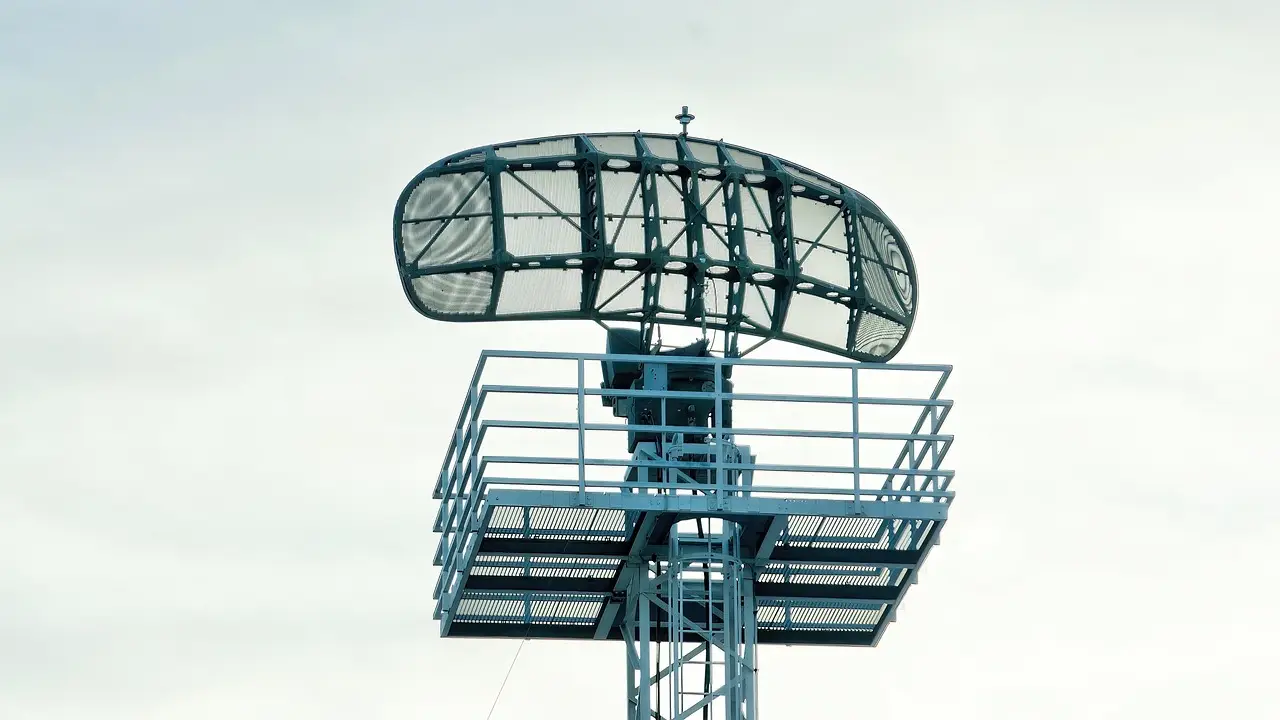
BAE Systems says its portable “ghost radar” is up to 10 times cheaper than comparable passive radar systems and is scheduled to begin live tests with defense, law enforcement and other partners in 2027, with military applications first.
Chris Shepherd, Product Manager, CUxS at BAE Systems’ UK-based Digital Intelligence & Land business, said:
“We’re harnessing the signals that all of us use already in our day-to-day lives to give police and armed forces the ability to protect us far more cheaply and safely than current passive radar systems.”
The company describes the portable system as detecting and tracking airborne threats without transmitting radio signals of its own. It replaces an active beam with a receiver that uses ambient transmissions. BAE has released neither the device specifications nor test results.
Why does passive radar matter?
Conventional radar was perfected during the Second World War and enabled forces to detect, identify and track objects in darkness and fog. BAE describes that capability as having won wars, prevented conflicts, made air travel safe and routine, and saved countless lives.
The same technology carries a structural weakness: the beam works as an electromagnetic searchlight. Once an adversary locates it, the radar can become a target for a warhead or electronic countermeasure. German Luftwaffe bombing of radar stations on the English coast during the Battle of Britain illustrates the longstanding contest between radar and anti-radar systems.
In recent years, inexpensive drones have become easy to acquire, modify into anti-radar weapons and deploy in numbers against military and civilian radar systems. The concept responds by removing the emitter such attacks seek. BAE describes the device as entirely passive, so an adversary has no transmitted beam to detect or home in on.
That argument covers emitter detection only; the company does not assess whether the receiver or its SUV could be found by other means. It also provides no performance data for areas with weak or crowded ambient transmissions.
How does the ghost radar work?
BAE has kept the design at concept level in its public disclosure. The company describes the operating chain as follows:
- Inputs: Reflections from digital television broadcasts, radio transmissions and mobile phone networks.
- Receiver: A compact system small enough to deploy in a standard SUV.
- Processing: The receiver translates reflected signals into a 3D map.
- Track data: The map identifies a target’s range, altitude, speed and heading.
He added:
“While people are sat at home watching TV, our new radar technology can use transmissions from TV and radio broadcasts without disturbance to keep crucial infrastructure such as power stations and air force bases safe from drone attacks. It also provides a boost for armed forces, allowing a soldier to monitor the battlefield undetected.”
What has BAE not demonstrated?
The published announcement gives no detection range, probability of detection, false-alarm rate, position accuracy, update rate, sample size, test protocol or independent validation. It does not name the defense, law-enforcement or other partners, identify test sites, disclose program funding or state whether any government or customer paid for the development.
The cost figure is a company claim, not a disclosed measured procurement result. BAE provides no baseline system, bill of materials, comparison basis or definition of “cheaper.” Likewise, its protection and battlefield benefits are proposed uses, not demonstrated outcomes.
For R&D managers, the omissions prevent a direct assessment of test workflow demands, including how operators acquire ambient signal quality, how often the system refreshes a track and how many false alarms it produces. A passive architecture can remove an outgoing beam from detection risk but cannot substitute for those operating data.
What will the 2027 trials show?
The 2027 live-test campaign will bring defense, law enforcement and other partners into the program, with an initial emphasis on military applications. The announcement names no partner, dates within the year, test locations, success criteria or budget.
The proposed mission set covers fixed sites such as power stations and air force bases, as well as battlefield monitoring by soldiers. These remain use cases until the live trials report measured detection, accuracy, false-alarm and cost performance.
For portfolio teams, the decisive outputs remain detection range, probability of detection, track accuracy, update rate, false-alarm rate and a comparable cost baseline. The 2027 trials are the next gating event for testing whether BAE’s passive-sensor concept can become a quantified procurement option.
via newatlas.com (Source)
Filed under
- passive-radar
- defense-technology
- sensor-systems
- bae-systems
- r-d-testing
More from Priya Raman
Show full bio
Staff writer covering money, funding and market shifts around research and development at Hypothesis Wire.
289 articles
References
- U.S. Moves to Upgrade Space-Based Nuclear-Blast Detection Sensors
- ORNL to Embed AI-Enhanced Algorithm in Radiation Detection Hardware
- MIT's portable 3D breast ultrasound lifts target detection to 79.7%
- Lockheed Martin wins $694 million ARRW production contract
- KBSI chief vows national research hub status for new light source