Proceedings · Session S-139 · filed November 20, 2026
AI & Emerging Tech in R&DSession paper
San Francisco Blocks New Data Centers as California Signs Seven Cost-Shifting Bills
San Francisco's unanimous 45-day data center moratorium, seven new California cost-sharing laws and Santa Clara's $35 million annual tax haul frame a statewide fight over who pays for AI infrastructure.
By Priya Raman4 min read826 words
Summary
- San Francisco supervisors unanimously passed a 45-day data center moratorium on October 6, extendable for roughly two years.
- Governor Newsom signed seven data center bills on September 21; three raise infrastructure payments, three mandate resource disclosures, one ends blanket environmental exemptions.
- A $16.5 billion AI-related tax surge over three years erased California's $2.9 billion projected deficit.
- Santa Clara hosts 56 data centers generating $35 million in annual tax revenue, yet its utility halted new applications in 2023.
- Oakley's Planning Commission voted 4-0 on October 20 to recommend a total data center ban.
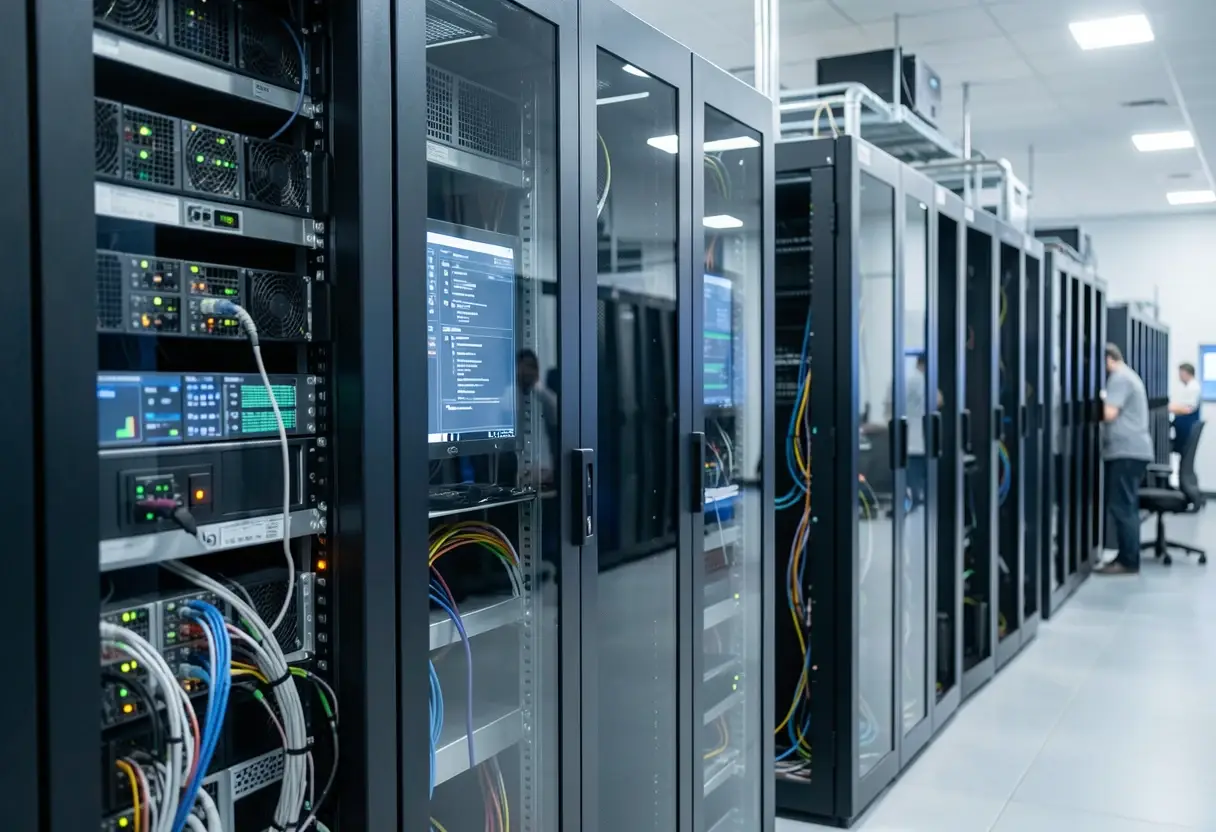
On October 6, the San Francisco Board of Supervisors unanimously passed a 45-day moratorium on new data center construction in the hometown of Anthropic and OpenAI. Bloomberg Law reported the pause can be extended for roughly two years while officials weigh more permanent restrictions.
The vote landed in a city that hosts two of the top upstart AI companies, Anthropic with Claude and OpenAI with ChatGPT, and it signals a broader shift: one national election takeaway, observers note, is that Americans are increasingly hostile to data-center construction near their neighborhoods.
Supervisor Shamann Walton, who represents Bayview-Hunters Point, said when he announced the plan that nothing should be approved until the city understands the consequences. His district holds two of the city's data center sites, and residents there have complained for decades about pollution.
How are Bay Area cities responding?
On the same night, the Oakland City Council passed its own 45-day moratorium. A few speakers argued for the jobs and revenue, as they had when a council committee advanced the measure. The law firm Holland & Knight noted on October 21 that Oakland's planning code does not even define "data center" and sets no standards for noise, generators or water.
Small cities are moving too. Oakley passed a 45-day moratorium in April, extended it 10 months in May, and on October 20 its Planning Commission voted 4-0, with one abstention, to recommend a total ban on data centers, according to The Press. The City Council will take up final approval at a future meeting.
Santa Clara, home to Nvidia and Intel, has been more welcoming but is nearly built out, with 56 data centers and two more coming. KTVU reported on October 6 that the industry contributes $35 million annually in taxes directly to the city's general fund. High power demand, however, prompted the municipal utility Silicon Valley Power to stop accepting new data center applications in 2023. The city has now launched a year-long interdepartmental review of environmental, water, power and quality-of-life impacts before updating its development rules.
San Jose, home to Cisco, Adobe, Zoom, eBay and PayPal, chose to regulate but not pause. The Mercury News reported on October 27 that a new data center on 15 acres carved from Western Digital's Charlotte Drive campus in South San Jose could be operational in three years if officials give final approval. At a hearing on the lot split, a public speaker warned that "thousands" of residents were poised to oppose the project and asked for "more transparency" about the subdivision.
What is the state doing?
In May, California announced a $16.5 billion unexpected tax surge over three years from AI profit-taking, allowing Governor Gavin Newsom to balance the fiscal 2026-27 budget and erase a $2.9 billion deficit from his January estimate. "It shows the nature of the economy in this state — the nature of the growth engine," Newsom said.
On September 21, Newsom signed seven data center bills that, in the CalMatters summary, "aim to force the data center industry to pay its own way in California." Three bills make operators pay more for infrastructure costs, three mandate resource use disclosures, and the seventh bans blanket environmental quality review exemptions. Newsom leaves office in January and is preparing a potential presidential run, with data centers unpopular in key primary states such as South Carolina, Michigan and Pennsylvania.
Is there a compromise path?
Several models already exist in the region, according to Pacific Research Institute editorial board member John Seiler, whose analysis frames the conflict as a deal-making opportunity.
- Flexible loads. Silicon Valley Power and Nvidia-backed Emerald AI are piloting data centers that trim power use during grid stress; the utility created a Flexible Load Interconnection Program offering faster, larger grid access to operators committing to verified flexibility.
- Clean power and water. A lawsuit over a Pittsburg data center was settled by an agreement between the city and the Center for Biological Diversity requiring 100% renewable energy and recycled water for cooling. Amazon said its Gilroy facility will rely on air cooling most of the year.
- Shared upside. KQED reported on August 13 that a San Jose City Council committee voted to fold community benefits into its drafting of data center standards and to study reinvesting a share of tax revenue in a defined area around each site.
- No subsidies. Cities should stay open to construction but should not use taxpayer dollars to subsidize operators, as is increasingly the case.
Under such deals, data centers would be built, pay their own way, disclose water use, avoid stressing the grid and pass some profit to local projects — with AI classes for local high schools and colleges as one suggested touch. Whether California's compromises become national models will depend on cities such as Oakland becoming, in Seiler's words, more reasonable, and on San Francisco overcoming its own hypocrisy.
via pacificresearch.org (Source)
Filed under
- ai-infrastructure
- data-center-regulation
- california-policy
- energy-and-water-use
- local-government
More from Priya Raman
Show full bio
Staff writer covering money, funding and market shifts around research and development at Hypothesis Wire.
289 articles
References
- Google signs 50 MW deal for superhot geothermal power
- Scott Wiener Heads to Congress With Federal AI Regulation on His Agenda
- U.S. hyperscale data centers used an estimated 68–99 TWh in 2024–25
- AI data centers drive $26B climate-tech surge, carbon removal left behind
- One in Four Data Centers Sits in a Water-Stressed Basin, Study Finds