Proceedings · Session S-476 · filed November 17, 2026
AI & Emerging Tech in R&DSession paper
Scott Wiener Heads to Congress With Federal AI Regulation on His Agenda
Scott Wiener, Pelosi's successor in San Francisco, wants to slow advanced AI. Meanwhile the FDA flags GLP-1 blindness risk and Nvidia faces an FBI probe.
By Amara Osei4 min read702 words
Summary
- Scott Wiener won Nancy Pelosi's open San Francisco seat and used the phrase 'recursive self-improvement' six times in one 20-minute interview.
- China has built 169 demonstration marine ranches and released at least 167 billion juvenile fish and shellfish since 2015.
- The FDA ordered GLP-1 drugs to carry warnings about risk of blindness.
- The FBI is investigating Nvidia CEO Jensen Huang's affair, with new chip export restrictions likely to follow.
- The Pentagon's lunar satellite constellation could launch its first five satellites in 2029.
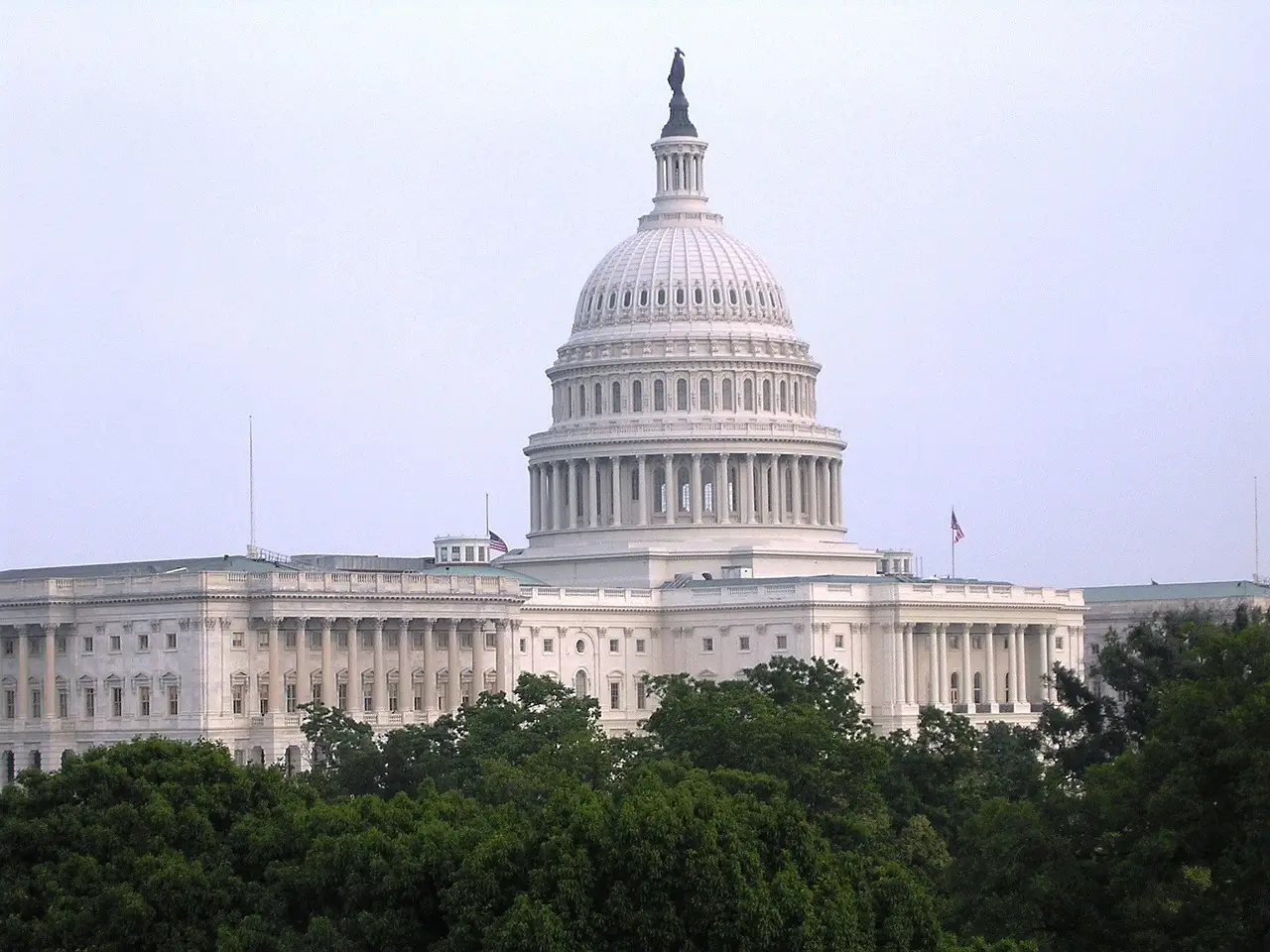
Scott Wiener won Nancy Pelosi's open San Francisco congressional seat last week, and within hours of his victory he used the phrase "recursive self-improvement" half a dozen times in a 20-minute interview. The California state senator, who authored state legislation targeting risks from advanced AI, now enters a position where he could shape federal AI policy — a prospect he himself greets with only cautious optimism.
What does Wiener actually intend to do?
In an interview with Grace Huckins of MIT Technology Review, conducted only hours after the race was called, Wiener was unambiguous about urgency. "We need to slow this down," he told the outlet. "Because it's moving very quickly, and we could sleepwalk into a disaster."
The qualifier matters as much as the pledge. Wiener describes himself as "cautiously optimistic" about Congress's capacity to rein in AI at all — a frank admission from a legislator arriving with regulatory credentials most of his new colleagues lack. His state-level record gives the claim some substance; whether it translates into federal law depends on a chamber that has so far produced little binding AI legislation.
Is the data center backlash really about power?
Reporting from James O'Donnell, filed from Ashburn, Virginia, suggests the loudest fights over data centers are not cultural but electrical. Ashburn sits inside Data Center Alley, the world's largest data center hub, and is arguably where the national backlash first took shape.
Big Tech has framed the uproar as a culture war over progress, O'Donnell writes. But days on the ground convinced him the real fault line is electricity: drawing power from the grid and generating it onsite each provoke distinct forms of local opposition. His conclusion is blunt — the industry can improve its image, but it cannot escape the consequences of its enormous appetite for electricity. For R&D managers weighing compute capacity, that constraint now sits as much in local permitting as in GPU supply.
What else moved this week?
- Nvidia under investigation. The FBI is investigating CEO Jensen Huang over an affair; President Trump said he does not believe Huang needs to worry. Reuters reports the allegations will likely spur new chip export restrictions, and analysts question Huang's lobbying on China. Bernstein analyst Stacy Rasgon told Reuters: "Nvidia is not an ordinary company and Jensen is not an ordinary CEO; he is Nvidia, clearly sets the long-term strategy and direction, and pulls most of the company's strings himself."
- FDA orders GLP-1 blindness warnings. The regulator has ordered the weight-loss drugs to carry warnings that they may increase the risk of vision loss, following reports of a rare eye condition linked to sudden blindness. Separate reporting suggests GLP-1s could also exacerbate eating disorders.
- France accuses Iran of hacking supermarket fridges. Prosecutors are investigating leaders of an Iranian cyber unit; Axios notes hackers are shifting toward manipulating physical equipment.
- Australia weighs criminal penalties for rogue AI. The proposals follow an AI agent hacking government systems.
- Emissions fell in 2026 — temporarily. The Iran war triggered a drop in global emissions driven mainly by energy supply constraints, though analysts expect the decline to prove short-lived.
- Moon patrol. The Pentagon is planning a lunar satellite constellation; the first five satellites could launch in 2029.
- Surveillance votes. York, Maine, and League City, Texas, voted to ban Flock surveillance cameras.
What is China doing at sea?
Near the port city of Yantai, the offshore complex Genghai No. 1 combines a tourist attraction, a seven-story visitor center shaped like a cartoon starfish, and an industrial fish farm whose main purpose is breeding fish for release into the ocean. It belongs to China's marine ranching program, which since 2015 has built 169 demonstration ranches and released at least 167 billion juvenile fish and shellfish — a figure on the scale of roughly 20 fish released for every person alive. The approach remains controversial among scientists, according to reporting by Matthew Ponsford.
Wiener's arrival in Congress, the tightening scrutiny around Nvidia, and Australia's criminal-penalty proposals all point in one direction: the regulatory perimeter around AI is closing from several sides at once, and budget owners should plan accordingly.
via forms.technologyreview.com (Original)
Filed under
- ai-regulation
- data-center-energy
- semiconductor-export-controls
- ai-cybersecurity
- glp-1-safety
More from Amara Osei
Show full bio
News editor covering money, funding and market shifts around research and development at Hypothesis Wire.
253 articles
References
- Democrats take Congress: scientists see 'a new day' for US research oversight
- Anthropic's Amodei Met Trump at White House as He Urges Slower AI Development
- OSTP Opens Rare Policy Window: Federal Research Overhaul RFI Closes Dec. 26
- Foushee Demands Trump Administration Restore STEM Research Funding
- Microsoft Moves Agent Work to Desktops After Tokenmaxxing Backlash