Proceedings · Session S-615 · filed November 20, 2026
Lab Technology & MethodsSession paper
Northwestern's DIAL 3D printing method quadruples speed, ditches supports
DIAL, a Northwestern 3D printing method combining projector curing with paste extrusion, printed a lattice in 30 minutes versus 124 for extrusion, with 150-micrometer walls and no support structures.
By Amara Osei3 min read691 words
Summary
- DIAL printed a porous grid structure in 30 minutes versus 124 minutes for conventional extrusion, more than four times faster.
- The method spreads 50-micrometer ink layers and achieves 150-micrometer lattice walls, resolution independent of nozzle diameter.
- Fumed silica nanoparticles give the ink yield-stress behavior, letting uncured material serve as reusable support.
- A polymerizable ionic liquid electrolyte ink printed 15 coin-cell-sized lattices in one 15-minute run.
- The study, led by senior author Ryan Truby, appears in Science Advances; DIAL remains laboratory-stage.
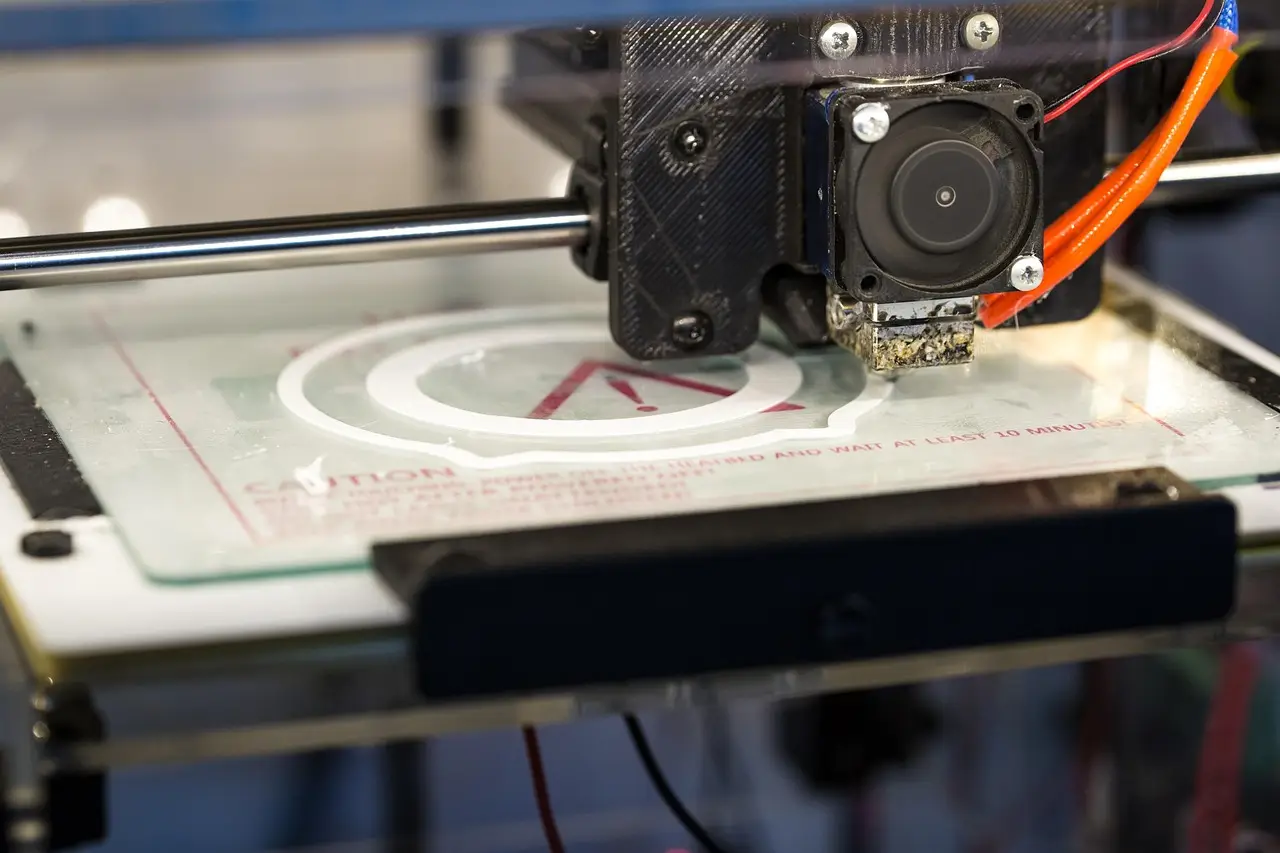
Northwestern University engineers have built a 3D printing method that prints complex objects more than four times faster than conventional extrusion, while matching the material versatility of paste-based systems. In one benchmark, a porous grid-like structure took 30 minutes with the new technique, called direct ink additive lithography (DIAL), against 124 minutes for a conventional extrusion setup. The team published its results in Science Advances, with Ryan Truby as senior author.
The method targets a trade-off that has structured the additive manufacturing field for years. Extrusion techniques such as direct ink writing handle thick, particle-filled functional inks but trace every line through a nozzle, which slows them down and clogs at fine feature sizes. Light-based techniques such as digital light processing cure entire cross-sections at once with a projector but require free-flowing resins that light can penetrate, excluding many functional inks that scatter light.
How does DIAL combine the two?
DIAL deposits paste-like ink through a slot-die nozzle, a long narrow opening, onto a flat printing surface. A blade then spreads the material into a uniform layer just 50 micrometers thick, thinner than a human hair. A projector shines a patterned light onto the sheet, triggering photopolymerization in the illuminated areas; the surrounding ink stays uncured. The printer repeats deposit, spread and expose until the object is complete, then washes away the residual material.
Because the projector solidifies an entire pattern at once, print resolution depends on pixel size and layer thickness rather than nozzle diameter. That decoupling is what allowed the team to produce lattice walls as thin as 150 micrometers, features their conventional extrusion setup could not replicate.
What removes the need for supports?
The ink itself carries the second innovation. The researchers mixed light-curable resin with fumed silica nanoparticles to give the material yield stress: it resists flowing until sufficient force is applied. The spreading blade supplies that force momentarily, then the ink stiffens again and holds its shape. Adjusting the silica concentration tunes the behavior.
The uncured ink surrounding each solidified feature stays firm enough to support overhangs and delicate internal geometry during printing. Once the object is finished, the surrounding material washes away, and excess ink left on the printing surface can be collected and reused. The team demonstrated intricate lattices and interlocking chainmail, geometries that normally require sacrificial scaffolding that risks damaging the parts it protects.
What did the demonstrations measure?
The reported results extend beyond the speed benchmark:
- The 30-minute versus 124-minute porous grid print, with sharper features and fewer defects than extrusion.
- Lattices with 150-micrometer walls beyond the extrusion system's reach.
- A honeycomb structure covering nearly four times the projector's illumination area, achieved by repositioning the projector over overlapping ink sheets, a scaling path vat-based light printing does not offer since DIAL is not confined to a resin container.
- Multi-material printing in successive layers and simultaneous printing of multiple objects.
Two functional ink formulations tested the material-compatibility claim. A structural electrolyte based on a polymerizable ionic liquid, a liquid salt that conducts ions, printed 15 porous lattices roughly the size of small coin-cell batteries in a single 15-minute run, structures relevant to future energy-storage devices. A hydrogel formulation produced miniature cell-culture containers with microscopic inverted pyramids resembling surfaces used to grow cells and organoids.
What has not been shown?
None of DIAL's components is new. Extrusion printing, projector-based curing and yield-stress materials have each existed for years; the contribution is their integration into one process. The researchers have demonstrated manufacturing capability but have yet to produce complete functional objects, and the technique remains laboratory-stage. Questions remain about performance across other materials, larger scales and demanding industrial applications.
"To print these types of materials, we don't just need new software capabilities, new hardware, or new inks," Truby said. "We need all three, working in concert." The team is extending the technology to additional materials and streamlining how the printer switches between tools, with projected applications spanning flexible robotics, medical devices, aerospace structures, batteries and engineered tissue environments.
via newatlas.com (Source)
Filed under
- 3d-printing
- direct-ink-additive-lithography
- additive-manufacturing
- photopolymerization
- yield-stress-inks
More from Amara Osei
Show full bio
News editor covering money, funding and market shifts around research and development at Hypothesis Wire.
261 articles
References
- Nonwovens Institute and Oerlikon Nonwoven Team on Meltblown Lab Work
- MIT Spin-Off Bizon Labs Splits LNP Mixing to Control Particle Shape
- ORNL, INL partner to 3D-print and AI-qualify nuclear pressure vessels
- Cling-film stamp moves 1 mm 2D layers with near-unity yield
- 3D-Printed Robot Frog Swims 80 mm on Light-Powered Artificial Muscles