Proceedings · Session S-125 · filed October 10, 2026
Lab Technology & MethodsSession paper
ORNL, INL partner to 3D-print and AI-qualify nuclear pressure vessels
Oak Ridge National Laboratory and Idaho National Laboratory have partnered to apply additive manufacturing and AI-based qualification to nuclear pressure vessels, with both labs targeting the U.S. energy supply chain, per Energies Media.
By Rebecca Stone3 min read545 words
Summary
- Oak Ridge National Laboratory and Idaho National Laboratory have partnered to 3D-print and AI-qualify nuclear pressure vessels, per Energies Media.
- ORNL operates the Manufacturing Demonstration Facility in Oak Ridge, Tennessee, focused on large-scale metal additive manufacturing.
- INL, headquartered in Idaho Falls, administers most of the DOE Office of Nuclear Energy's reactor demonstration, fuel, and materials research portfolio.
- The Energies Media announcement does not disclose funding, timeline, named personnel, target reactor design, or AI training corpus details.
- Domestic forging capacity for nuclear-grade vessels has narrowed since the 1970s-80s U.S. reactor build wave, leaving a thin supply base for new construction.
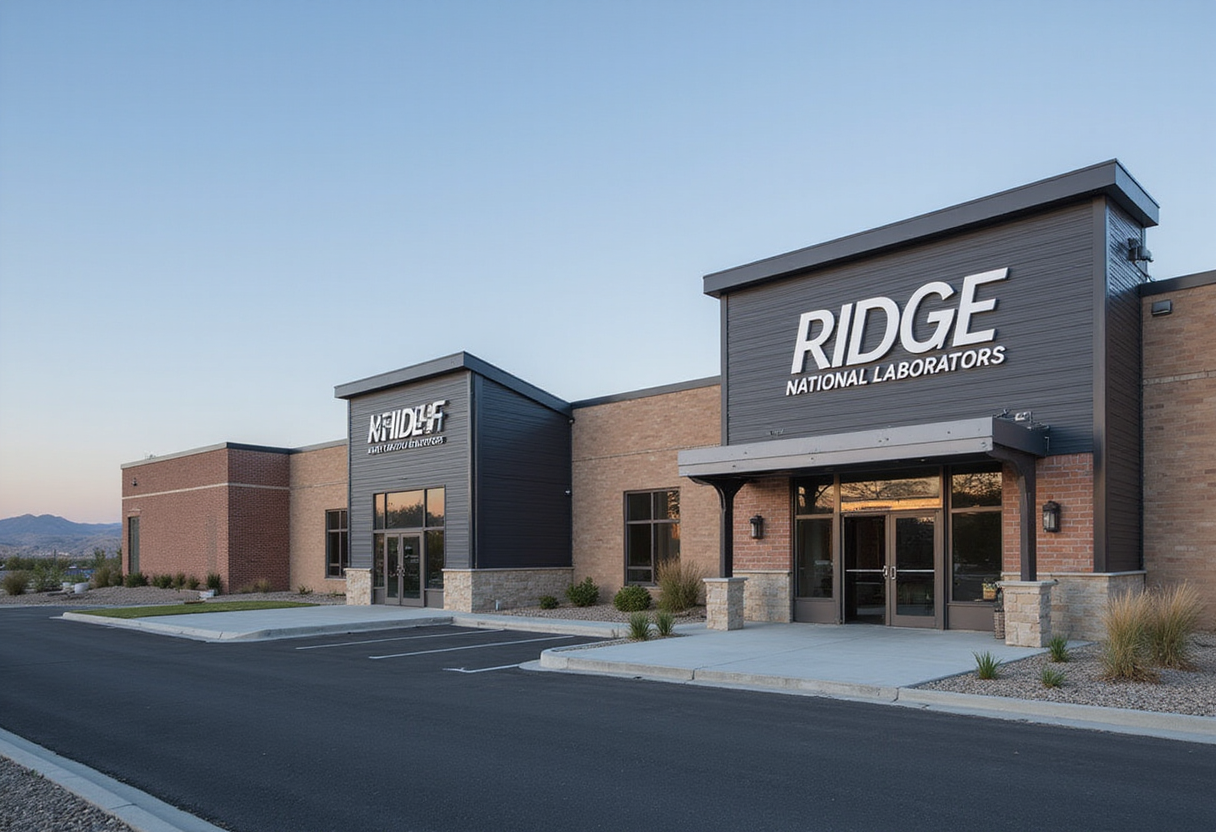
Oak Ridge National Laboratory and Idaho National Laboratory have partnered to apply additive manufacturing and artificial-intelligence-based qualification to nuclear pressure vessels, according to a brief published by Energies Media. The collaboration is positioned for the U.S. energy supply chain.
What is being combined
The program lines up two bets. The first is 3D printing of metallic pressure vessels. The second is using AI models to qualify those vessels, compressing or supplementing the traditional test-based regime.
What is at stake in the supply chain
Nuclear pressure vessels are the thick-walled components that contain reactor coolant. They have been one of the longer-lead elements in U.S. nuclear builds.
Domestic forging capacity for nuclear-grade vessels has narrowed since the last wave of U.S. reactor construction in the 1970s and 1980s. The supply base for new builds is thin.
Any program that moves vessels toward additive production therefore touches schedule risk and capital exposure for utility and reactor-vendor procurement. R&D managers planning nuclear budgets will track the qualification pathway closely.
What each laboratory brings
ORNL operates the Manufacturing Demonstration Facility in Oak Ridge, Tennessee. The user facility has developed large-scale metal additive manufacturing processes from research through industrial-scale component production.
INL, headquartered in Idaho Falls, administers much of the Department of Energy Office of Nuclear Energy's reactor demonstration, advanced fuel and materials research portfolio.
Pairing the two puts process R&D and component qualification experience under a single DOE sponsor. That linkage matters for fast iteration between build parameters and qualification evidence.
Why AI-based qualification differs
Traditional nuclear qualification combines destructive testing of witness coupons, hydrostatic pressure testing and inspection regimes whose cost scales with part size.
AI-based qualification substitutes trained models — typically fed by in-process sensor streams, computed tomography scans, or acoustic emission data — to detect anomalies and predict performance.
For additively manufactured vessels with geometries that forging cannot produce, including internal cooling channels and lattice structures, AI methods can interrogate features that conventional test regimes were never designed to evaluate.
The practical ceiling will depend on whether the Nuclear Regulatory Commission, the American Society of Mechanical Engineers, and international equivalents accept AI evidence in place of witness-coupon testing.
What the source does not disclose
The Energies Media brief omits several specifics. Researchers and procurement teams will look for the following in any follow-on announcement:
- A named principal investigator or program lead
- A budget figure or DOE program line
- A milestone schedule with dates
- A target reactor design or vendor
- Details on the AI training corpus, defect taxonomy, and validation campaign
Sample-size disclosures for the AI models — defect classes, training image counts, validation scope — will shape whether regulators treat the route as a supplement or a substitute for physical testing.
Until those details reach the public record, R&D managers cannot size the program against existing budgets or weigh whether the qualification route fits procurement timelines.
Forward look
If the partnership delivers an additively manufactured nuclear pressure vessel qualified through the AI route, and if regulators accept that qualification, the program would compress one of the longer-lead items in U.S. nuclear construction and reduce the schedule exposure tied to the limited pool of domestic forging suppliers.
via Google News: Research infrastructure & national labs (Source)
Filed under
- additive-manufacturing
- nuclear-energy
- ai-qualification
- national-laboratories
- pressure-vessels
More from Rebecca Stone
Show full bio
Market editor covering marketplaces and e-commerce at Hypothesis Wire.
183 articles
References
- ORNL Opens New Translational Research Capability Facility
- SRNL Flags 'CRAFT' Additive Manufacturing Platform via DOE Release
- INL's $60 Million Nuclear AI Project Starts with Testing Limits
- ORNL takes six FLC technology transfer awards in a single year
- ORNL opens Translational Research Capability, its newest facility