Proceedings · Session S-526 · filed September 29, 2026
Research InfrastructureSession paper
ORNL opens Translational Research Capability, its newest facility
Oak Ridge National Laboratory has opened the Translational Research Capability, its newest facility, with the Knoxville News Sentinel offering a first walkthrough of the building.
By Priya Raman3 min read607 words
Summary
- Oak Ridge National Laboratory has opened the Translational Research Capability (TRC), its newest research facility.
- The Knoxville News Sentinel published an inside look at the newly completed building.
- ORNL has not yet publicly detailed which specific research programs will occupy the facility.
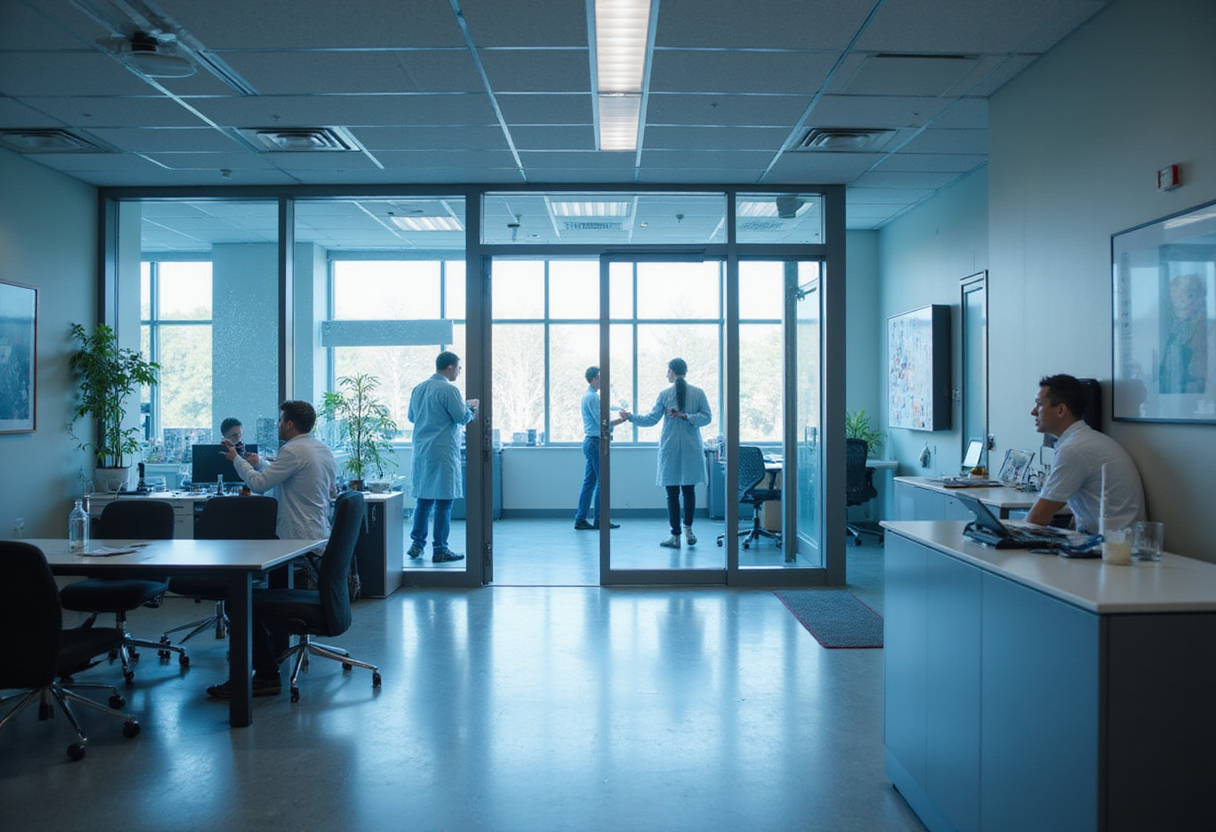
Oak Ridge National Laboratory has added a new building to its research portfolio: the Translational Research Capability, or TRC. The Knoxville News Sentinel has published a walkthrough of the facility, giving R&D managers and laboratory planners an early look at how the Department of Energy's largest multiprogram lab is configuring space for work that sits between basic discovery and deployment.
The name itself signals intent. "Translational" is the operative word, and in ORNL's portfolio it describes the gap between research that succeeds at bench scale and technology that survives contact with industrial conditions. Labs across the federal system have struggled to close that gap with legacy facilities, many of which date from eras when cleanroom standards, power density, and collaboration norms were different. A purpose-built structure is one of the few levers an institution can pull to change how its researchers physically work.
For R&D managers watching ORNL's capital plans, a new facility raises practical questions the walkthrough invites readers to assess. How much of the floor plate is dedicated to wet lab versus dry instrumentation space? What provisions exist for co-locating external partners — the industry and university collaborators that translational programs depend on for scale-up and licensing? And does the building's layout shorten the distance, literal and organizational, between modeling teams and experimental teams?
ORNL's campus already hosts several marquee instruments, including leadership-class computing and neutron scattering user facilities, so any new capability will be judged against that baseline. The TRC's value proposition depends on whether it gives researchers something the existing buildings cannot: flexibility to reconfigure programs quickly, capacity for pilot-scale hardware, or environmental controls suited to materials work that older halls were never designed to support. Facility tours of this kind rarely settle those questions definitively, but they do show what the institution chose to fund and where it placed its bets.
There is a budget logic here as well. Federal lab construction is multi-year money, committed long before a building opens, and the decisions embedded in a new facility — bay depths, floor loading, utility rough-ins — effectively lock in research directions for decades. Managers evaluating their own capital requests can read ORNL's choices as a data point on what a national lab believes translational work will require: adaptable space, room for partner engagement, and infrastructure that does not force scientists to redesign experiments around the building.
It is worth applying the same scrutiny to a facility announcement that one would apply to a vendor claim. A ribbon-cutting does not establish throughput, and architectural renderings do not measure scientific output. The concrete test will come in the years after opening: which programs move in, how much external funding follows them, and whether the building demonstrably shortens the path from laboratory result to licensed or deployed technology. ORNL's public user facilities publish utilization data, and over time the TRC's occupancy and partner activity will indicate whether the investment is performing.
The Knoxville News Sentinel's walkthrough is, in that sense, a first checkpoint rather than a verdict. It shows the hardware and the layout as delivered. What it cannot show is the pipeline of work that will run through the building, and that is the number — however it is eventually counted — that R&D decision-makers should watch.
ORNL has not yet detailed the full roster of research programs that will occupy the Translational Research Capability, so the coming months should bring announcements on tenant groups, first projects, and any user-access arrangements, which will clarify the facility's actual role in the lab's research portfolio.
via Google News: Translational research (Source)
Filed under
- oak-ridge-national-laboratory
- translational-research
- national-labs
- r-d-facilities
- doe
More from Priya Raman
References
- ORNL Opens New Translational Research Capability Facility
- ORNL takes six FLC technology transfer awards in a single year
- NJIT Opens 25,000-Square-Foot Translational Research Center at NEST
- NJIT opens 25,000 sq ft translational research center at Kenilworth NEST campus
- Science|Business Insider: Competitiveness Push Rests on Tech Transfer