Proceedings · Session S-483 · filed September 29, 2026
Translational ScienceSession paper
ORNL Opens New Translational Research Capability Facility
Oak Ridge National Laboratory has opened a Translational Research Capability facility, adding applied-research space aimed at moving bench-scale work toward industrial deployment.
By Rebecca Stone2 min read497 words
Summary
- ORNL has opened a new Translational Research Capability facility at its Oak Ridge, Tennessee campus.
- The Knoxville News Sentinel published an inside look at the new building.
- The facility is intended to move laboratory research results toward deployable, industrially relevant technologies.
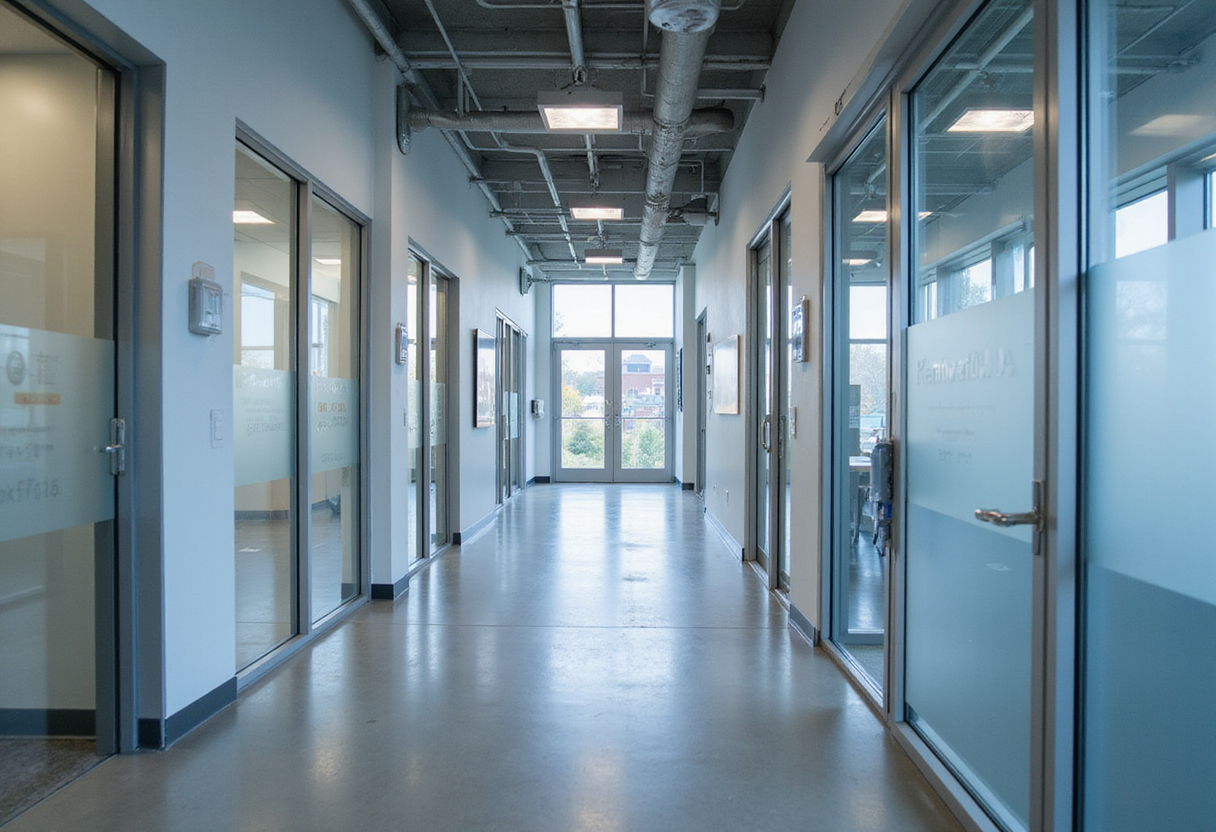
Oak Ridge National Laboratory has opened its new Translational Research Capability, a facility designed to shorten the distance between bench-scale discovery and deployable technology at the Department of Energy's largest science and energy laboratory.
The Knoxville News Sentinel was granted a look inside the new building. The tour marks the facility's arrival as a physical addition to ORNL's research infrastructure in Oak Ridge, Tennessee, and signals where the lab's management expects applied research capacity to grow.
The name itself states the intent. "Translational" is a term more often associated with clinical medicine, where it describes the pipeline from laboratory finding to approved therapy. In the national laboratory context, it refers to the equivalent stage in energy and materials research: taking results produced under controlled conditions and hardening them for industrial-scale demonstration, manufacturing integration, or field deployment.
That stage is a known choke point in the federal R&D portfolio. Projects frequently clear peer-reviewed science hurdles but stall when they need pilot-scale equipment, flexible floor space, or engineering support that does not fit within a disciplinary program's budget lines. Facilities labeled as translational are one institutional answer: they provide shared space and instrumentation where cross-program teams can scale work without each project carrying the full capital cost.
For ORNL specifically, the addition matters for portfolio reasons. The laboratory already operates a portfolio of user facilities and mission programs spanning materials, neutrons, computing, and manufacturing. A translational building slots in downstream of those capabilities, giving industry partners and internal teams a place to mature technologies that have outgrown laboratory bench setups but do not yet meet the readiness bar for private investment.
The timing also tracks with federal priorities. Congress and DOE have pressed laboratories in recent years to demonstrate technology transfer outcomes — licenses, cooperative research agreements, startups — rather than publication counts alone. New applied-research space is one visible response to that pressure, and the Knoxville News Sentinel's access suggests ORNL wants the regional business and research community aware of it.
What the reporting does not yet establish, and what R&D managers evaluating partnerships should watch for, is the specific instrument list, the initial project roster, and the funding line behind the construction. Translational claims, like vendor performance claims, deserve interrogation: the measure of a facility of this kind is not its square footage but the number of technologies that move through it to demonstrated deployment, and on what timeline.
ORNL has a track record its managers will presumably point to as a baseline — the lab anchors one of the DOE complex's broadest applied energy portfolios. The new capability now needs occupants, milestones, and eventually published throughput figures.
Expect ORNL to detail the facility's first tenant programs and industrial partnerships as it moves from opening to operation, and expect those announcements to indicate which parts of the lab's portfolio — energy storage, advanced manufacturing, or materials — management has decided merit priority for translation first.
via Google News: Translational research (Source)
Filed under
- ornl
- doe-national-laboratories
- technology-maturation
- applied-research
- research-facilities
More from Rebecca Stone
Show full bio
Market editor covering marketplaces and e-commerce at Hypothesis Wire.
80 articles
References
- ORNL opens Translational Research Capability, its newest facility
- NJIT opens 25,000 sq ft translational research center at Kenilworth NEST campus
- Utah Plans Translational Research Building for Mental Health
- Georgia Health Landscape proposes scalable model for translational research
- Weizmann Institute builds translational unit beyond tech transfer