Proceedings · Session S-234 · filed October 9, 2026
Corporate & Industrial R&DSession paper
Nonwovens Institute and Oerlikon Nonwoven Team on Meltblown Lab Work
The Nonwovens Institute and Oerlikon Nonwoven have announced a cooperation on meltblown laboratory technology, pairing academic pilot research with industrial process equipment.
By Sophie Lindqvist3 min read562 words
Summary
- The Nonwovens Institute (NWI) and Oerlikon Nonwoven have announced a cooperation on meltblown laboratory technology.
- The partnership pairs NWI's academic research consortium model with Oerlikon's industrial meltblown equipment platform.
- No financial terms, duration or exclusivity details were disclosed in the announcement.
- Meltblown technology produces micron-scale fiber webs used in filtration media, medical barriers and absorbent applications.
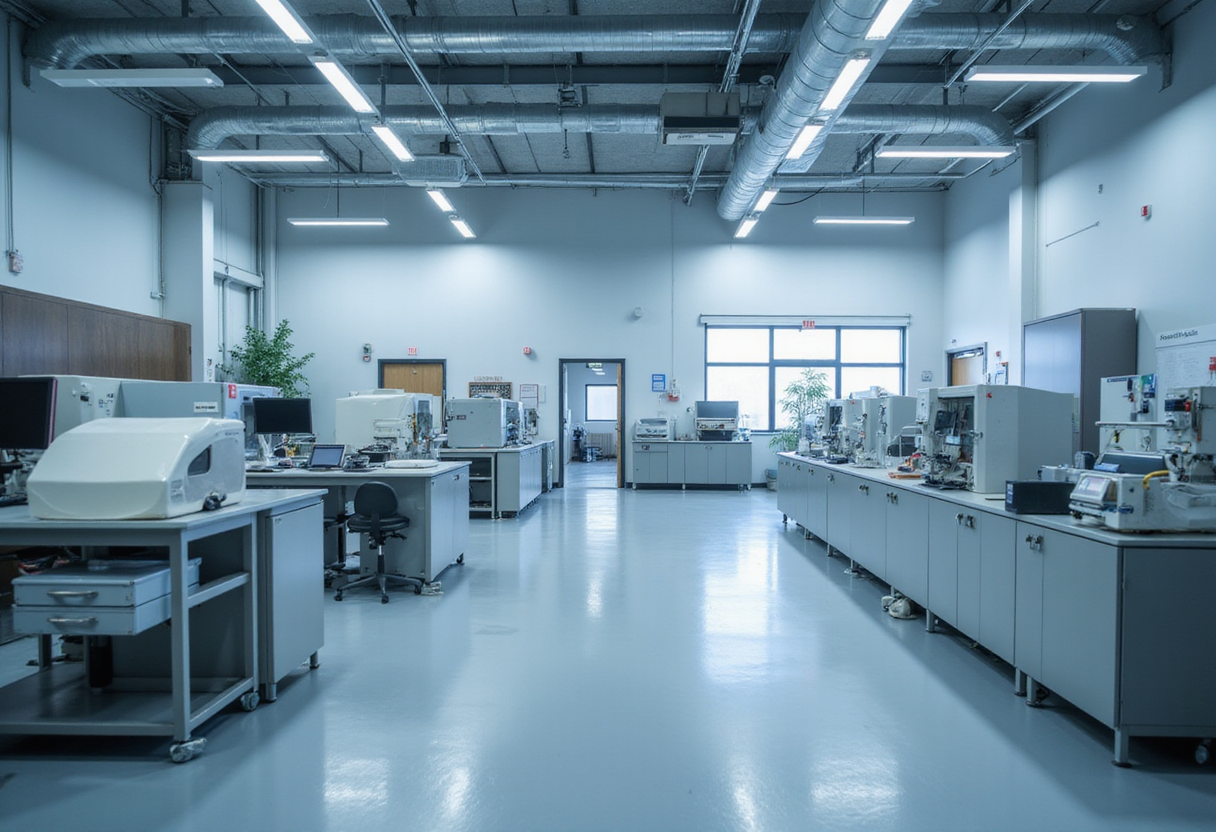
The Nonwovens Institute (NWI) and Oerlikon Nonwoven have entered a cooperation on meltblown laboratory technology, the two organizations announced via Textile World, linking one of the industry's leading academic research centers with a major equipment supplier's process platform.
Details of the arrangement — its duration, financial terms and any exclusivity provisions — were not disclosed in the announcement. What is clear is the scope: the partners will work together on meltblown technology at laboratory scale, the process that produces the fine-fiber nonwoven fabrics used in filtration media, medical barriers and absorbent applications.
Why meltblown, and why at lab scale?
Meltblown extrusion produces fibers in the micron and sub-micron range by driving molten polymer through a die with high-velocity hot air. The resulting webs deliver filtration efficiency that carded or spunbond materials cannot match, which is why the process became a bottleneck point during the pandemic-era surge in mask and respirator demand.
Laboratory-scale meltblown lines solve a specific problem for R&D managers: full production lines run at widths and throughputs that make small-batch polymer trials expensive, while off-line web sampling cannot reproduce the aerodynamics and quenching conditions that determine fiber diameter distribution. A lab platform lets researchers iterate on polymer formulations, process parameters and web structures before committing line time or capital.
For NWI, which operates as an industry-focused research consortium based at North Carolina State University, the cooperation adds a vendor-side technology partner to its existing pilot infrastructure. For Oerlikon Nonwoven, the German-based machinery supplier, it provides a route into academic evaluation work and early exposure to formulations and applications under development at member companies.
What the cooperation does not yet specify
The announcement, as reported, names the partners and the technical field but leaves open several questions that determine practical value for research teams:
- Which specific laboratory equipment Oerlikon will supply or co-develop at NWI facilities
- Whether member companies of NWI gain access to the technology, and on what terms
- Whether joint development results will be published, patented or held as trade secrets
- Any timeline for first outputs or milestones
Procurement and portfolio managers tracking nonwovens capacity will want those answers before treating the partnership as a signal about Oerlikon's next-generation meltblown systems or NWI's service offerings to industrial members.
The commercial backdrop
Oerlikon Nonwoven competes in a meltblown equipment market that expanded sharply after 2020, when filter-media makers worldwide rushed to add capacity. Much of that added capacity now faces utilization questions as mask demand normalized, pushing equipment suppliers toward research collaborations, smaller-format systems and process differentiation rather than volume sales.
NWI, for its part, has positioned itself as the neutral ground where fiber producers, converters and brand owners can test ideas without committing to a single supplier's platform. A bilateral technology cooperation sits slightly outside that neutral posture, and how the institute manages member access to Oerlikon-derived capabilities will shape perceptions among its broader membership.
Neither party has commented publicly beyond the announcement on the scale of investment involved or on target applications such as filtration grades, sorbents or medical fabrics.
The two organizations say further specifics will emerge as the laboratory cooperation progresses, giving nonwovens R&D teams a concrete marker to watch: which equipment lands at NWI, and which members line up first to run trials on it.
via Google News: Laboratory technology (Source)
Filed under
- meltblown
- nonwovens
- filtration
- laboratory-equipment
- industry-academic-partnership
More from Sophie Lindqvist
Show full bio
Correspondent covering business strategy at Hypothesis Wire.
90 articles
References
- Polystyrene Labware, Including Petri Dishes, Can Be Recycled, Industry Report Says
- Fraunhofer IFAM Opens Electrolysis Prototype Centre
- Lab Waste Is Not Inevitable: Reduce, Reuse, Rethink
- Ball Mill Abrasion Turns 'Inert' Steel Into a Reactant
- Samsung Biologics MSAT Team Argues for Integrated Biologics Tech Transfer