Proceedings · Session S-327 · filed November 19, 2026
Lab Technology & MethodsSession paper
Liver kept alive 7 weeks ex-body as Sila lands $1B battery deal
A human liver survived seven weeks outside the body, Sila signed a $1B+ Panasonic anode deal backed by a $1.4B DoD loan, and Anthropic raised $81 billion.
By Tom Whitfield4 min read700 words
Summary
- Australian researchers kept a human liver alive ex-body for seven weeks vs the prior ~two-week record
- Sila's anode supply deal with Panasonic Energy could be worth over $1 billion; its factory has a $1.4B DoD loan
- Anthropic raised $81 billion at $83 per share in the biggest IPO ever, surpassing SpaceX
- China's NEO implant became the first invasive BCI approved beyond clinical trials in March
- IEA projects AI datacentres drive a 70% emissions rise by 2030
By Tom Whitfield
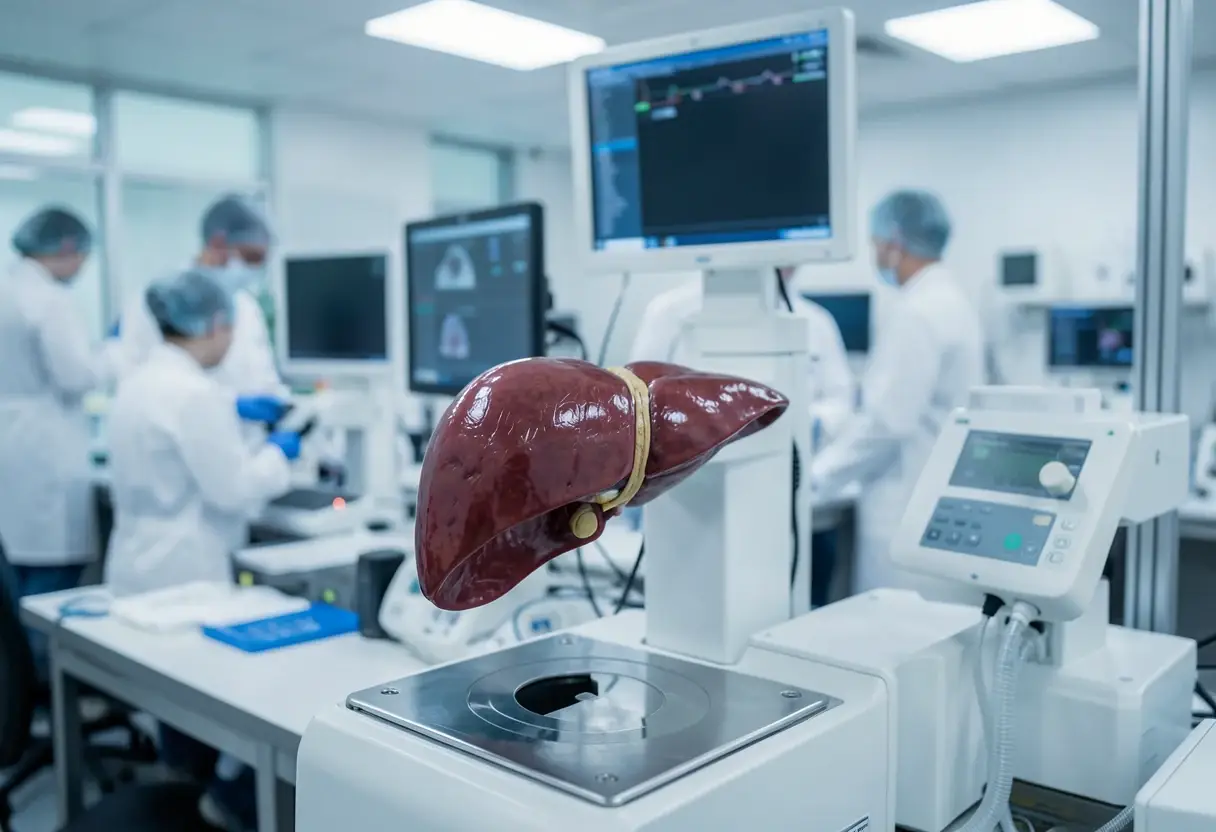
Researchers in Australia say they've kept a human liver alive on external life support for seven weeks, more than tripling the previous record of roughly two weeks. The system — automated pumps and sensors feeding the organ nutrients and blood while clearing waste — kept a donated liver viable outside the body for a duration no lab had previously demonstrated.
For R&D managers in biomedical engineering, that's a claim to interrogate. It's a single donated organ, described by the researchers themselves, not a peer-reviewed cohort. But if the perfusion platform holds up across repeated runs, the implications are concrete: longer windows for organ repair, wider logistical reach for transplantation, and a technical base for work on grown organs and even artificial wombs, which some groups in the field are already exploring.
What does the battery deal signal?
The same week brought rare positive news for US next-generation batteries. Sila has signed a supply agreement with Panasonic Energy for silicon-carbon anode material worth potentially more than $1 billion. The deal underwrites Sila's production scale-up and could push smaller, lighter batteries to market.
The financing tells its own story. Sila's factory is backed by a $1.4 billion loan from the Trump administration's Defense Department — a signal that battery investment in the US is now driven more by geopolitics than by the energy transition. Portfolio planners reading this deal should note the shift: defense-linked capital is replacing climate framing as the funding channel for advanced energy materials.
Anthropic's $81 billion IPO tops SpaceX
Anthropic raised $81 billion in the largest stock-market debut on record, eclipsing SpaceX. Priced at $83 per share, the IPO arrives amid new safety concerns about the company's AI advances, and commentators warn its stated mission could clash with shareholder interests. Its post-debut performance is now the market's live test of the AI boom.
The quote of the week captures the mood. Philosopher Thomas Nagel, professor emeritus at NYU, told Wired: "Here are some of the smartest people on the planet being completely idiotic" — his objection to Anthropic granting its Claude model more independence just as the company went public.
What else moved?
- China and Nvidia chips: Beijing is reportedly seeking Nvidia chips for AI-powered weapons, circumventing US export controls. Alibaba reportedly tapped Nvidia to support a military-linked lab.
- US funding cuts abroad: America has slashed funding for biomedical science overseas while weakening oversight of foreign grants.
- AI datacentre emissions: The IEA warns AI datacentres are set to drive a 70% rise in emissions by 2030, with the US and China turning to fossil fuels to power them.
- European Commission cyberattack: A major attack may have exposed large amounts of staff personal data.
- Chinese AI disclosure: The Trump administration is weighing a rule forcing US firms to disclose their use of Chinese AI models.
- Ukraine's relay drones: Kyiv struck Putin's bridge using relay drones to bypass Starlink limits; Musk denies claims about restrictions.
China approves the first invasive brain chip
In Henan province last October, Dong Hui — paralyzed from the neck down for six years after a car accident — slowly wrote his name, "Thank you," and the date. He was holding the pen with his mind, via a brain implant called NEO.
In March, NEO became the world's first invasive brain-computer interface approved for use beyond clinical trials. The milestone is expected to accelerate China's bid for global leadership in brain implants, a race in which regulatory first-mover advantage now sits outside the US. Neuralink and its Western rivals face a competitor that has cleared the commercial-approval gate first.
Elsewhere: Grand Theft Auto 6 scored 99 out of 100 on Metacritic, the best-reviewed game ever; a new underwater research station staffed by aquanauts aims to protect Florida's coral reefs; and MIT Technology Review's latest AI Hype Index tracks AI's spread across literary prizes, cyberattacks, and a Grok-ified Odyssey. How the liver perfusion platform performs beyond a single organ — and whether Sila's anodes ship on schedule — will say more about both fields than any announcement this week.
via newscientist.com (Original)
Filed under
- liver-perfusion
- organ-preservation
- biomedical-engineering
- silicon-carbon-batteries
- brain-computer-interfaces
More from Tom Whitfield
Show full bio
Senior reporter covering technology and product news in research and development at Hypothesis Wire.
280 articles
References
- Sydney team reports seven-week human liver perfusion record
- Pig Kidneys Revived After a Year at -150 °C in Cryopreservation First
- QuantumScape Claims Minutes-Long Ceramic Firing as Solid-State Race Tightens
- DARPA Bets $73 Million on Shelf-Stable Blood for 2029 Deployment
- DOE launches four-lab BattMan accelerator to de-risk battery scale-up