Proceedings · Session S-962 · filed November 17, 2026
Corporate & Industrial R&DSession paper
UCL–AstraZeneca Hybrid Model Cuts Lactate Prediction Error by 30%
A UCL–AstraZeneca hybrid model cuts lactate prediction error by 30% and detects the lactate switch at day 5, giving CHO process engineers time to avert batch failure.
By Rebecca Stone3 min read686 words
Summary
- Hybrid model cut RMSE by ~50% for glucose and ~30% for lactate versus a baseline model at 88% accuracy
- pH-based soft sensor detects the lactate switch at around day 5 of a fed-batch CHO run
- Model trained on ten runs: five back-metabolism, three evaluation, two lactate run-away scenarios
- Developed by UCL researchers Li Qin and Stephen Goldrick with AstraZeneca, published in Biotechnology and Bioengineering
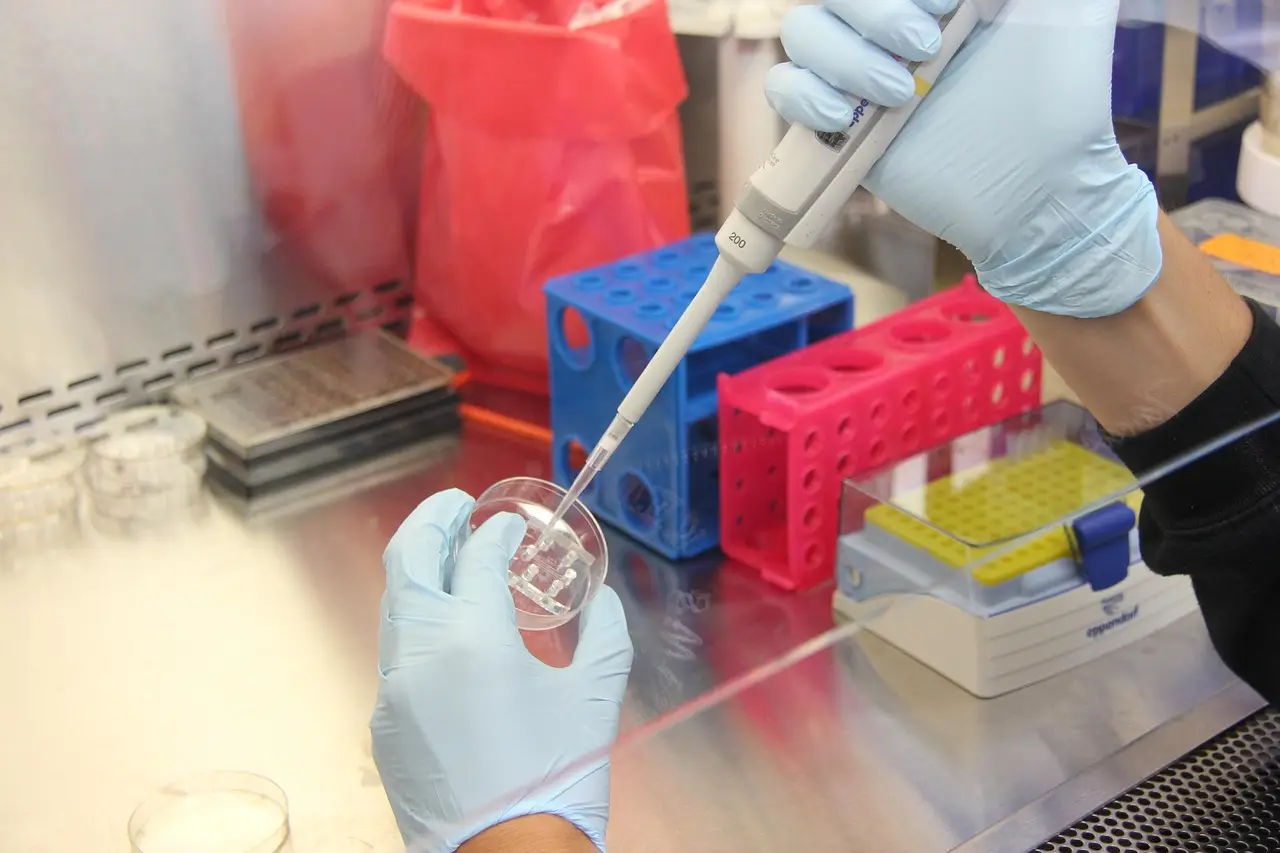
A hybrid model of lactate metabolism developed at University College London with AstraZeneca reduced root mean squared error by roughly 50% for glucose and 30% for lactate predictions compared with an initial model that achieved 88% accuracy. The work, published in Biotechnology and Bioengineering, targets one of the most persistent sources of batch failure in monoclonal antibody manufacturing: lactate run-away.
The team, led by principal investigator Li Qin, PhD, a postdoctoral research fellow, and Stephen Goldrick, PhD, associate professor of digital bioprocess engineering at UCL, built a hybrid mechanistic-data-driven model. That term describes a mathematical structure in which equations derived from biological mechanism are combined with parameters fitted to measured process data. The model predicts viable cell density, monoclonal antibody, glucose and lactate concentrations in real time during mammalian cell culture.
For biopharmaceutical manufacturers, the tool offers a route to predicting batch-to-batch variability and failing runs early in the process.
Why does the lactate switch matter?
In fed-batch cultures of Chinese hamster ovary (CHO) cells — the workhorse cell line for antibody production — cells normally switch at some point from producing lactate to consuming it, a behavior called back-metabolism. When that switch fails, the culture enters lactate run-away, in which lactate keeps accumulating.
"This model addresses a key industrial challenge," Goldrick told GEN. "In fed-batch CHO cultures, cells normally switch from lactate production to lactate back-metabolism. If they do not, the culture goes into lactate run-away, which can cause batch failure or a significantly lower titer. This switch is poorly understood and rarely controlled."
The consequences are financial as much as scientific. A batch lost to lactate run-away wastes weeks of bioreactor time and feed material. Early detection gives process engineers a window to intervene.
How does the detection work?
The model uses pH as a soft sensor — an online measurement used to infer a variable that is not directly measured — to detect whether a given run will undergo back-metabolism.
"Our model uses pH as a soft sensor to detect early, at around day 5, whether the cells will undergo lactate back-metabolism," Goldrick said. "This information could be built into the control strategy, so the process can be adjusted to avoid lactate run-away."
A day-5 signal in a typical 14-day fed-batch leaves roughly two-thirds of the run in which feeds and control parameters can be adjusted.
What is novel in the equations?
The researchers describe the novelty as three-fold:
- New kinetic equations describing CHO cell growth and death dynamics
- New equations for lactate production and consumption that capture metabolic transitions under varying process conditions
- Adaptive kinetic updating integrated with the lactate-switch detection algorithm, incorporating online and offline measurements dynamically
Training drew on online data — pH values, glucose flow rates and other nutrient feeds — combined with historical measurements of glucose, lactate and mAb concentrations plus cell densities from random runs. The dataset comprised five runs that switched from lactate production to consumption, three runs used to evaluate predictive performance, one run exhibiting lactate run-away, and one external run-away scenario.
This stratification let the team identify which parameters could be predicted accurately from online data alone and which highly variable parameters required fine-tuning from both real-time and historical data. "This targeted strategy significantly reduces model update time compared to full recalibration, while maintaining predictive accuracy," the authors note.
How far can ten runs carry the model?
Ten training runs is a small number, and the researchers acknowledge this limitation. Within those runs, however, predicted values closely matched measured values.
The evidence base is modest in another respect: the run-away behavior, the failure mode the model is designed to catch, appears in only two of the ten runs. Whether the switch-detection algorithm holds up across cell lines, scales and media formulations remains untested in the published work.
The team's next steps extend the measured outputs to amino acid consumption, ammonia accumulation, osmolality dynamics and product quality attributes — moving the model from a metabolite monitor toward a fuller digital twin of the culture.
via analyticalsciencejournals.onlinelibrary.wiley.com (Original)
Filed under
- biopharmaceutical-manufacturing
- cho-cell-culture
- lactate-metabolism
- hybrid-mechanistic-models
- soft-sensors
More from Rebecca Stone
Show full bio
Market editor covering regulation, policy and their impact on research and development at Hypothesis Wire.
274 articles
References
- Sungkyunkwan Team at 80% on Hybrid Digital Twin for CHO Cell Bioreactors
- 20,000 Simulated Data Points Plus 65 Bioreactor Runs: A Case for Multi-Fidelity ML in Bioprocessing
- Stable Pools Move Biologics Off the Clone-First Path
- Facility Footprint, Not Process Type, Drives Antibody Plant Energy Use
- Label-Free Electrical Signals Could Give Bioprocess Engineers Earlier Warnings of Failing Cultures