Proceedings · Session S-965 · filed November 6, 2026
Lab Technology & MethodsSession paper
TU Delft metamaterial bridges bone-tendon material divide
TU Delft engineers 3D-printed a hybrid metamaterial whose twinned unit cells bridge strut and sheet lattices, surviving fatigue tests and pointing to stronger implants.
By Tom Whitfield3 min read698 words
Summary
- TU Delft researchers published a bone-tendon-mimicking metamaterial in Nature Communications.
- Twinned unit cells bridge strut-based lattices and triply-periodic-minimal-surface sheet structures.
- Mechanical, fatigue and stiffness tests confirmed robust interfaces under different loads.
- Micro-CT imaging showed printed structures matched computational designs with no unintended voids.
- In vitro monoculture and co-culture cell studies are underway with promising preliminary results.
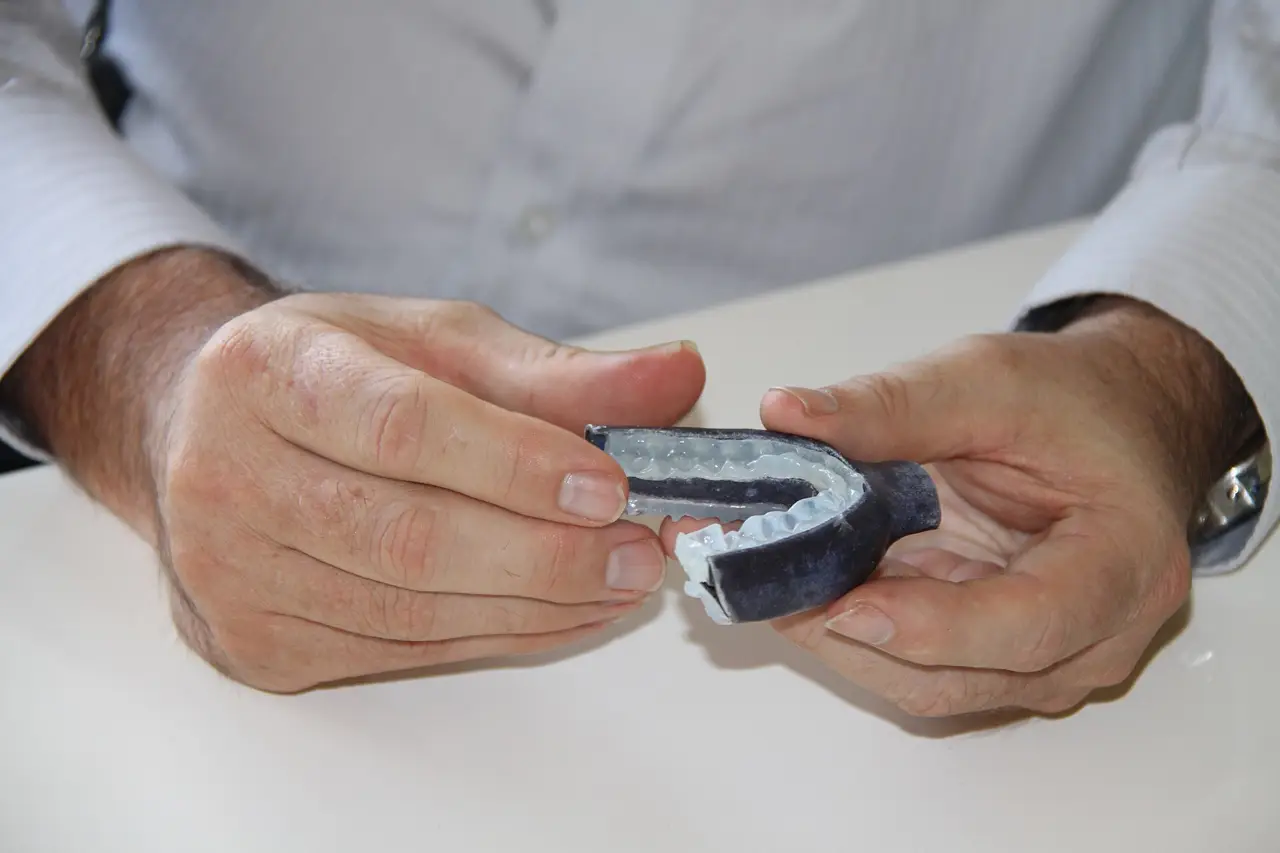
Engineers at Delft University of Technology have built a 3D-printed metamaterial that transitions smoothly between two fundamentally different lattice architectures, mimicking the natural junction where stiff, porous bone meets soft, fibrous tendon. The work appears in Nature Communications, and the team says its transitional interfaces survived mechanical, fatigue and stiffness testing under multiple load conditions.
That last point matters. Interfacing materials with wildly different properties has long been a sticking point in biomedical engineering, because bone is stiff and isotropic while tendon is much softer and highly anisotropic. Biomedical scaffolds meant to repair bone-tendon junctions — which weaken with age and can cause musculoskeletal pain or even disability — have struggled with exactly this mismatch.
"Reproducing the characteristics of both within a single architecture usually requires concessions that limit the performance of one or the other," says Mohammad J Mirzaali, who led the TU Delft study. "The main challenge was therefore not simply to design two different types of lattices but find a reliable way to connect them."
What did the team actually build?
The researchers started from two distinct classes of architected materials: strut-based lattices and sheet-based ones derived from triply periodic minimal surfaces. According to Mirzaali, the sheet-based structures deliver relatively high stiffness and load-bearing capacity, while the strut-based lattices offer greater geometric flexibility and can be tuned for more compliant, anisotropic mechanical responses — the tendon-like behaviour.
The problem is joining them. Prior approaches received little attention precisely because this is hard. "Directly connecting the two often creates weak interfacial zones in the composite that concentrate mechanical stresses, making it more likely to fail," Mirzaali explains.
The TU Delft team's answer is a computational strategy that identifies compatible geometries between the two structure families and inserts a transition region bridging them over a relatively short distance. The bridging relies on what the researchers call twinned unit cells — cells that share characteristics of both architectures and allow a gradual change from one to the other. The result resembles the graded natural bone-tendon interface rather than an abrupt boundary.
How was it validated?
The group 3D-printed several of the computer-generated designs and put them through mechanical testing. They evaluated failure mechanisms, the fatigue behaviour of the hybrid lattices, and how different connection strategies affected stiffness. Their conclusion: the transitional interfaces are robust under different loads.
They also checked fidelity. Micro-computed tomography (µCT) images showed the printed structures closely matched the computational versions, with no unintended voids visible in the examined regions — a non-trivial result for multi-architecture prints, where defects at zone boundaries are exactly where you'd expect them.
It's worth noting the caveats. The reported validation covers mechanical performance and geometric fidelity, not biological performance, and the team hasn't yet published in vivo data. The claim of robustness rests on lab-scale mechanical tests of printed samples, not on implanted devices.
Where does the work go next?
"Our work shows that we can design multi-zonal structures in which each region is optimized for a different function without being restricted to a single family of lattice architectures," Mirzaali tells Physics World. Hybrid biomedical scaffolds are one application he cites, "but the concept is more general and could be extended to a host of other areas where different regions in a component need contrasting properties."
For now, the Delft group is concentrating on biomedical uses and investigating how different cell types respond to the architectural transitions. The initial work uses in vitro monoculture and co-culture studies, which the team describes as showing promising preliminary results — an early-stage signal, not a clinical one.
The motivation, Mirzaali argues, is straightforward: "Musculoskeletal disorders are among the leading causes of disability worldwide, and improved methods for connecting hard and soft tissues could help advance future implants and tissue engineering strategies."
For R&D managers in medical devices and regenerative medicine, the study offers a design methodology — computational geometry matching plus twinned transition cells — that could transfer to any component combining stiff and compliant zones, from orthopaedic implants to soft robotics. Whether cell studies confirm biocompatibility of the graded interfaces is the next checkpoint to watch.
via tudelft.nl (Original)
Filed under
- metamaterials
- 3d-printing
- biomedical-scaffolds
- bone-tendon-interface
- architected-materials
More from Tom Whitfield
Show full bio
Senior reporter covering technology and product news in research and development at Hypothesis Wire.
239 articles
References
- Titanium metamaterial stays buoyant in seawater at 0.15% mass loss
- MIT Team Grows Steerable Blood Vessels Using Magnetic Forces
- Tissue Engineering Reaches the Clinic: FDA Approvals and First-in-Human Trials
- Applied Biologics Reports Ligament Regeneration Data for XWRAP
- Kyushu team reports self-docking flexible circuits with sub-100 μm actuators