Proceedings · Session S-124 · filed November 5, 2026
Translational ScienceSession paper
Tissue Engineering Reaches the Clinic: FDA Approvals and First-in-Human Trials
Engineered tissue reaches the clinic: Symvess holds FDA approval, EpiBone reports six-patient bone trial data, and Matricelf plans a 2027 first-in-human spinal cord study.
By Priya Raman3 min read670 words
Summary
- Humacyte's Symvess, an acellular tissue-engineered vessel, received FDA approval in December 2024, with shelf life extended to 36 months in September 2026.
- Matricelf's NewRal showed functional recovery in 80% of treated animals in pilot spinal cord injury studies, with a first-in-human program planned for 2027.
- EpiBone treated six patients in its first-in-human bone trial with zero product-related adverse events.
- Over 18,000 traumatic spinal cord injuries occur annually in the U.S., with about 310,000 patients living with the condition.
- Humacyte plans a supplemental BLA for hemodialysis use in the second half of 2026.
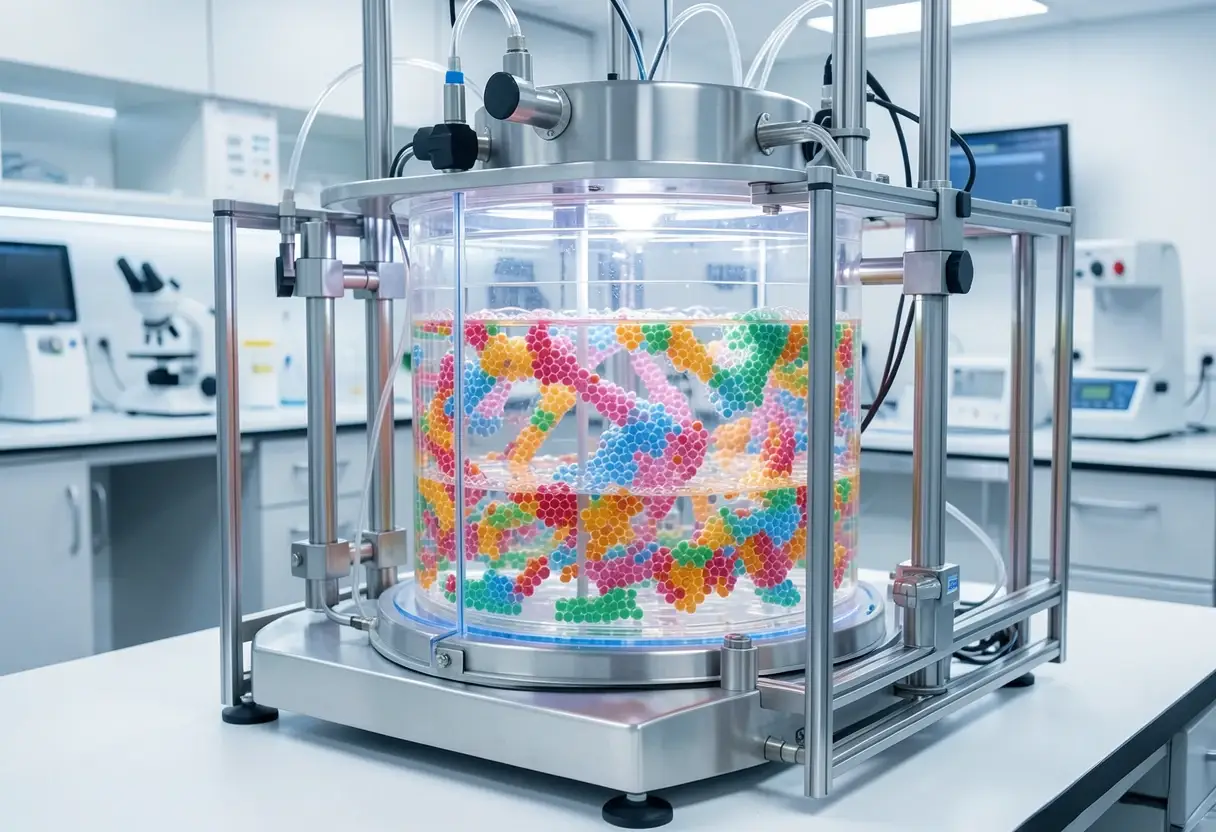
One engineered-tissue product, Humacyte's Symvess, holds FDA approval as a vascular conduit — granted in December 2024 — and in September 2026 the agency extended its shelf life from 18 to 36 months. That regulatory record anchors a field now moving from concept to clinic across five fronts: cardiac patches, bioprinted implants, spinal cord transplants, living bone grafts, and manufactured blood vessels.
Avery Therapeutics is developing an allogeneic cardiac patch for heart failure, a disease whose current drug arsenal, in the words of CEO Jordan Lancaster, PhD, "does slow progression of disease" but leaves the prognosis grim because "there are no therapies today that get to the root cause of heart failure, which is loss of functioning cardiomyocytes and fibrosis." The company describes its product as a "living band-aid": human iPSC-derived cardiomyocytes and fibroblasts embedded in a bioresorbable matrix, placed on damaged tissue to trigger a localized immunomodulatory response that recruits immune precursor cells and drives repair. Avery says it has validated the mechanism in preclinical models and solved manufacturing-scale, handleability, and cryopreservation hurdles. The late-stage preclinical company will target ischemic heart failure first.
What is happening in bioprinting?
CollPlant Biotechnologies, led by CEO Yehiel Tal, attacks the field's basic constraints — access to safe and reproducible biomaterials, vascularization, and scalable manufacturing — through plant-derived recombinant human type 1 collagen. "Because our collagen is bioidentical to human collagen and produced without animal or human tissue, it offers a consistent, scalable, animal-free building block," Tal said. Its BioFlex kit combines Collink.3D 50 with a biodegradable polymer and photoactive agents for digital light processing bioprinting. The company has also advanced commercial-size 3D-bioprinted regenerative breast implants through large-animal preclinical studies; the implants gradually degrade as the patient's own tissue regenerates.
How close is personalized spinal cord repair?
More than 18,000 people sustain traumatic spinal cord injuries in the U.S. each year, and roughly 310,000 patients live with the condition. Matricelf's NewRal combines patient blood-derived iPSCs with an extracellular-matrix hydrogel from the patient's omental tissue, assembled into 3D neural spheroid constructs containing electrically active neural cells. CEO Gil Hakim reports the dual-autologous design may reduce immune mismatch and the need for immunosuppression. In pilot efficacy studies in chronic spinal cord injury animal models, 80% of treated animals showed improved functional recovery and tissue regeneration. The company has completed GLP safety studies, advanced GMP manufacturing, and received FDA feedback on a first-in-human program planned for 2027.
Where do living bone grafts stand?
EpiBone grows personalized bone and cartilage from adult stem cells seeded onto natural bone matrix and matured in a bioreactor. "In our first-in-human bone trial, we treated six patients with zero product-related adverse events," CEO Nina Tandon, PhD, said. "Those six jaws are the thing I am proudest of." The company has also tested an injectable cartilage therapy for osteoarthritis in dogs and horses, reporting improvements over standard of care. Tandon frames manufacturing, not biology, as the decisive challenge: making living tissue reproducibly, at clinical grade, "is the one we have spent more than a decade on."
Why do acellular vessels matter?
Humacyte's ATEVs are grown from human vascular smooth muscle cells on a biodegradable scaffold, conditioned under pulsatile flow, then decellularized, leaving human collagen and extracellular matrix. After implantation, the patient's own cells repopulate the vessel. Symvess is approved for adults with extremity arterial injury needing urgent revascularization when an autologous vein graft is not feasible; a supplemental Biologics License Application for hemodialysis is planned for the second half of 2026. President and CEO Laura Niklason, MD, PhD, sees the field at an inflection point: "What's changing now is the shift toward manufactured, off-the-shelf regenerative products that have the potential to reach a large scale of patients." The next test is whether the rest of the pipeline — patches, neural transplants, and printed implants still in preclinical stages — can follow the vessel's regulatory path.
via s.w.org (Original)
Filed under
- tissue-engineering
- regenerative-medicine
- bioprinting
- fda-approval
- first-in-human-trials
More from Priya Raman
Show full bio
Staff writer covering money, funding and market shifts around research and development at Hypothesis Wire.
243 articles
References
- Stem cell entrepreneurs lobby FDA for regulatory path, citing peptide precedent
- ARPA-H Commits Up to $87 Million to Room-Temperature Cell Therapy Storage
- IPF pipeline heats up: Boehringer preps NDA, Refoxy raises $9.58M
- Delivery Vehicles, Not Payloads, Will Decide CGT Success, USP Scientist Argues
- Federal research funding delivered the cystic fibrosis 'miracle drug.' New rules may end the next one