Proceedings · Session S-972 · filed November 6, 2026
Physical Sciences ResearchSession paper
Solar Storm GLE 77 Breached Aviation Radiation Thresholds Unannounced
GLE 77, the strongest solar radiation storm in nearly 20 years, pushed radiation past ICAO thresholds over northern Britain with no aviation advisory issued, a University of Surrey study finds.
By Rebecca Stone4 min read747 words
Summary
- GLE 77 struck on 11 November 2025, the strongest solar radiation storm in nearly 20 years, beginning with an X5-class flare at 10:05 UTC.
- Balloon measurements above Lerwick, Shetland reached roughly 1000 times normal ground-level radiation background at up to 106,000 feet.
- Radiation over Lerwick passed ICAO 'severe' threshold at supersonic altitudes, yet no aviation advisory was issued.
- A London-to-New York flight during the storm recorded 46% above-normal radiation exposure.
- A 1956 event was about 50 times more intense than GLE 77.
- Airbus recently grounded around 6,000 aircraft to fix a radiation-induced fault.
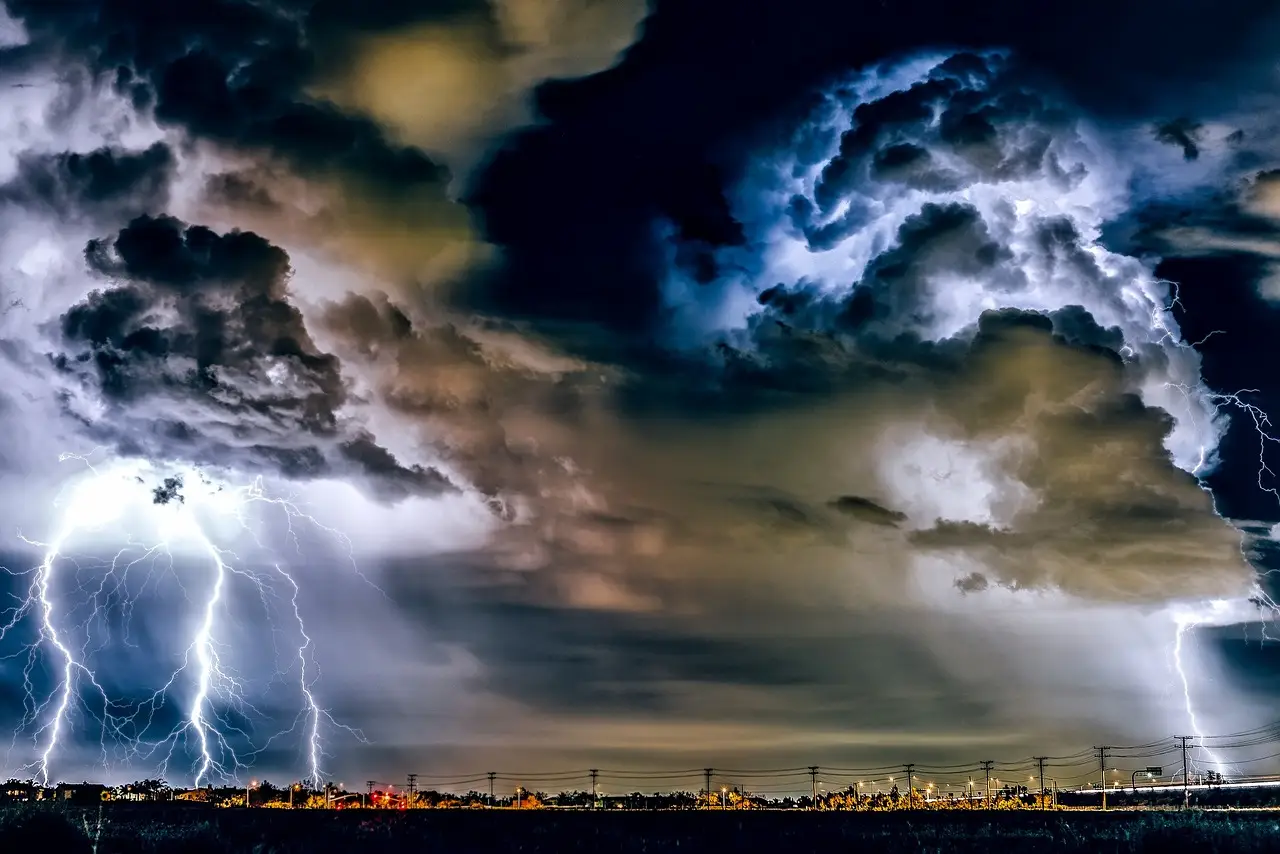
The strongest solar radiation storm in nearly 20 years pushed radiation past aviation safety thresholds high above northern Britain, and no warning was issued to aircraft. That gap between measured risk and operational alerting is the central finding of a study published in Space Weather and led by Fraser Baird and Ben Clewer of the University of Surrey.
The event, designated GLE 77, began at 10:05 UTC on 11 November 2025 with an X5-class solar flare and a coronal mass ejection (an eruption of plasma and magnetic field from the Sun). Particles arrived at close to the speed of light; ground monitors registered the rise around 10:15 UTC. Within the hour, the Met Office was launching weather balloons carrying radiation detectors from Shetland, the northernmost region of the UK.
Baird, a space weather researcher, said the scale surprised him. "Since I started studying them seven years ago, we've really only had little blips," he told Physics World. When he checked the Lerwick ground monitor in Shetland and found radiation more than double normal background, he knew it was time to get back to work.
How the team measured the storm
The researchers tracked GLE 77 through three independent data streams:
- four ground-based neutron monitors across the UK;
- weather balloons climbing to 106,000 feet;
- radiation monitors aboard two transatlantic passenger aircraft.
The balloon data produced the study's sharpest numbers. Above Lerwick, at altitudes higher than supersonic jets fly, radiation reached roughly 1000 times the normal ground-level background. Further south the effect faded fast: Camborne, at the UK's southern tip, recorded only a 12% increase.
Why did hotspots form, and why no warning?
Two mechanisms explain the uneven exposure. Earth's magnetic field shields less effectively near the poles. The rest comes from anisotropy, meaning the particles arrived from one region of the sky rather than evenly from all directions.
"It could be thought of as a beam of light from a torch being shone on the Earth," Baird explained. "The more anisotropic the event, the tighter the beam of light is." The magnetic field bends and distorts that beam, so nearby locations can receive particles from different parts of the sky, creating hotspots of elevated risk.
GLE 77 also produced two distinct radiation peaks rather than one. According to Baird, this suggests particle acceleration continued well after the visible solar flare had faded — a complication for any forecasting model built on flare timing alone.
Several hours after the peak, radiation over Lerwick passed the International Civil Aviation Organization's "moderate" threshold at business-jet altitudes and its "severe" threshold at supersonic altitudes. No aviation advisory followed. "For me, this is the main finding of the study and is really crucial," Baird said. "It shows us that the space weather alerts for aviation, which are still in their infancy, can be improved upon."
Ground Level Enhancements cannot yet be forecast. Forecasters rely on nowcasts assembled from live observations, and GLE 77 showed those nowcasts still miss altitude-specific and location-specific peaks.
What the in-flight data showed
A London-to-New York flight that departed during the storm recorded radiation exposure 46% above normal. That route runs at high northern latitudes, where Earth's magnetic field gives aircraft the least protection, and the researchers note that more flights now use such routes. A second New York flight, leaving about six hours later, registered no significant increase.
The aircraft data also arrived later in the event, after the most intense hotspots had passed. This is why the balloons, launchable more or less on demand, proved so valuable: they sampled the atmosphere during the peak.
What are the actual risks?
Passengers have little to fear from GLE 77 itself. Baird estimates that someone flying through the peak received an extra dose equal to about two additional flights. The larger concern is aircraft electronics, which radiation can disrupt; Airbus recently grounded around 6,000 aircraft to fix a radiation-induced fault.
By historical standards GLE 77 was modest — a 1956 event was roughly 50 times more intense. Concorde, which made the first GLE observation ever recorded from an aircraft, carried radiation monitors at all times. Baird would like every aircraft to do the same, especially supersonic ones.
His team is now working out how narrow the particle beam was, refining nowcasts, and installing more monitors on aircraft and balloons — so that when a stronger storm arrives, someone is watching from every height.
via icao.int (Original)
Filed under
- gle-77
- space-weather
- solar-radiation-storms
- aviation-radiation-safety
- radiation-monitoring
More from Rebecca Stone
Show full bio
Market editor covering regulation, policy and their impact on research and development at Hypothesis Wire.
234 articles
References
- 107 Seconds on a Spanish Mountain: Inside Eclipse Astronomer's Iron-Ion Hunt
- Four 23 m Cherenkov telescopes completed in La Palma
- AstroRad vest cuts simulated solar-storm dose by 60% for deep-space crews
- U.S. Moves to Upgrade Space-Based Nuclear-Blast Detection Sensors
- LLNL gamma-ray sensor en route to Phobos aboard Japan's MMX mission