Proceedings · Session S-921 · filed November 16, 2026
Translational ScienceSession paper
Remedy Robotics lands $62M to push remote thrombectomy toward trials
Remedy Robotics raised $62M after Toronto surgeons used its N1 robot on ten patients, finishing procedures nearly twice as fast as standard thrombectomy times.
By Sophie Lindqvist6 min read1,153 words
Summary
- Remedy Robotics raised US $62 million, partly from the University of California system, to fund clinical trials starting within a year.
- In September 2025, ten consented patients in Toronto underwent robot-assisted procedures completed nearly twice as fast as the current standard.
- Only about 1 in 10 patients eligible for thrombectomy receives one; 1 in 5 Americans lives more than an hour from a center offering it.
- The N1 system pauses all surgical action when round-trip latency exceeds 150 milliseconds.
- Remote surgeries in Australia or within the UC system are planned near the end of 2027.
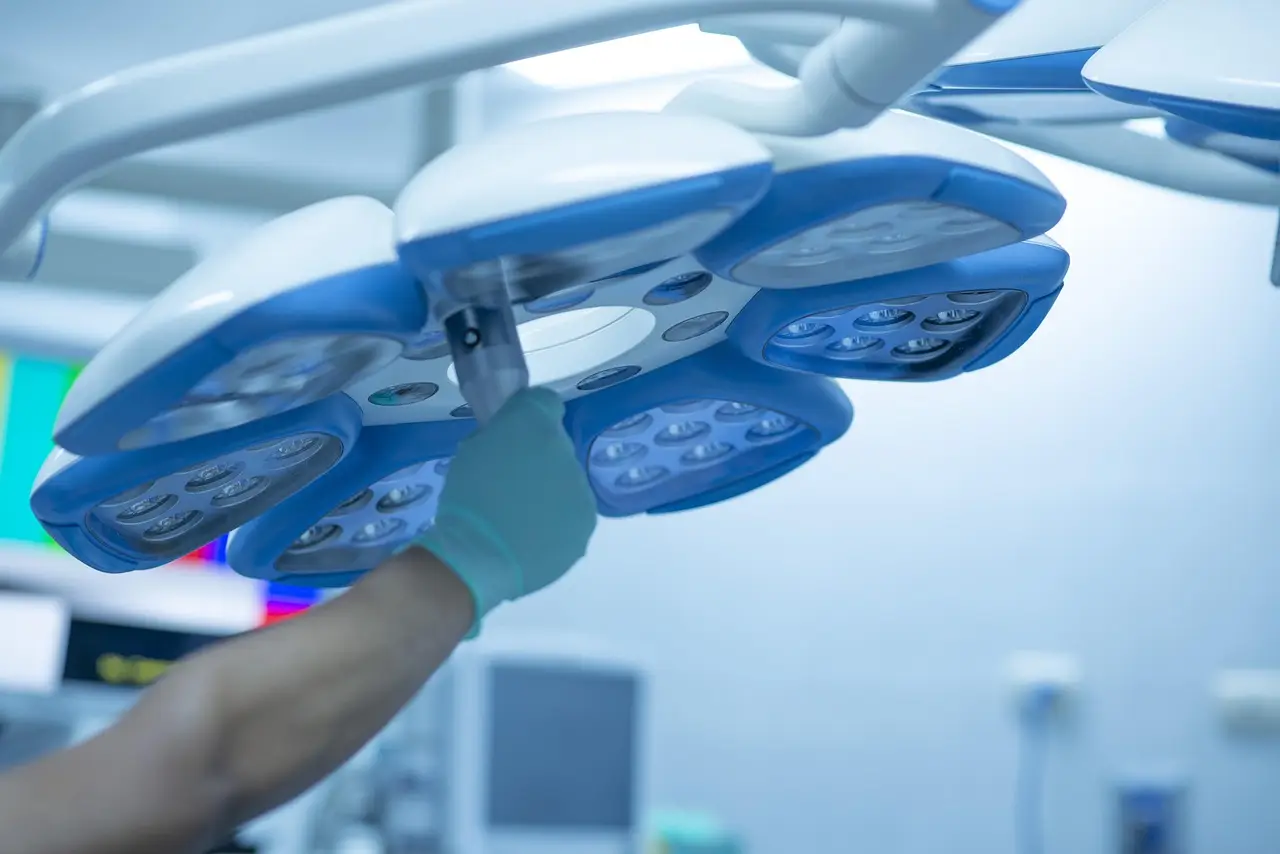
Remedy Robotics has raised US $62 million to fund clinical trials of its N1 telesurgery robot, months after neurosurgeons in Toronto used the system on ten consenting patients and completed angiogram procedures nearly twice as quickly as the current standard. A portion of the funding comes from the University of California system, which will host the first clinical studies within a year, according to CEO and cofounder David Bell.
The San Francisco company, founded by Bell and CTO Jake Sganga after they met at Stanford in 2019, is targeting thrombectomy — the mechanical removal of blood clots from brain arteries in acute ischemic stroke. Today, only about 1 in 10 patients eligible for thrombectomy receives one, according to figures cited by the company. Ischemic stroke affects at least 5 million people worldwide each year and ranks as the fourth leading cause of death in the United States.
Bell frames the problem in access terms. Rural and remote patients lose crucial hours in transfer to hospitals that can perform the procedure. One in five Americans lives more than an hour from a thrombectomy-capable hospital. Alaska's only two thrombectomy centers, both in Anchorage, leave more than half of the state's 739,000 residents out of range.
What did the Toronto test show?
In September 2025, Bell flew to Toronto for Remedy's first test in human patients. Ten patients had consented to nonemergency procedures. A neurosurgeon operating from a laptop treated six patients from an adjoining room, two elsewhere in the hospital, and two at a different hospital across town.
The procedures were a success, per Remedy's own press release, and were completed nearly twice as fast as the standard. Animal tests had previously suggested the robot collided less often with blood vessel walls and finished procedures faster than a human operator. The company counts no peer-reviewed patient outcome data yet; the trial measured speed and safety in a small, consented, nonemergency cohort.
"I cannot explain the relief," Bell said of the night before the first operation, which he barely slept through.
How does the robot work?
The N1 feeds a steerable catheter along a rail lined with seven motorized modules. Unlike standard thrombectomy, which relies on a guide wire that can twist unpredictably inside the body, Remedy's catheter bends via tiny external wires that tug its tip in any direction.
Two engineering choices stand out for lab and clinical workflow:
- A CT scan overlays the live X-ray feed, showing three-dimensional vessel routes that X-ray alone cannot display, since X-ray cannot see soft tissue.
- Markings on the catheter feed a computer-vision algorithm that tracks rotation, so a surgeon's "steer right" input on the 2D image translates into the correct physical motion without manual compensation.
Bell rejects the usual robotics marketing pitch. "Smoothness and precision are not clinical outcomes. Neither is a surgeon's ergonomics," he said. The outcomes he tracks are whether patients who would not otherwise receive thrombectomy get it, and whether the robot reduces vessel perforations — which occur in more than 1 percent of thrombectomy operations and are sometimes fatal.
Can the network carry remote surgery?
Telesurgery has a long history and a thin record. In 2001, the Lindbergh Operation removed a gallbladder over 6,000 km between New York and Strasbourg, safely and without complications — yet telesurgery never scaled. Companies, led by Intuitive after its 2003 merger with Computer Motion, built same-room robots instead. Roughly 22 percent of US surgeries now involve robotic assistance, and more than 2 million da Vinci procedures were performed in 2023 alone.
Momentum returned in summer 2025, when surgeons near Orlando removed a prostate from a patient 11,000 km away in Luanda, Angola, and Intuitive demonstrated cross-continental "telecollaboration" on a tissue model. India's SS Innovations is testing cardiac telesurgery, and Texas-based XCath has tested a steerable guide wire for thrombectomies in Panama. No company has won full regulatory approval for telesurgery, and no patient has been operated on remotely in the United States.
Remedy targets round-trip latency of no more than 150 milliseconds, below the roughly 200-millisecond average human reaction time. The system pauses all surgical action whenever latency exceeds that threshold. The founders say they have operated the system across the Pacific over a mobile hotspot, and that operators adapt to lag. "We've actually found that operators are quite resilient to latency," Sganga said.
Independent researchers caution on infrastructure. Mike Teodorescu of the University of Washington notes that experts treat 100 milliseconds as a safe threshold, and his team recently reported that many rural communities — and most countries — struggle to meet it. "It's an infrastructure problem," he said. In June, experts from five major robotics companies coauthored technical standards for "surgical-grade networks."
Where does the technology fit?
Brad Nelson, who develops surgical robots at ETH Zurich and is not affiliated with Remedy, coauthored a 2025 Science Robotics report arguing telesurgery will succeed first in emergency operations where patients cannot reach specialists in time — stroke, heart attack, fetal surgery. He sees vascular procedures as a comparatively safe proving ground: "If you have a hiccup, the nice thing about vascular procedures is nothing bad can happen other than the thing stops moving."
Neurologist Archit Bhatt of Providence Medical Group in Portland argues medium-size regional hospitals are the realistic target — they rarely offer thrombectomies but often have the staffing, CT scanners and patient volume to support one. Emergency physician Jasdeep Bahra of Kilifi, Kenya warns that telerobotics could concentrate expertise in rich cities and widen the skill gap, and says lower-income communities might benefit more if the system also trains on-site clinicians. Sganga says that mentorship model fits Remedy's mission.
Bell raises unresolved allocation questions of his own: what happens if two patients need the same remote surgeon simultaneously. "Is the person suffering a stroke in America necessarily more important than the person suffering a stroke in India? No," he said.
What comes next?
The first trials, within a year at University of California hospitals, will cover on-site elective procedures such as treating unruptured aneurysms before expanding to remote surgeries in Australia or within the UC system near the end of 2027.
Sganga insists the on-site work is not merely a stepping stone. "The remote solution — it's very flashy, it's very obvious what that patient need is — but in order to get there, we believe you have to solve a meaningful problem on-premise," he said. "Otherwise, doctors simply won't use the system."
Beyond speed and safety, the 25-person company will measure how quickly doctors learn the technique, how smoothly bedside interactions run, and how fast setup and draping go. If the trials deliver patient-benefit evidence and regulators accept remote operation, Remedy could become the first company to put an approved telesurgery platform into US stroke care.
via linkedin.com (Original)
Filed under
- telesurgery
- surgical-robotics
- thrombectomy
- clinical-trials
- stroke
More from Sophie Lindqvist
Show full bio
Correspondent covering money, funding and market shifts around research and development at Hypothesis Wire.
242 articles
References
- Half of digital health products now in production, Jabil survey finds
- NIH Awards Brown $26M for Third Phase of Advance RI-CTR
- USF Health Opens Institute to Bridge Eye Research and Care
- Recursion Targets H2 2027 Pivotal Trial After REC-4881 Cuts FAP Polyps 47%
- OHSU posts 2.2% margin and record $550M in research awards