Proceedings · Session S-542 · filed November 14, 2026
Translational ScienceSession paper
Six-million-person dataset yields strongest genetic risk score for glaucoma
A rebuilt polygenic risk score trained on six million people flags a ten-fold higher glaucoma risk in the top genetic decile, QIMR Berghofer and Flinders researchers report in Ophthalmology.
By Rebecca Stone3 min read632 words
Summary
- New glaucoma genetic test built on data from six million people, including ~300,000 with glaucoma, versus 8,000 cases in the 2020 version.
- People in the highest 10% of genetic risk were 10 times more likely to have glaucoma (Australians of European ancestry).
- Researchers estimate about half of those who develop glaucoma live most of their lives undiagnosed.
- Study led by Professor Stuart MacGregor (QIMR Berghofer) and Professor Jamie Craig (Flinders University), published in Ophthalmology.
- Next phase: improving accuracy in non-European populations and developing the test for scale and cost effectiveness.
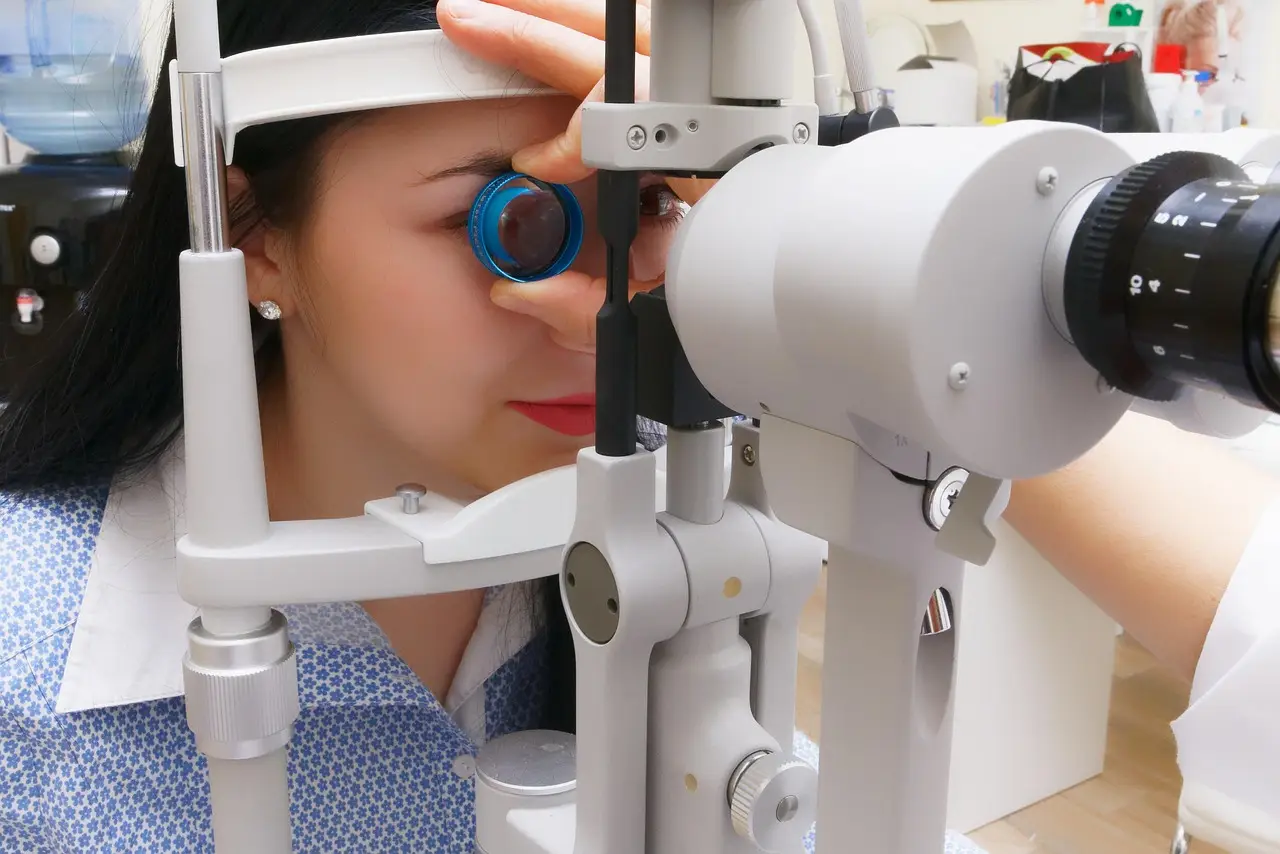
An international research team has rebuilt a genetic test for open-angle glaucoma on data from six million people, roughly 300,000 of them with the disease, and reports that individuals in the top 10% of genetic risk were ten times more likely to have the condition than the rest of the population. The study, led by Professor Stuart MacGregor, head of QIMR Berghofer's Statistical Genetics Laboratory, with Professor Jamie Craig's group at Flinders University and international collaborators, appears in the journal Ophthalmology.
The upgrade matters because of its scale. The previous version of the test, published in 2020, drew on data from about 8,000 people with glaucoma. The new version uses roughly 75 times that number of cases.
How does the test work?
The test rests on a polygenic risk score (a single number that combines the effects of millions of small genetic variations across the genome). Each variation contributes a small amount of risk on its own; summed, they stratify a population by likelihood of developing open-angle glaucoma, the most common form of the disease and the one responsible for the highest rate of blindness worldwide.
The headline figure comes from one population segment. "In Australians of European ancestry, people in the highest 10% of genetic risk were 10 times more likely to have glaucoma than everyone else," MacGregor said. He added: "To our knowledge, this is the strongest genetic risk prediction reported for any common complex disease."
That claim invites scrutiny. The ten-fold figure applies to a European-ancestry cohort, and MacGregor concedes the underlying limitation: "Most of the large genetic datasets available today come from people of European ancestry. Improving accuracy for all populations is an important priority for our next phase of work." R&D managers evaluating polygenic score platforms will recognize the pattern — predictive power built on one ancestry group often degrades when applied to others.
What would the test change in the clinic?
The clinical logic is a triage problem. Optic nerve damage from glaucoma produces no symptoms in its early stages, and the researchers estimate that around half of those who develop the disease live most of their lives undiagnosed, even in countries with strong access to care. By the time vision loss becomes apparent, deterioration is already underway and cannot be reversed.
A risk score applied before symptoms could redirect resources in both directions: earlier monitoring and intervention for high-risk individuals, and fewer unnecessary eye exams for those at low risk. "Glaucoma is very treatable if it is caught early, but many people are diagnosed only after permanent damage has occurred," MacGregor said. "A test like this can help direct eye care resources to the people who need them most."
For family members of patients and people showing early signs of disease, the score could also calibrate treatment timing. "This research has opened the door to a personalised approach to glaucoma risk analysis for the population, family members of patients, and those already showing signs of early stage disease," Craig said. "It will allow us to get the timing of treatments right to prevent vision loss."
What remains before screening-scale deployment?
Two gaps separate the published result from a general screening tool. First, ancestry coverage: the team must extend and validate accuracy in non-European populations before the score can be applied broadly. Second, economics: the researchers state that the next phase of work targets scaling and cost effectiveness, so the test could sit within general medical screening rather than specialist referral pathways.
The measured result to date is a ten-fold risk separation in a defined population, drawn from a six-million-person dataset. The projection — saving the sight of millions as they age — depends on the validation and cost work now getting under way.
via newatlas.com (Source)
Filed under
- polygenic-risk-score
- glaucoma
- genetic-testing
- genomic-datasets
- precision-medicine
More from Rebecca Stone
Show full bio
Market editor covering regulation, policy and their impact on research and development at Hypothesis Wire.
258 articles
References
- CBD Eye Drops Cut Intraocular Pressure in Glaucoma Mice, Study Finds
- Optogenetic therapy restores partial vision in 7 of 10 blind patients
- David Liu advances disease-agnostic gene editing at ESGCT
- Every One of 100,000 All of Us Participants Carries Drug-Response Gene Variants
- UniQure's AMT-130 shows 44% slowing at four-year Huntington's checkup