Proceedings · Session S-686 · filed November 9, 2026
AI & Emerging Tech in R&DSession paper
Dangote’s 700,000-bpd test raises Nigeria’s robotics question
After a 700,000-bpd Dangote test, Nigeria’s refining focus shifts to maintenance. Contact-capable robots could reduce hazardous entries, but pilots need safety and uptime evidence.
By Amara Osei5 min read946 words
Summary
- Dangote’s June licensor test processed 700,000 barrels per day against a 650,000-barrel nameplate.
- Dangote’s owners target 1.4 million barrels per day by 2028.
- Port Harcourt and Warri restarted briefly in late 2024, then shut again within months.
- NNPC signed an April MoU with two unnamed Chinese firms covering completion, operation and maintenance.
- The proposed robotics pilot would cover one process unit over 12 to 18 months.
By Amara Osei
Can Nigeria convert refining scale into reliable production?
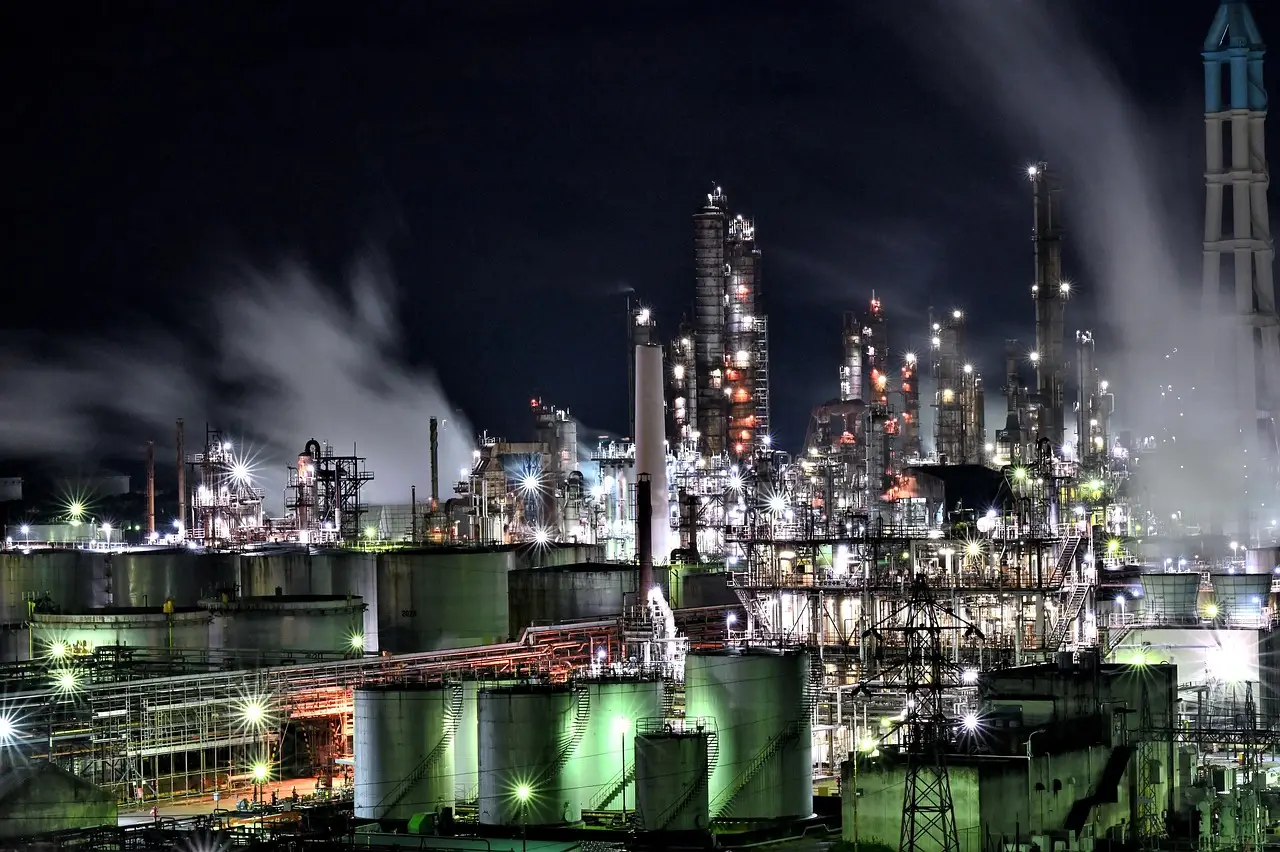
June’s licensor performance test at Dangote’s refinery processed 700,000 barrels per day, 50,000 barrels, or 7.7%, above its 650,000-barrel nameplate. The source does not name the licensor or give the test year, measurement protocol, or sustained output after the test.
Dangote’s owners discuss 1.4 million barrels per day by 2028, and modular refineries continue to come on stream across the Niger Delta. Writing in the source, Temitope Amosa calls that expansion the first time in a generation that Nigeria has refined at scale.
The state-owned system tells a less settled story. Port Harcourt and Warri restarted briefly in late 2024 and shut again within months, while Nigerian National Petroleum Company Limited admitted that running Port Harcourt before rehabilitation finished was “ill-informed and sub-commercial.”
In April, NNPC signed a memorandum of understanding with two Chinese firms for a technical equity partnership covering completion, operation and maintenance. The source gives no year for the MoU, identifies neither firm, and discloses no capital value, completion schedule or availability commitment.
Can new capacity survive its maintenance burden?
Refinery reliability, rather than another capacity target, is the immediate operating problem. Valves stick, flanges seize, insulation degrades unevenly and debris accumulates where drawings do not predict it, leaving technicians to work under heat and vibration with hydrocarbon and hydrogen sulphide exposure.
Inspection robots and drones already use thermal cameras, gas detectors and visual anomaly detection through process units worldwide, according to the source. Their output can identify a leak. A human still has to turn a seized valve without stripping it, insert a probe into a partly blocked port, or clean or coat an irregular surface.
The source names no deployments, detection rates or maintenance-time savings for those inspection systems. It therefore leaves the economic gap between spotting a fault and correcting one unresolved.
What would a contact-capable robot need to prove?
Amosa proposes learning-based robots that combine technician demonstrations, reinforcement learning in simulation, and real-time force and tactile sensing for pushing, gripping and twisting. A technician can demonstrate how a stubborn valve feels as it yields, allowing the machine to stop before it causes damage.
Unlike a fixed pre-programmed path, the model could adapt on the job to wear, corrosion and layout quirks in a decades-old Port Harcourt unit. Mounted on legged or wheeled platforms with force-sensitive arms, it could close a predictive-maintenance loop by finding a developing fault, performing an intervention and remaining under human supervision from a safe distance.
Each intervention would also generate data for the next task, in the proposed operating model. That remains a mechanism and business hypothesis: the source identifies no robot model, supplier, pilot site, sample size, error rate, intervention time, safety metric or funder.
The proposed benefits are operational projections rather than measured results. They include fewer entries into hazardous zones, faster and more consistent interventions, shorter turnarounds and less margin lost to refinery downtime, but the source supplies no baseline, cost model or quantified exposure reduction.
Field deployment also carries constraints that laboratory demonstrations can conceal. Equipment must receive certification for explosive atmospheres, robots can fail in tropical heat and dust in ways laboratory robots do not, and contact-rich manipulation remains immature.
Amosa therefore argues for focused pilots designed around Nigerian refinery conditions rather than importing a finished product built for another plant. The proposal identifies a relevant validation question, but it does not yet establish technical or commercial readiness.
Can contracts and local content build capability?
As NNPC negotiates operation and maintenance terms with partners and private operators plan expansions, Amosa says procurement specifications should require a roadmap for robotic inspection and contact-capable intervention. Those targets should connect to safety and uptime, the two outcomes he presents as the basis for adoption.
Amosa says the Nigerian Content Development and Monitoring Board should reward co-development of algorithms and hardware suited to tropical heat, dust and Nigerian process-unit layouts, rather than headcount alone, with local partners retaining intellectual property. Neither this proposal nor the contract recommendation specifies a budget, procurement schedule, technology partner or liability allocation.
The source leaves pilot funding undefined. It proposes pairing operators with researchers for one process unit, a defined set of tasks and a 12-to-18-month window, long enough to prove or disprove value while training the first local specialists, but names no sponsor or cost.
Amosa says research groups, including Nigerians abroad, are ready to collaborate. Universities could also build robot learning, force control and field robotics curricula with industry partners, although the source names no institution, cohort size or qualification program.
Could robots raise the skill level of refinery work?
Amosa frames the labor effect as elevation rather than elimination: robots take dangerous, repetitive physical tasks, while technicians supervise fleets, supply demonstrations and resolve exceptions no algorithm anticipates, preserving human judgement. He expects demand for Nigerian engineers with those skills but provides no headcount, wage, displacement or training-capacity estimate.
The case would advance if the first pilot measured hazardous-area entries, intervention consistency, turnaround duration, equipment availability and maintenance cost against a human baseline. The source mentions safety and uptime targets but leaves those decision metrics, comparator design and pass thresholds unspecified.
Amosa is a doctoral researcher in robot learning and dexterous manipulation at Purdue University’s Edwardson School of Industrial Engineering and MARS Laboratory. He states: “Robots that can touch, not just look, are no longer a laboratory curiosity.” The next test is whether funded pilots can convert that proposition into safer interventions and sustained refinery uptime.
via businessday.ng (Source)
Filed under
- refinery-robotics
- robotic-inspection
- predictive-maintenance
- contact-manipulation
- field-robotics
More from Amara Osei
Show full bio
News editor covering money, funding and market shifts around research and development at Hypothesis Wire.
232 articles
References
- Nigeria's Train 7 Hits 94% Construction as Lagos Roundtable Targets Gas
- NIPPS and Nigeria's University Tech Transfer Ambition
- Nigeria opens Czech tech-transfer talks to rebuild DICON capacity
- Nigerian society pledges technology transfer push in HVAC&R sector
- Nigeria's Tinubu Targets Technology Independence, Central Research Fund