Proceedings
Lab Technology & MethodsSession paper
Battery-free silicone patch matches clinical pulse monitors at 0.94 correlation
NTNU's OptoPatch, a battery-free silicone patch with a nanostructured diffraction grating, matched clinical pulse waveforms at 0.94 correlation in tests on 13 volunteers using ordinary smartphone cameras.
By Priya Raman3 min read609 words
Summary
- OptoPatch achieved a mean correlation of 0.94 with a clinical blood-pressure reference in tests on 13 volunteers.
- The patch contains no electronics, batteries or sensors; ordinary Samsung Galaxy A55 and iPhone 14 cameras at 60 fps captured the signal.
- It identified arterial reflected-wave features in 12 of 13 volunteers, a marker related to arterial stiffness.
- The work was published in the journal Advanced Materials by researchers at NTNU.
- The device is not yet clinically validated for diagnosing cardiovascular disease or measuring blood pressure.
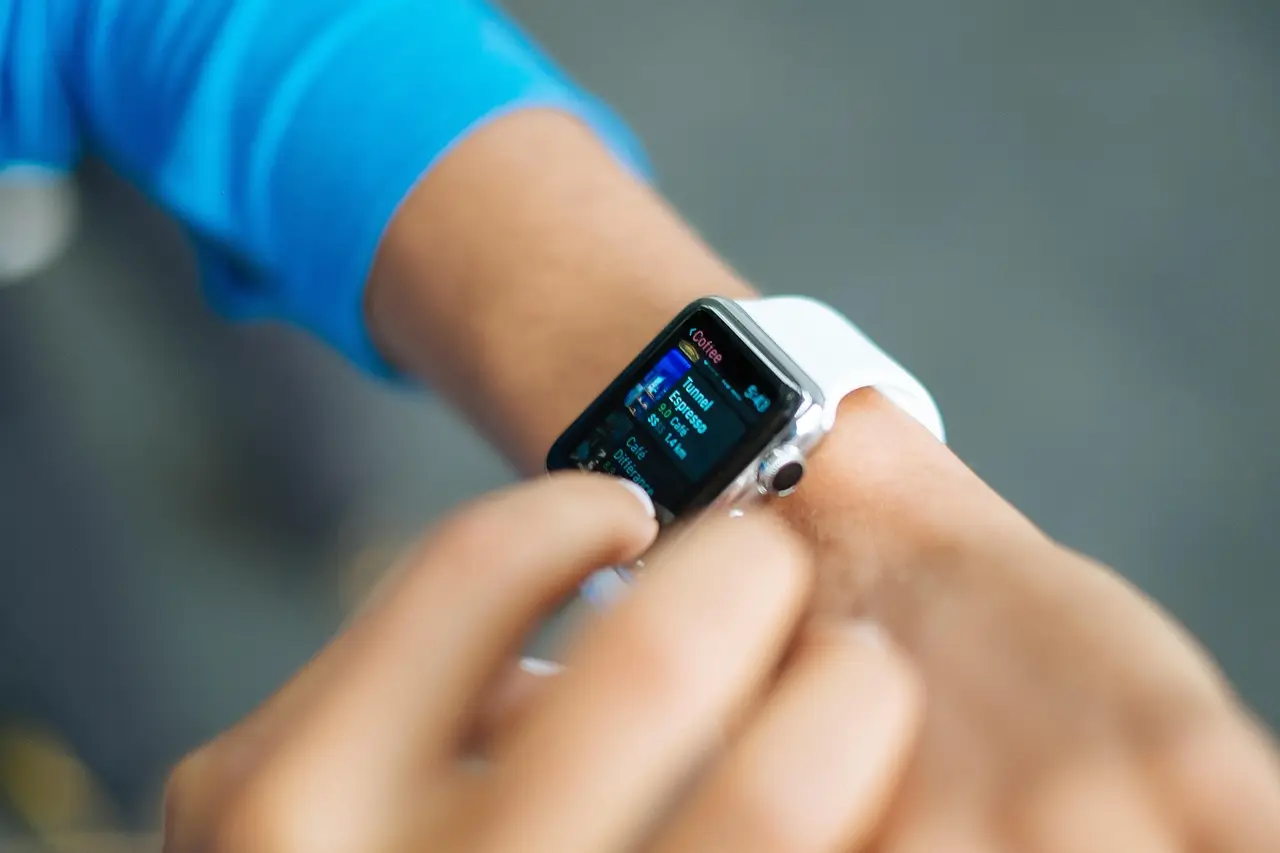
A thin silicone patch containing no electronics, batteries or sensors reconstructed arterial pulse waveforms with a mean correlation of 0.94 against a clinical continuous blood-pressure reference system, researchers at the Norwegian University of Science and Technology (NTNU) reported in the journal Advanced Materials.
The device, called OptoPatch, was tested on 13 healthy volunteers seated at rest, with the patch placed over the radial artery at the wrist. Ordinary smartphones — a Samsung Galaxy A55 and an iPhone 14, both recording at 60 frames per second — captured the patch's changing colors, from which software rebuilt the pulse waveform.
In head-to-head comparisons, the patch produced waveforms closer to the reference pressure signal than conventional reflectance photoplethysmography (PPG), camera-based PPG, and piezoelectric pulse sensors.
How does a sticker measure a heartbeat?
The patch is made from polydimethylsiloxane (PDMS), a soft elastic silicone. Each heartbeat sends a pressure wave through the arteries, and the walls of vessels near the skin surface expand and contract slightly. Placed over an artery, the patch stretches and relaxes with these movements.
The upper surface carries a diffraction grating: regularly spaced grooves between hundreds and a few thousand nanometers apart, similar in principle to the microscopic grooves that produce rainbow colors on the back of a CD. Stretching the silicone changes the spacing and orientation of the grooves, which alters the reflected colors and brightness. The changes are too subtle for the naked eye, but a camera can record them, and software can analyze shifting red, green and blue intensities to reconstruct the pulse waveform.
To grip the skin without adhesive, the researchers patterned the underside with microscopic suction-cup structures inspired by octopus tentacles.
What does it measure beyond heart rate?
The patch captured subtle features within individual pulse waves, including the timing of reflected pressure waves, which carry information about arterial stiffness. It identified reflected-wave features in 12 of the 13 volunteers. It also recorded irregular heartbeat events that appeared in the clinical reference measurements.
Because the optical measurement occurs at the silicone's upper surface rather than through the skin, the mechanism does not depend on how much light the skin absorbs. That avoids the direct influence of melanin, which can degrade accuracy in conventional PPG devices used by smartwatches — a known limitation for people with darker skin, and a concern when such devices are used for critical healthcare monitoring.
Earlier efforts at patch-based cardiovascular monitoring include an ultrasound-system-on-a-patch device, but that carries electronics and a battery. Other approaches required lasers and spectrometers. OptoPatch produces a measurable signal using ordinary room lighting and a smartphone camera.
"What we are essentially doing is taking a lot of the complexity involved in these measurement systems and shifting it to the smartphone," said Torjus Lines Steffensen, a postdoctoral researcher in medical imaging at NTNU.
What are the limitations?
The validation covers 13 healthy volunteers, all seated at rest; performance during walking, running or other significant movement remains unknown. Skin and tissue thickness, and how firmly the patch adheres, could also affect readings.
The researchers captured video on smartphones but processed the recordings on separate computer-based software, so a dedicated app would be needed for everyday use. The patch has not been clinically validated for measuring vascular stiffness or diagnosing cardiovascular disease, and it cannot directly measure blood pressure, blood oxygen saturation, or replace an ECG.
Even so, the passive, low-cost design points toward battery-free wearable sensors suited to remote and resource-limited healthcare settings, and the NTNU team's published results provide a baseline against which larger, moving-subject trials can now be measured.
via newatlas.com (Source)
Filed under
More from Priya Raman
Show full bio
Staff writer covering money, funding and market shifts around research and development at Hypothesis Wire.
297 articles
References
- Terasaki Institute Lens Measures Serotonin in Tears
- 0.55 mm Piezoelectric Microprobe Cuts IV-OCT Catheter Size Nearly Fourfold
- FDA Clears Neurotronics Sleep Analysis Module for Home Sleep Testing
- Innovate UK hands Siloton £8.4m to shrink retinal OCT onto a chip
- Wireless Implant Restored Normal Glucose in Diabetic Mice Within an Hour