Proceedings · Session S-948 · filed September 30, 2026
Research Funding & PolicySession paper
Alabama Puts $262K Into Forensic Lab Equipment Upgrade
Governor Kay Ivey awarded a $262,000 grant for new equipment at the Alabama Forensic Lab, a state-level capital investment in forensic instrumentation with procurement and validation implications.
By Amara Osei3 min read616 words
Summary
- Governor Kay Ivey awarded a $262,000 grant for equipment at the Alabama Forensic Lab.
- The announcement did not specify which instruments, vendors, or forensic disciplines the funding covers.
- The report did not identify the grant program or state whether federal conditions attach to the funds.
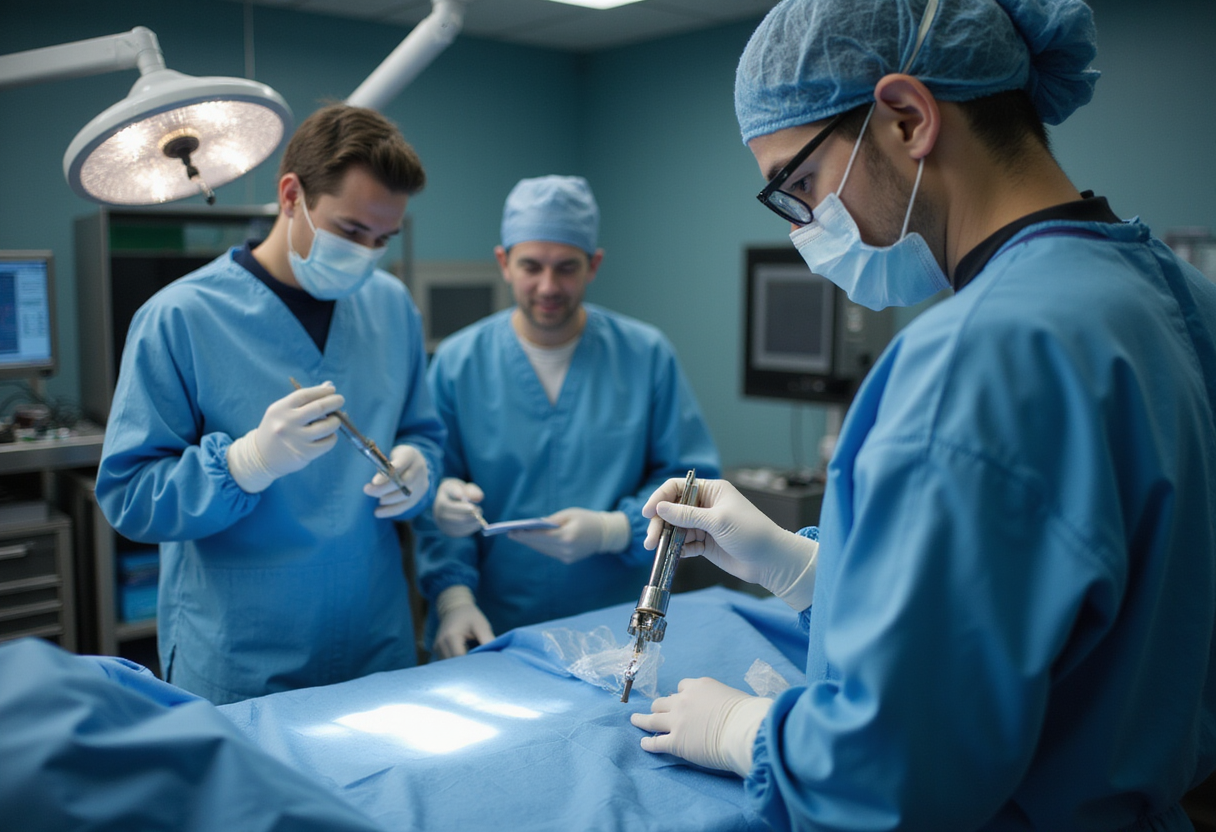
Alabama Governor Kay Ivey has awarded a $262,000 grant to purchase new equipment for the Alabama Forensic Lab, according to a report from FOX10 News. The figure is the single hardest number in the announcement, and it frames the practical question for laboratory managers watching state forensic budgets: what does a quarter-million dollars buy in a modern evidence-processing facility, and where does it fit against the state's existing instrumentation baseline?
The grant, announced through the governor's office and reported on November 20, 2025, directs funds toward equipment at the state's forensic laboratory. The announcement did not itemize the instruments, specify vendors, or state which forensic disciplines — DNA, toxicology, firearms, trace evidence — the purchases will serve. That omission matters for anyone benchmarking public forensic capital spending, because equipment costs in this sector vary by an order of magnitude depending on discipline. A single next-generation DNA sequencer can absorb the entire grant; a benchtop gas chromatography-mass spectrometry system for toxicology casework typically runs well below it, leaving room for supporting hardware, software licenses, and service contracts.
For R&D and laboratory managers, the relevant planning questions follow directly. First, procurement: state-administered grants of this size usually move through established purchasing channels, which sets the timeline for vendors bidding on the requirement. Second, workflow: new instrumentation in a forensic lab only pays off if validated under the laboratory's quality system before it touches casework. Validation studies — even for off-the-shelf platforms — commonly take months of analyst time, and the $262,000 figure does not appear to include those internal costs, nor installation, training, or maintenance.
Third, capacity. State forensic laboratories nationally carry persistent backlogs, and equipment grants are the standard lever governors use to add throughput without adding headcount. Whether $262,000 meaningfully moves Alabama's casework volume depends entirely on the bottleneck the purchase targets. If the lab's constraint is instrument hours on DNA analysis, a new platform adds direct capacity. If the constraint is analyst staffing, hardware alone will not shorten turnaround times — a distinction the announcement does not address.
The funding mechanism also warrants scrutiny. The governor's office administers several grant programs that route federal dollars — often from the U.S. Department of Justice or the Department of Commerce's economic development portfolio — into state and local projects. The report does not specify which program supplied the $262,000 or whether federal conditions, such as matching requirements or permissible-use restrictions, attach to it. Those conditions shape procurement rules, including whether the lab must favor certain vendors or run competitive bidding.
What the announcement does establish is concrete: a named funder (the governor's office), a fixed amount ($262,000), a named recipient (the Alabama Forensic Lab), and a stated purpose (equipment). What it does not establish is equally concrete: no instrument list, no vendor selection, no projected casework impact, no deployment timeline, and no stated performance metric the purchase is expected to improve. Readers evaluating this against their own capital planning should treat the projection-free framing as typical of state grant announcements rather than as evidence of measured outcomes.
The source report provides no quotes from the governor's office or laboratory leadership, so there is no stated rationale beyond the equipment purpose itself. Watch for the follow-on documents — the state's grant award notice, the lab's procurement solicitations, and any validation protocol filings — to reveal what the money actually buys and when it enters casework.
Governor Ivey's office is expected to release further detail on the equipment purchases as procurement proceeds, and the forensic lab's subsequent casework statistics will show whether the investment shifts turnaround times.
via Google News: Laboratory technology (Source)
Filed under
- forensic-science
- laboratory-equipment
- state-grants
- procurement
- lab-validation