Proceedings · Session S-436 · filed November 9, 2026
AI & Emerging Tech in R&DSession paper
AI's Climate Payoff Stays Mostly on Paper, Sector Review Finds
Projections credit AI with up to 5.4 billion tonnes of annual CO2 cuts by 2035. A sector-by-sector review finds one proven grid win and a $906 million VC collapse in cultivated meat.
By Tom Whitfield4 min read757 words
Summary
- Peer-reviewed projections estimate AI could cut 3.2–5.4 billion tonnes of CO2 annually by 2035, net of its own energy use.
- Only one grid operator reviewed — the UK's National Grid ESO with Open Climate Fix — runs a working AI forecasting program, halving solar-forecast error.
- Venture capital into cultivated meat fell from $989 million in 2021 to about $83 million last year.
- CATL's AI, trained on 100,000+ battery design cases and 600 TB of test data, cut material screening time by two orders of magnitude, per the company.
- IEA forecasts data-center emissions could exceed 300 million tonnes annually in 2035.
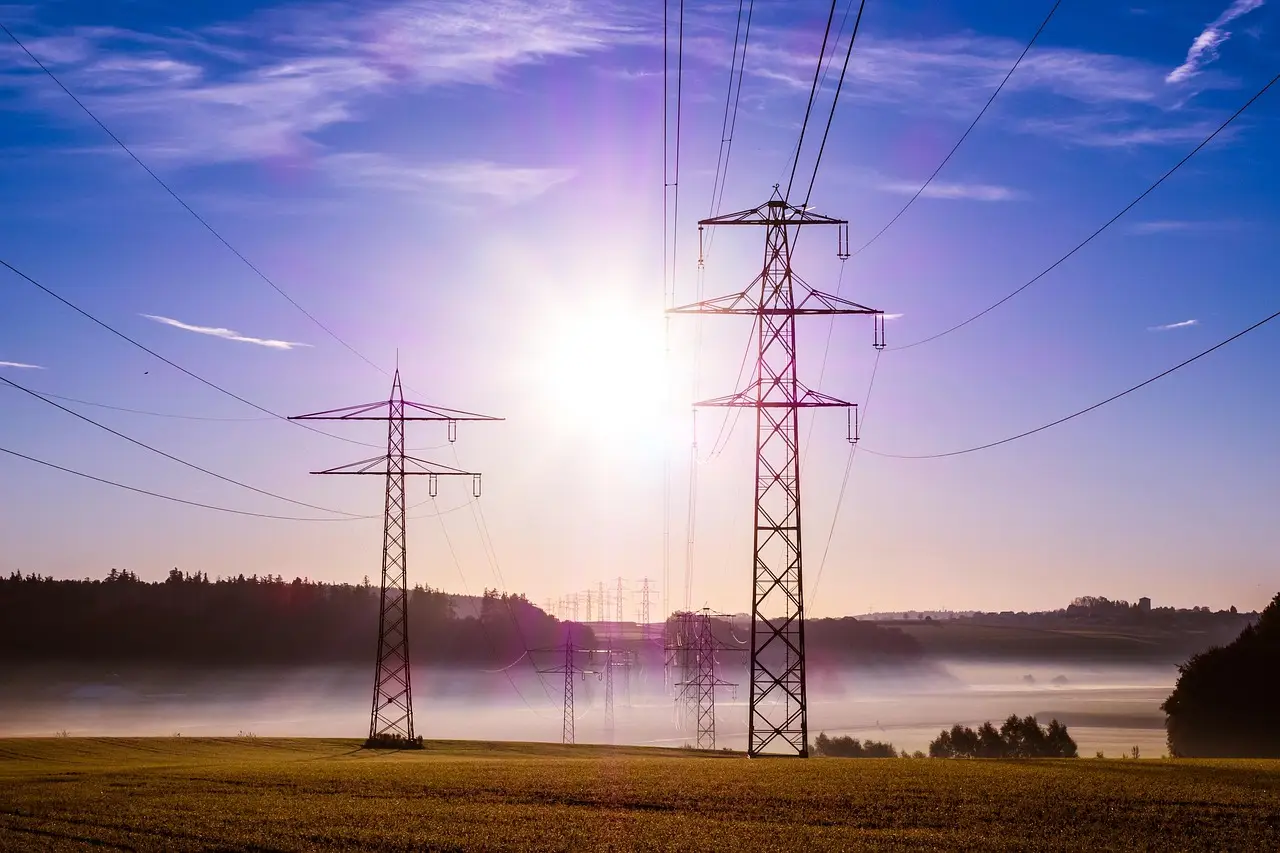
Peer-reviewed projections say AI could cut global emissions by 3.2 to 5.4 billion tonnes of CO2 a year by 2035. An AI-assisted review of what companies are actually deploying today finds almost nothing on the ground to support that number.
The projection, published last year and led by researchers at the London School of Economics' Grantham Research Institute with the firm Systemiq, puts most of the potential gain in three sectors: power, meat and dairy, and vehicles. The new analysis — run with Anthropic's Claude Code and checked against public documents and media accounts — asked whether the largest players in those sectors are pursuing the specific emissions-reducing routes the study assumed. Few are. Fewer still claim measurable climate results.
The timing is pointed. Delegates at the UN climate conference in Antalya, Turkey this week will debate AI, and the host presidency has already asked countries to pledge that AI is designed, powered and deployed in ways that support climate action. The review suggests industry is a long way from that standard.
What did the power sector show?
Here the math is most concrete. AI-driven supply-and-demand forecasting could lift renewable electricity delivered from already-built solar and wind by up to 20%, the earlier study estimated — avoiding roughly 1.8 billion tonnes of emissions a year.
The reality check found one working example. A partnership between the UK's National Grid ESO and Open Climate Fix halved the operator's solar-forecast error, avoiding hundreds of thousands of tonnes of CO2 annually. Beyond that, grid operators across the EU, the US and China showed little in the public record matching the study's vision.
One win. Dozens of operators reviewed. That's the gap.
Why does meat and dairy lag furthest behind?
The study's route runs through alternative proteins: AI would need to close the taste and cost gap between animal products and lab-grown or plant-based substitutes. The clearest effort is NotCo's joint venture with Kraft Heinz, built on its Giuseppe platform, which analyzes plant molecular data to replicate the taste, texture and smell of animal products.
Few other alternative-protein companies showed anything comparably integrated. The sector has deeper problems: slow mainstream adoption and collapsing funding. Venture capital into cultivated meat fell from a $989 million peak in 2021 to roughly $83 million last year.
Where is the evidence strongest?
Transport shows the most credible results. CATL, which controls roughly 40% of the global EV battery market, launched an AI system trained on more than 100,000 battery design cases and 600 terabytes of test data. The company says it cut candidate-material screening time by two orders of magnitude. Independent researchers found that Didi Chuxing's AI-optimized routing reduced per-trip emissions 16% on average by minimizing detours.
Note the distinction: CATL's claim is a company figure. Didi's comes from peer-reviewed analysis.
Who's checking the claims?
The backdrop is loud with optimism. In 2024, OpenAI CEO Sam Altman said AI would deliver "astounding triumphs," including "fixing the climate." A 2023 op-ed by Google's head of sustainability and a coauthor claimed AI could cut global emissions 5% to 10% by 2030.
The authors — Mary Nichols, distinguished counsel at UCLA School of Law and former chair of the California Air Resources Board, and Jeremy Tamanini, founder of Dual Citizen — flag two caveats. First, oil and gas companies are adopting the same tools, with research pointing to their potential to increase fossil-fuel production. Second, AI doesn't shorten the certification, permitting, construction and sales paths any resulting product must travel. Integration is only step one.
The review itself has limits. Companies may be running undisclosed AI programs that fit the study's scenarios, the authors concede.
What happens to the sector's own footprint?
AI's buildout is already undermining its sponsors' climate targets. Rapid data-center expansion has pushed Microsoft, Google and others well off track on corporate emissions goals. IEA base-case forecasts put data-center emissions — covering AI and non-AI computing — above 300 million tonnes annually by 2035. At that pace, the authors write, it would be surprising if the sector zeroes out its own pollution.
Their prescriptions: industry leaders deploy AI where it cuts emissions most; corporate customers select the lowest-impact models and push developers on footprint; and states and regions incentivize or mandate responsible operation. The 2035 projections may still be reachable, they conclude, but only through deliberate, sustained effort — not aspiration.
via fortune.com (Original)
Filed under
- artificial-intelligence
- climate-change-mitigation
- industrial-decarbonization
- renewable-energy
- corporate-ai-adoption
More from Tom Whitfield
Show full bio
Senior reporter covering technology and product news in research and development at Hypothesis Wire.
245 articles
References
- AI data centers drive $26B climate-tech surge, carbon removal left behind
- INL's $60 Million Nuclear AI Project Starts with Testing Limits
- Armenia Signals AI Expansion Across Research, Infrastructure and Investment
- Virtual Power Plants Face a Scale-and-Evidence Test
- COP31 and the New Colonialism of Technology Transfer