Proceedings · Session S-839 · filed October 10, 2026
Innovation ManagementSession paper
WeLion's 824 Wh/kg cell tops lithium-ion by 4x in 2025 lab test
WeLion's 2025 lab cell hit 824 Wh/kg, more than four times typical lithium-ion. Only ~200 of its 360 Wh/kg Nio packs shipped in 2023, and cycle-life data for the 824 figure remains undisclosed.
By Rebecca Stone3 min read604 words
Summary
- WeLion's 2025 semi-solid-state cell reached 824 Wh/kg in lab testing, more than 3x the 200 Wh/kg typical of today's lithium-ion packs
- About 200 units of the 360 Wh/kg Nio battery pack produced in 2023 shipped before costs halted volume output
- Annual manufacturing capacity stands at 11 GWh across four Chinese bases, with two more plants totaling 18 GWh under construction
- Roadmap targets a 410 Wh/kg drone cell by end of 2025 and a 400 Wh/kg all-solid-state car cell in 2027
- Two inland cargo ships in Huzhou slated for October 2026 will carry ~4,000 kWh packs rated for up to 250 km voyages
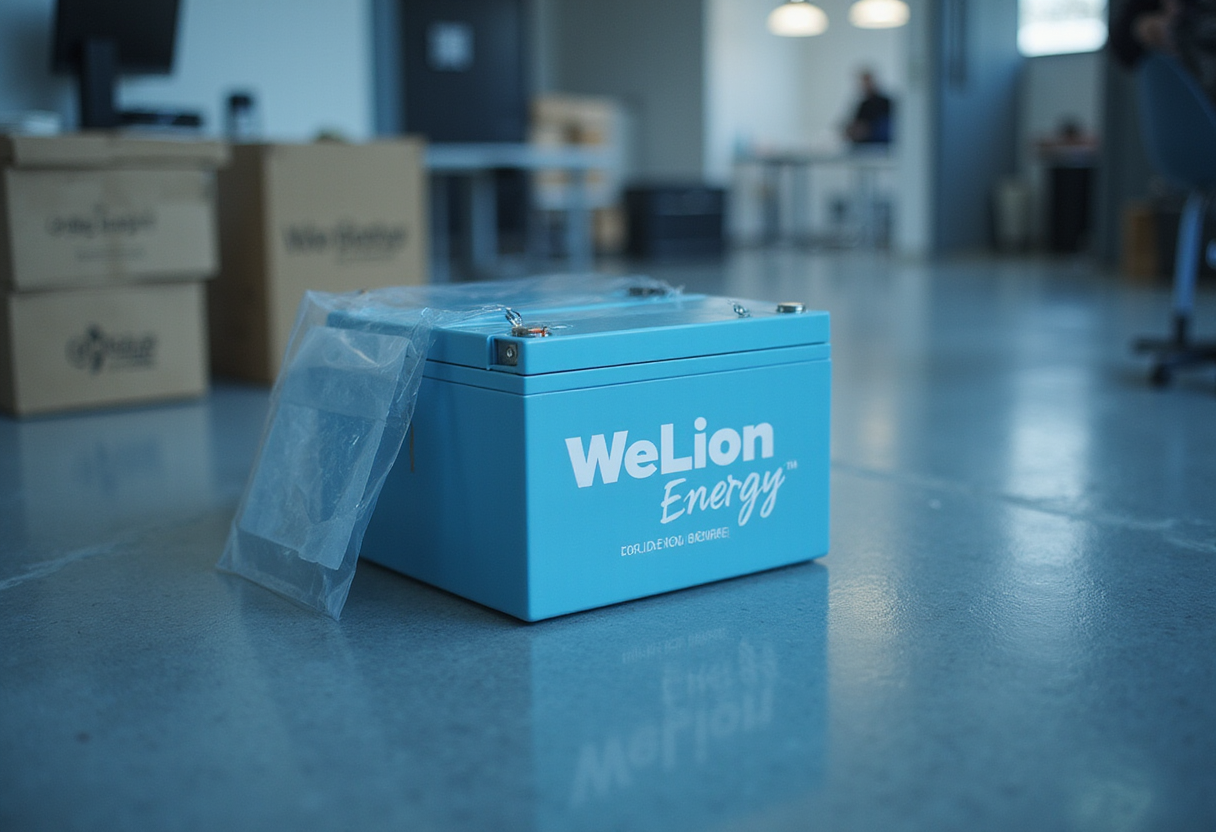
WeLion New Energy's laboratory cells reached 824 watt-hours per kilogram in 2025 testing, more than three times the 200 Wh/kg typical of today's lithium-ion packs, according to company disclosures. The Beijing-headquartered firm, founded in 2016, has yet to say when that prototype exits research, how many cells the figure averages across, or what test protocol produced it.
What has actually reached vehicles?
The benchmark that has reached drivers is the 2023 battery pack WeLion released with Shanghai EV-maker Nio. That pack stores 360 Wh/kg — a step above today's lithium-ion cells but well below the lab figure — and has powered Nio vehicles to over 1,000 kilometers per charge.
About 200 units shipped before costs halted volume production, the company says; the packs remain in service today.
How big is the supply picture?
- Current annual capacity: 11 GWh across four Chinese production bases
- Under construction: two additional plants with a combined 18 GWh
- Competitor benchmark: CATL and other large Chinese cell makers continue to out-price WeLion on conventional lithium-ion
WeLion's cells rely on a hybrid electrolyte — part solid, part liquid — sidestepping manufacturing barriers that have stalled fully solid-state programs elsewhere. Co-founder Chen Liquan, a Chinese Academy of Sciences scientist, led the development of China's first all-solid-state battery in 1988, a pedigree the company leverages with state research partners and investors.
Where does WeLion sit in the field?
Semi-solid-state cells replace only part of the liquid electrolyte with a solid or gel layer, trading some of the safety and density gains of fully solid-state designs for manufacturability. WeLion appears to be the furthest along that compromise path, with Nio deployments to show for it. Japanese and South Korean programs continue to pursue all-solid-state chemistries using oxide or sulfide electrolytes. Cost parity with conventional lithium-ion remains the unresolved constraint across the industry, and WeLion has not disclosed a per-kWh figure for its semi-solid-state packs.
Which markets is WeLion targeting next?
A 410 Wh/kg drone cell is slated for release by the end of 2025. A 400 Wh/kg all-solid-state passenger-car cell targets 2027. WeLion has also committed to two inland cargo ships for Huzhou, eastern China, in October 2026, each fitted with a roughly 4,000 kWh pack rated for up to 250 kilometers of inland sailing. The firm operates a marine battery subsidiary to support that pipeline.
China's transportation sector contributes around 10% of national CO₂ emissions, and the country's inland waterway fleet alone is projected to emit 18.7 million metric tons of CO₂ by 2030, up roughly 25% from 2020 levels. Higher energy density cells translate directly into vessel payload, route flexibility, and per-trip emissions — variables that R&D managers at shipping operators now have to model against cell cost and supplier concentration risk tied to CATL and its peers.
What does the lab-to-line gap look like?
WeLion has not released cycle life, capacity fade, sample size, or test protocol details for the 824 Wh/kg figure. The company's own materials characterize the prototype as far from commercialization, which means R&D teams tracking the roadmap should treat the number as a research data point rather than a purchasing signal.
Whether WeLion can hold its 824 Wh/kg result through independent replication, scale its 29 GWh capacity plan under competitive pricing, and land the 2027 car cell on schedule will define how much of the company's pipeline turns into deployed kilowatt-hours before the decade closes.
via MIT Technology Review (Source)
Filed under
- batteries
- solid-state
- welion
- nio
- china
More from Rebecca Stone
Show full bio
Market editor covering marketplaces and e-commerce at Hypothesis Wire.
183 articles
References
- Higher Vinylene Carbonate Loadings Extend Life of LFP/Graphite Cells at 70°C
- Sandia Picks EEI to Lead National LDES Commercialization Push
- Cotton and Lee press DOE to bar Chinese nationals from national labs
- Sandia develops microwave process for spent battery cathode upcycling
- 12.5 bar of stack pressure doubled EV battery lifetime in Cambridge study