Proceedings
Corporate & Industrial R&DSession paper
Texas A&M Breeds Hemp With Zero Detectable Cannabinoids
Texas A&M AgriLife bred a Type V hemp with no detectable level of 18 tested cannabinoids. The patent-pending trait is licensed to Rare Earth Genomics; field trials run 2027-2028.
By Rebecca Stone3 min read596 words
Summary
- Lab testing detected none of 18 cannabinoids, including THC, in the new Type V variety
- Nearly every Asian fiber hemp variety tested in Texas in 2023 exceeded the 0.3% federal THC limit
- Trait induced via ethyl methanesulfonate mutagenesis and trichome screening, not gene editing
- Patent-pending trait exclusively licensed to Rare Earth Genomics Texas LLC
- Field trials planned for 2027-2028; commercial seeds targeted for 2029
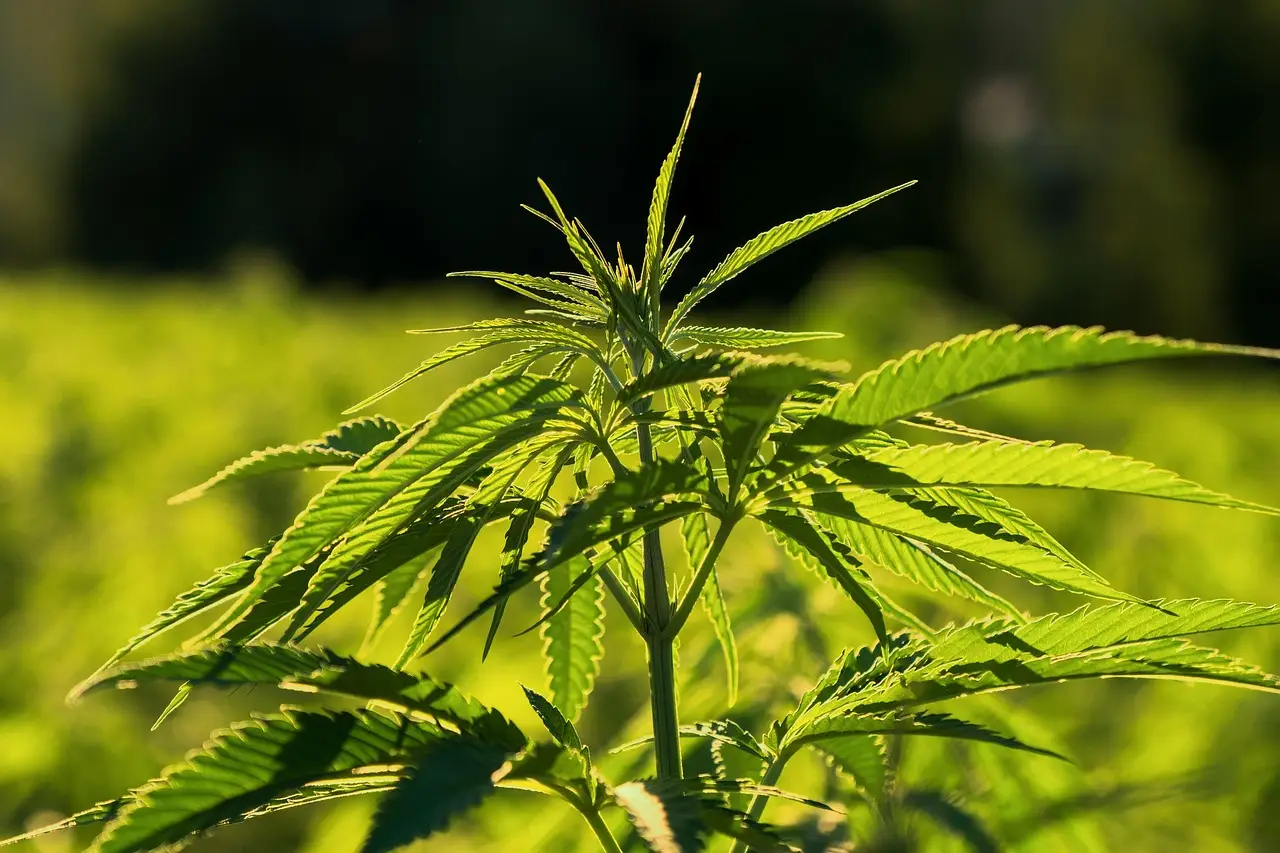
Texas A&M AgriLife Research has produced a hemp plant in which laboratory testing detected none of 18 screened cannabinoids, including THC, the compound that triggers federal crop destruction when concentrations exceed 0.3%.
The variety, classified as Type V hemp, was announced Thursday and addresses a problem that has cost farmers entire harvests: industrial hemp grown for fiber or grain can drift over the legal THC threshold through genetic variation or environmental stress, even when the grower has no interest in cannabinoids. Under federal law, a compliant crop is defined by that 0.3% ceiling.
The stakes are concrete. According to Texas A&M, nearly every fiber hemp variety imported from Asia and tested in Texas during 2023 exceeded the federal THC limit. Many of those varieties were otherwise well suited to the state's growing conditions, which made the compliance failures particularly costly.
How the researchers did it
The team did not edit the genes that synthesize cannabinoids directly. Instead, they targeted the factory where those compounds are made: trichomes, the microscopic hairlike structures on hemp and cannabis plants that carry glandular heads producing cannabinoids.
The method had three stages:
- Researchers treated hemp seeds with ethyl methanesulfonate, a chemical that induces random genetic mutations.
- They screened thousands of resulting plants and identified individuals whose trichomes lacked the glandular structures normally found at their tips.
- They bred the selected plants and confirmed the trait through high-performance liquid chromatography (a technique that separates and measures chemical compounds in solution), which found no detectable level of any of the 18 cannabinoids tested.
Without the glands, the plants cannot accumulate cannabinoids in measurable amounts. Because the approach relies on chemically induced mutations followed by selection and conventional breeding, it does not fall under the regulatory category of transgenic genetic engineering — a distinction that matters for markets restrictive of engineered crops.
The mutation-breeding techniques were detailed in a study published in the journal Crops by researchers affiliated with Texas A&M and Rare Earth Genomics.
What remains unvalidated
The university reports that whole-genome sequencing identified two candidate genes potentially associated with the unusual trichome development. That finding is preliminary. Work is underway to validate the genes and develop molecular markers (short DNA sequences used to track a trait during breeding) that would let other breeders move the trait into their own varieties.
The 18-cannabinoid panel is laboratory evidence, not field evidence. Whether the trait holds under the environmental conditions that push conventional varieties over the THC limit will be tested only in the field trials planned for 2027 and 2028.
Commercial path and licensing
The trait is patent-pending and has been exclusively licensed to Rare Earth Genomics Texas LLC, which collaborated with the university's hemp breeding program. Texas A&M is also developing its own fiber, grain and dual-purpose varieties incorporating the trait, aiming for plants adapted to Texas conditions while retaining desirable agricultural characteristics.
The timeline the university sets out is a seed increase this winter, field trials in 2027 and 2028, and commercial seed availability to growers by 2029 if development proceeds as anticipated.
The university frames the applications as broader than Texas. Producers in countries with THC limits stricter than the U.S. 0.3% standard could, in principle, incorporate the Type V trait into existing varieties and cultivate without the risk of noncompliance from cannabinoid accumulation — a projection that will depend on regulatory acceptance and on the trait performing outside the lab.
Researchers plan to scale seed production this winter, with the first field data arriving in 2027.
via themarijuanaherald.com (Source)
Filed under
More from Rebecca Stone
Show full bio
Market editor covering regulation, policy and their impact on research and development at Hypothesis Wire.
288 articles
References
- USDA Seeks to Extend Hemp Production Survey, Counting 4,010 Licensed Growers
- DEA-Registered Lab Testing Mandate for Hemp Looms After Years of USDA Delays
- Cornell and USDA Platform Lifts Cannabis Genotyping Efficiency to 88.5%
- Senate Bill Would Lift Hemp Program Funding 30%, Push FDA on Cannabinoid Pain Drugs
- Mile High Labs files Type II Drug Master File for 98% CBD isolate