Proceedings · Session S-656 · filed November 18, 2026
Translational ScienceSession paper
mRNA Nose Drops Restore Memory in Aged Mice, Sydney Team Reports
Sydney researchers restored youthful memory in aged mice using mRNA nose drops encoding BDNF. All results remain preclinical; human nasal anatomy poses unresolved delivery questions.
By Amara Osei3 min read653 words
Summary
- mRNA nose drops encoding BDNF restored learning and memory in 18-month-old mice to young-animal levels
- BDNF production persisted for four days in laboratory cultures after delivery
- Alzheimer's-model mice treated twice weekly from two months outperformed controls from four months, with amyloid burden unchanged
- The 2009 precedent: BDNF gene delivery restored memory in AD-model mice without clearing amyloid
- No major side effects appeared in mice, but no human testing has been conducted
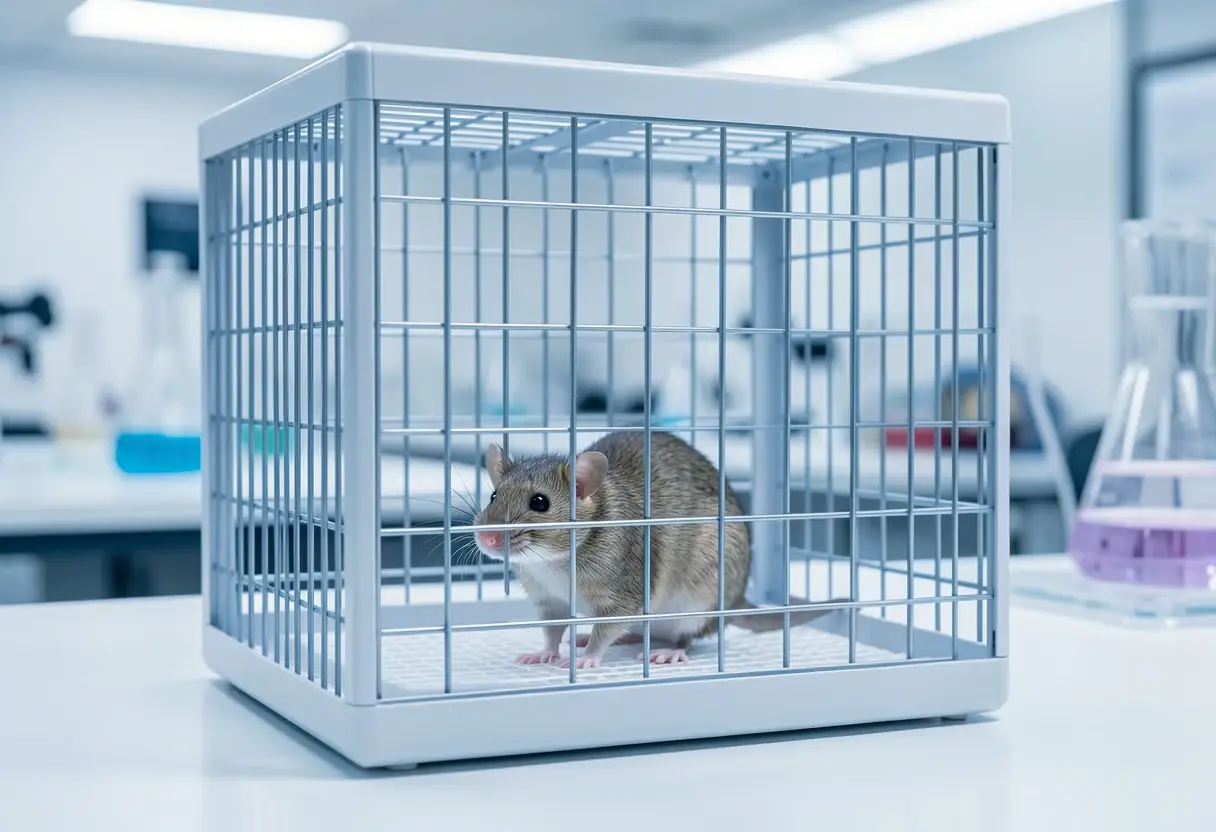
Nose drops carrying messenger RNA raised learning and memory in 18-month-old mice to levels matching young animals, according to University of Sydney research published in Advanced Science. The treatment, delivered in lipid nanoparticles borrowed from COVID-19 vaccine technology, produced no major side effects in the study — though every result so far sits firmly in mouse territory.
The functional genomicist Greg Neely led the investigations. "In aged mice, we saw learning and memory significantly increased, returning animal cognition to its youthful prime," Neely said in a statement. That claim, it should be noted, rests on behavioral tests in animals, not on any human data, and Neely himself concedes the delivery problem is unresolved. "Human noses are different from mouse noses, so we will need to test our drugs in humans," he said.
How does the delivery work?
The drops carry mRNA encoding brain-derived neurotrophic factor, or BDNF, a naturally occurring protein that helps neurons survive and supports the changing connections underpinning learning and memory. Tiny lipid nanoparticles protect the cargo — the same packaging approach used to deliver virus-spotting antigens in mRNA vaccines.
The route matters as much as the payload. The blood-brain barrier tightly controls what passes from circulation into brain tissue, excluding many potentially useful medicines. Connections between the nasal cavity and the brain offer a way around that obstacle. The drops turn cells lining the nose into temporary protein factories, raising BDNF levels in the brain itself.
RNA delivery carries one concrete advantage over injecting the protein directly: cells keep manufacturing fresh supplies. In laboratory cultures, BDNF production remained detectable for four days after delivery.
What did the experiments measure?
The researchers treated 18-month-old mice — roughly late middle age in human terms — and compared them against untreated juveniles and older animals given a control. The treated mice performed similarly to young animals across tests of object recognition, working memory and spatial memory.
Two controls strengthen the finding. Physical activity in the treated animals remained lower, so the memory gains cannot be explained by higher energy levels. The hippocampi of treated mice also contained more cells bearing signs of newly developing neurons.
A second experiment used mice engineered with a handful of mutations associated with familial Alzheimer's disease in humans. Treatment began at two months, before pronounced cognitive decline was expected, and continued twice weekly. From four months of age, the treated animals outperformed controls on memory tasks.
One result deserves careful reading: the amyloid plaque burden in those mice was unchanged. A 2009 study had already shown BDNF gene delivery restored learning and memory in mice modeling Alzheimer's without reducing amyloid deposits. The new work is consistent with that pattern, and the distinction matters commercially as well as scientifically. A neuron-supporting therapy could complement, not replace, the amyloid-targeting drugs that dominate current pipelines.
Where are the caveats?
Plenty remain. The animals in the study showed no major side effects during the experiments, but longer-term safety testing has not been done. Human nasal anatomy presents different delivery challenges from a rodent's. And the drops had no measurable effect on the cognition of healthy young mice — this is a restorative approach, not an enhancer.
The field is nonetheless moving. Research published last year described lipid nanoparticles engineered to deliver mRNA into neurons and other brain cells after intravenous injection in mice. A separate study this year used nasal nanoparticles carrying instructions for BDNF and anti-inflammatory proteins to improve cognition in mice with repeated mild brain injuries — roughly the profile of accumulated head impacts seen in contact sports.
For R&D managers weighing platform bets, the pattern is familiar: a validated cargo molecule, a delivery problem partially solved in rodents, and a long translational gap before any human dosing. Nasal delivery of neurological treatments could yet become routine, but the next milestone — a human safety trial — has not been announced.
via newatlas.com (Source)
Filed under
- mrna-therapeutics
- bdnf
- nasal-drug-delivery
- lipid-nanoparticles
- alzheimer-s-disease
More from Amara Osei
Show full bio
News editor covering money, funding and market shifts around research and development at Hypothesis Wire.
253 articles
References
- Delivery Vehicles, Not Payloads, Will Decide CGT Success, USP Scientist Argues
- Two injections reversed Alzheimer's pathology in mice via neuron reprogramming
- BCG Vaccine Cut Tau Tangles and Restored Memory in Dementia Mice
- Mouse atlas identifies 92 protective proteins crossing brain barrier
- 80,000 UK Biobank Samples to Be Tested for Pre-Symptom Brain Proteins