Proceedings · Session S-962 · filed November 17, 2026
Research InfrastructureSession paper
Fermilab's 34,000-Ton Liquid Argon Plan Runs Through a Six-Inch Pipe
Fermilab will move 34,000 metric tons of liquid argon by vaporizing it topside, piping the gas down a 6-inch shaft line and re-liquefying it at DUNE's detectors.
By Rebecca Stone3 min read619 words
Summary
- DUNE requires 34,000 metric tons of liquid argon moved 4,850 feet underground as gas through a 6-inch pipe.
- Cryostat assembly by Fermilab, Sanford Underground Research Facility and CERN began in early November per a Nov. 10 release.
- The first cryostat fill needs about 1,000 truckloads — four 20-ton loads daily for roughly a year.
- Pipeline bids closed July 27; shaft pipe construction is scheduled to start in May 2027.
- 2023 design estimates put fill times at 257 days for cryostat 1 and 436 days for cryostat 2.
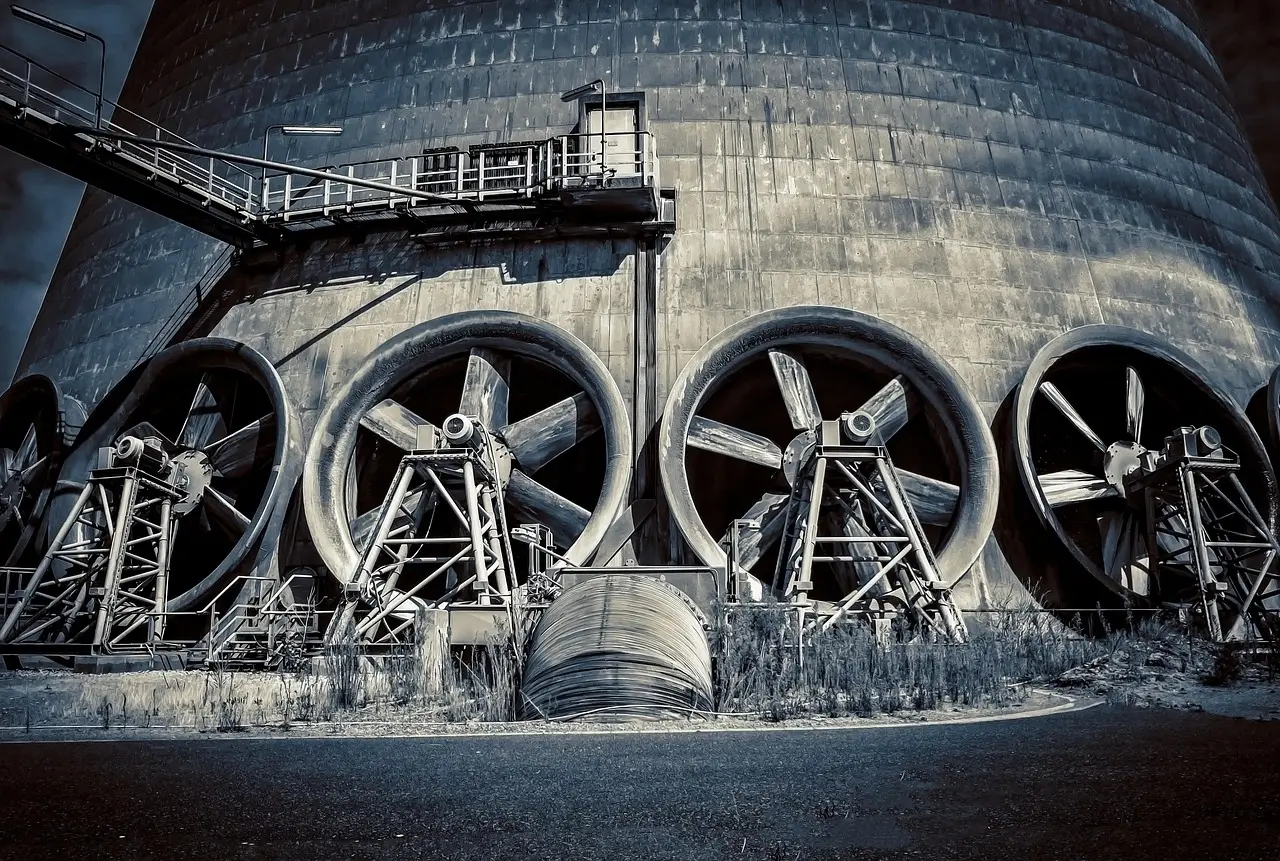
Filling the two detector tanks of the DUNE experiment requires moving 34,000 metric tons of liquid argon nearly a mile underground — and Fermilab's chosen method is to turn it into gas, pipe it down, and liquefy it again.
Crews from the Fermi National Accelerator Laboratory, the Sanford Underground Research Facility and CERN began assembling the tanks, called cryostats, in early November, according to a Nov. 10 Fermilab release. The cryostats sit at the 4,850-foot level of the Sanford Underground Research Facility in South Dakota, where DUNE — the Deep Underground Neutrino Experiment — will analyze neutrinos fired 800 miles from Fermilab's accelerator site in Illinois.
Why argon, and why as a gas?
The argon is the detection medium. When a neutrino strikes an argon atom, the collision produces charged particles that knock loose electrons; an electric field then pulls those electrons through the liquid to readout planes. That signal chain is what lets physicists compare how neutrinos change type over their 800-mile journey, and by extension probe why the universe contains matter rather than antimatter.
Transporting the argon as a liquid was considered and set aside. Fermilab's cryogenics team will instead vaporize each trucked delivery at a surface plant and send the gas 4,850 feet down the Ross Shaft through a 6-inch stainless steel pipe. Underground, the cryogenics system purifies the argon and recondenses it into liquid using liquid nitrogen. Air Products, an industrial gas company based in Allentown, Pennsylvania, holds the nitrogen contract; CERN is procuring the argon condensers.
A June solicitation describes the full pipeline route: 8-inch stainless steel pipe from the receiving facility to the Ross Shaft, 6-inch pipe down the shaft to the 4,850 Level, and 8-inch pipe again to the Central Utility Cavern, which sits between the two detector halls and houses the cryogenics plant. The line is sized for about 40,000 metric tons of argon over the project's life. Bids closed July 27; Fermilab has not announced a winner. The February project update schedules the surface trench and shaft pipe construction for 2027, and the solicitation's scope of work puts the start in May 2027.
The logistics, by the numbers
- The first cryostat fill takes roughly 1,000 truckloads over about a year — four 20-ton loads a day, seven days a week.
- Each cryostat holds roughly five Olympic pools' worth of liquid argon, which is 1.4 times as dense as water.
- The cryostats' outer structures use more than 6,200 metric tons of steel, all supplied from CERN.
- The vessels must survive a temperature swing of about 375 degrees Fahrenheit, from room temperature to the argon's operating point.
- The surface receiving facility plans 280 metric tons of storage — 3.5 to 4 days of buffer at 70 metric tons per day — plus two redundant 500 kW vaporizers.
The receiving facility will test each delivery for purity before vaporizing it. Tanks at the site can also pump the argon back into trucks at the end of the experiment, an explicit provision for decommissioning and material recovery.
What the fill schedule looks like
Under Fermilab's 2023 design estimates, liquid argon would enter the cryostats at 0.8 and 0.5 kilograms per second respectively, filling cryostat 1 in about 257 days and cryostat 2 in about 436 days. The February project update adds a sequencing note with budget implications: the first detector will start taking data while crews are still building the second, compressing the timeline between installation and first physics results.
With cryostat assembly now underway, pipeline contract award and the 2027 shaft construction window are the next milestones that determine whether the fill schedule holds.
via news.fnal.gov (Original)
Filed under
- dune-experiment
- fermilab
- liquid-argon
- neutrino-detection
- cryogenic-infrastructure
More from Rebecca Stone
Show full bio
Market editor covering regulation, policy and their impact on research and development at Hypothesis Wire.
274 articles
References
- Cryostat Installation Begins for $3.3bn DUNE Neutrino Experiment
- Quantum information analysis says neutrinos carry more δ-CP data than detectors extract
- Double Chooz records first antineutrino signal from spent nuclear fuel at 5.9σ
- Trapped-ion quantum simulator reproduces gluon string breaking
- MAPL-EMIT finds about 50% more methane plumes in satellite scenes