Proceedings · Session S-576 · filed October 10, 2026
Research Funding & PolicySession paper
FAS column signals turbulent session ahead for US science policy
Federation of American Scientists publishes 'Gil on the Hill' column warning that returning Congress will face friction on federal research funding, oversight, and authorizations.
By Rebecca Stone2 min read500 words
Summary
- Federation of American Scientists published column headlined 'Gil on the Hill: Congress is Back. Science Policy is About to Get Messy' (publication date not provided in source feed)
- FAS was founded in 1945 by Manhattan Project scientists James Franck and Leo Szilard
- 'Gil on the Hill' is a recurring FAS digest covering NIH, NSF, ARPA-E, and DOE Office of Science appropriations and authorizations
- FAS invokes 'messy' framing previously used during the 2018-2019 shutdown and FY2023 debt-ceiling negotiations
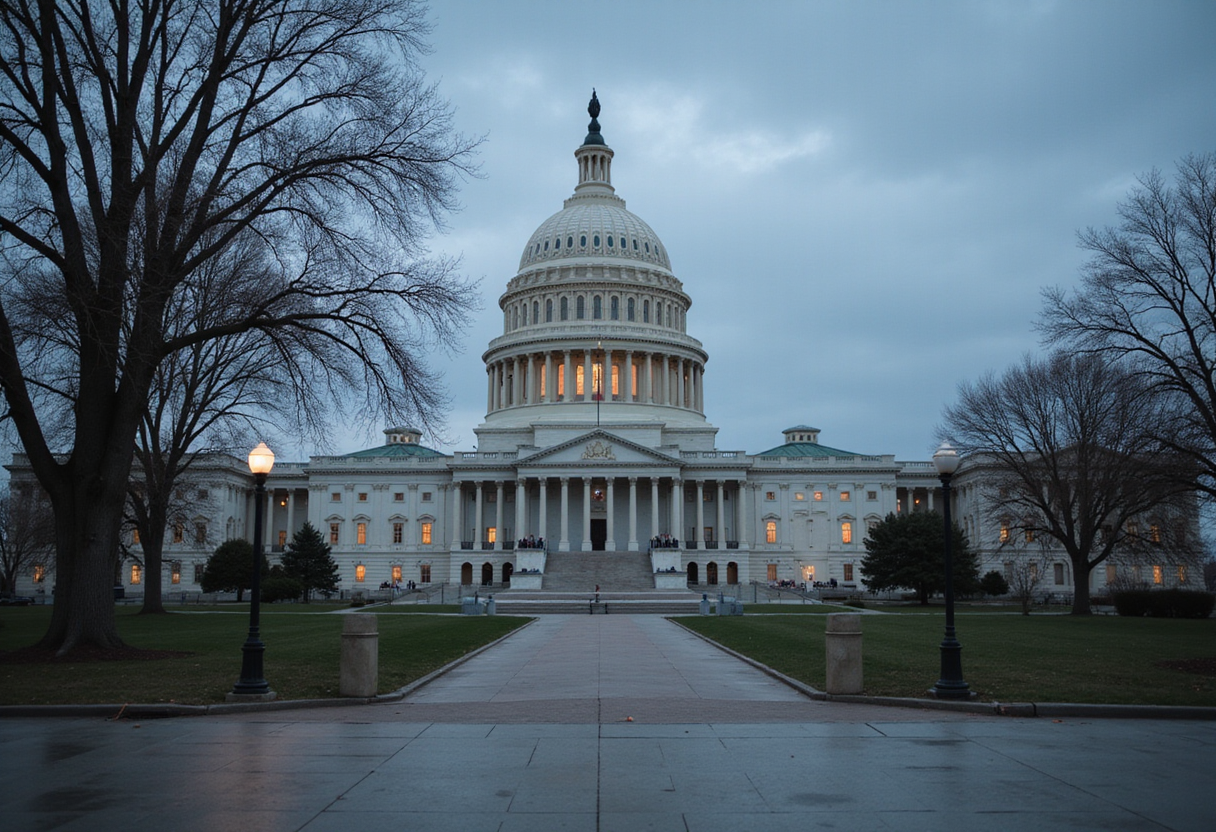
The Federation of American Scientists published a column headlined "Gil on the Hill: Congress is Back. Science Policy is About to Get Messy," flagging what it frames as a difficult legislative stretch ahead for federal research policy.
The headline, the entirety of the available feed, signals FAS expects friction across appropriations, oversight, and agency authorizations as the new Congress opens. Founded in 1945 by Manhattan Project scientists including James Franck and Leo Szilard, FAS operates as a nonpartisan policy organization based in Washington, DC.
What does "Gil on the Hill" cover?
The "Gil on the Hill" segment functions as FAS's recurring digest of congressional science and technology activity. Past iterations have covered appropriations for the National Institutes of Health and National Science Foundation, authorizations for ARPA-E and the DOE Office of Science, oversight hearings on national laboratories, and reauthorization of major research statutes.
The current headline frames the incoming session as more turbulent than recent ones. The phrasing echoes warnings FAS and peer organizations issued during prior appropriations fights, including the 2018-2019 shutdown cycle and FY2023 debt-ceiling negotiations that capped non-defense spending.
Without the underlying column text, the specific bills, hearings, or lawmakers the FAS analysis cites remain undisclosed in this feed.
Why does the framing matter for labs?
Research administrators and lab directors should treat the "messy" label as a planning signal. In federal science policy, that descriptor applies to three recurring scenarios:
- Continuing resolutions substituting for full-year appropriations, freezing new program starts and capping obligations at prior-year levels
- Authorization lapses for agencies whose multi-year statutory frameworks require periodic renewal
- Partisan friction in committee markups of the Commerce, Justice, Science and Energy and Energy and Water Development bills
Each scenario carries direct operational impact for grantees. Continuing resolutions, for instance, prevent federal agencies from initiating new programs or issuing fresh grant awards beyond continuation funding, delaying lab hires, equipment purchases, and research timelines.
What should R&D managers do?
Labs with significant federal exposure should prepare contingency plans. Three steps typically help research organizations weather appropriations turbulence:
- Map grant dependencies by fiscal quarter to identify exposure to continuing resolution delays
- Track House and Senate appropriations subcommittee markup calendars for the relevant bills
- Monitor reauthorization timelines for statutes governing primary funding sources
R&D managers should expect operational uncertainty through at least the first quarter of the new session before normal appropriations rhythms resume.
What indicators should labs monitor?
Four signals will clarify how the science policy environment develops:
- Subcommittee markup dates for Commerce, Justice, Science and Energy and Energy and Water bills
- Reintroduction of the America COMPETES reauthorization framework
- Confirmation hearings for NSF, NIH, and DOE Office of Science director nominees
- Oversight hearing schedules for ARPA-E and other applied research offices
The FAS headline establishes the basis for treating the incoming session as a high-friction environment for federal research funding decisions. Until the full analysis surfaces, research organizations should plan for continued appropriations turbulence and adjust portfolio risk accordingly.
via Google News: Research & science policy (Source)
Filed under
- federal-research-funding
- us-science-policy
- congressional-appropriations
- continuing-resolution
- rd-management
More from Rebecca Stone
Show full bio
Market editor covering marketplaces and e-commerce at Hypothesis Wire.
183 articles
References
- Union of Concerned Scientists Calls New Administration Action Biggest Threat Yet
- Science Policy Attrition: Federal News Network's Pipeline Diagnosis
- States Weigh Own Science Funding as Federal Research Outlook Dims
- Researchers Press Congress Over Trump's Dismissal of Funding Agency Board
- White House 'Golden Age' Science Plan Sidesteps US Research Strengths