Proceedings · Session S-165 · filed November 20, 2026
AI & Emerging Tech in R&DSession paper
EU GMP Annex 22 Won't Bite in Early 2027, Adviser Warns
EU inspectors will send the final Annex 22 text to the European Commission by year-end, but a transition period means no early-2027 application, says regulatory adviser Florin Muraru.
By Tom Whitfield3 min read616 words
Summary
- EU inspectors plan to send the final Annex 22 text to the European Commission by the end of 2026, adviser Florin Muraru said on November 19, 2026.
- Annex 22 will apply only after a transition period; Muraru advised against planning for an early-2027 effective date.
- Panelists said most manufacturers aren't ready, static AI models likely stay central, and local AI deployment grows.
- Panel argued generative AI users should meet a higher proficiency bar than CAR-T operators because AI errors propagate beyond one batch.
- Cole and Jaenisch recommended a data steward role, immutable instruction ledgers, and automation against AI poisoning.
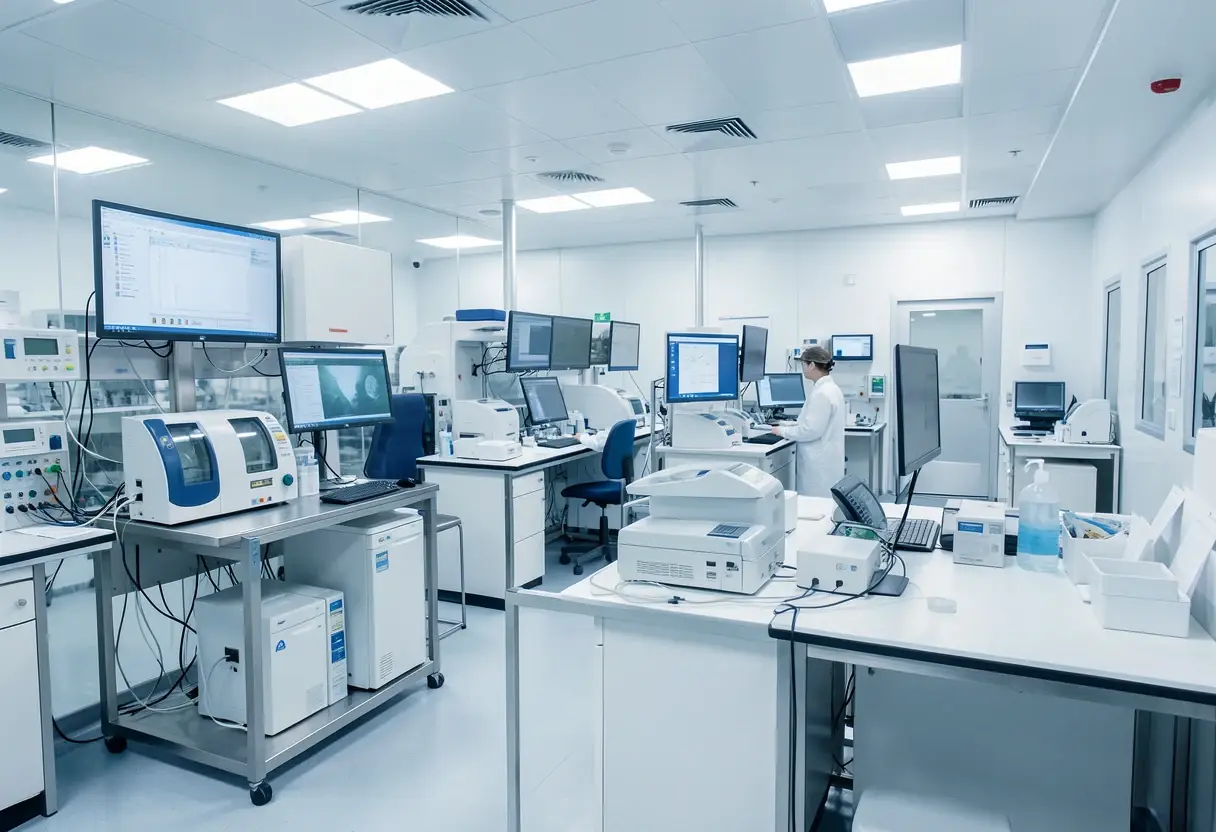
EU inspectors aim to hand the final text of EU GMP Annex 22 to the European Commission by the end of 2026 — and that is not the date it applies. Florin Muraru, an independent regulatory adviser specializing in EU and US regulatory strategy and AI governance, corrected that common assumption on the PharmTech AI Pulse Check panel on November 19, 2026.
His point is procedural but it hits planning calendars. EU GMP annexes typically take effect only after a transition period, Muraru explained. He advised against planning for an early-2027 effective date, which means R&D and quality teams drafting AI compliance budgets for next year have more runway than many assume — but no guarantee of how much.
What did the panel say about readiness?
The panelists' core verdict was blunt. Most manufacturers aren't ready for the annex. Static AI models are likely to stay central to compliant manufacturing, and local AI deployment is growing.
That static-models point matters for portfolio decisions. If regulators continue to favor fixed, validated models over continuously learning ones, teams investing in adaptive or generative systems for GMP environments may need parallel validation tracks. Local deployment — running AI on-site rather than through cloud services — also shifts infrastructure budgets toward on-premises compute.
Who tests companies against their own policies?
The panel included Muraru alongside regular contributors Cole, Jaenisch, and Pandey. One recurring theme: regulators will test pharma companies against their own internal AI policies. Jaenisch, Muraru, and Pandey laid out how to build defensible, inspection-ready AI practices — meaning a company's written policy becomes the yardstick an inspector uses, not some external baseline.
That reframes documentation. A lax internal policy invites a shallow inspection. A strict one invites scrutiny the company must be able to pass.
What about AI security and skills?
Cole and Jaenisch addressed two operational questions with direct lab-workflow consequences.
On staffing, they explained where pharma should keep manual checks, how to vet AI skills in hires, and why self-taught AI use risks GMP compliance. The panel's standard was explicit: no operator touches a CAR-T batch before demonstrating proficiency. Generative AI users should meet the same standard — and a higher one, because an AI error does not stay inside one batch.
That's a quantified logic of harm. A human error contaminates a batch. An AI error propagates across whatever processes the model touches, which is why the panel argued generative AI demands more than the CAR-T proficiency bar, not less.
On defending against AI poisoning in pharma manufacturing, Cole and Jaenisch called for a dedicated data steward role, immutable instruction ledgers, and automation. Immutable ledgers — records of the exact instructions and data a model operated on — would let investigators reconstruct what an AI system did and when. Data stewards would own that accountability, closing gaps the panel sees in current org charts.
Does oversight end at go-live?
No. The panel discussed why MHRA and FDA oversight of pharma AI continues past go-live — and raised a question few vendors answer: who validates the regulators' own AI?
The group also weighed a December AI playbook, recent EMA and MHRA moves, accountability gaps around PCCPs (predetermined change control plans), and regulatory guidance built to be MCP-ready, according to the panel discussion published alongside the November 19 piece.
PharmTech is also surveying how confident the bio/pharma workforce feels heading into 2027, with an open call for reader input.
For now, the practical takeaway from Muraru stands: expect the Commission to receive the final Annex 22 text around year-end, then watch for the transition-period clock — not a January compliance deadline — before locking 2027 AI validation budgets.
via pharmtech.com (Source)
Filed under
- eu-gmp-annex-22
- ai-governance
- pharmaceutical-manufacturing
- ai-validation
- regulatory-compliance
More from Tom Whitfield
Show full bio
Senior reporter covering technology and product news in research and development at Hypothesis Wire.
280 articles
References
- FDA AI Warning Letter Raises the Bar for Model Validation
- AI Playbook Expected December as Pharma Weighs Vendor Model Change Accountability
- EU Pharmaceutical Overhaul Lands With Procurement Reform and 2028 Deadline
- Anthropic's Amodei Met Trump at White House as He Urges Slower AI Development
- AMD Commits £2 Billion to UK AI and Research Infrastructure