Proceedings · Session S-368 · filed October 30, 2026
Translational ScienceSession paper
ESMO 2026 translational award backs 'cancer glucose monitor' vision
ESMO has awarded its 2026 translational research prize to Weill Cornell's Dan A. Landau, whose 'cancer glucose meter' concept aims to predict relapses from blood before conventional tests can.
By Tom Whitfield3 min read655 words
Summary
- ESMO awarded its 2026 Award for Translational Research to Dan A. Landau of Weill Cornell Medicine at this year's ESMO Congress.
- Landau's concept: a repeatable blood test, a 'cancer glucose meter', to track tumour presence, treatment response and relapse risk.
- Current single-cell technologies can measure genetic mutations, gene activity and certain epigenetic traits simultaneously.
- Large-scale implementation of MRD monitoring remains an uphill struggle, per the award coverage.
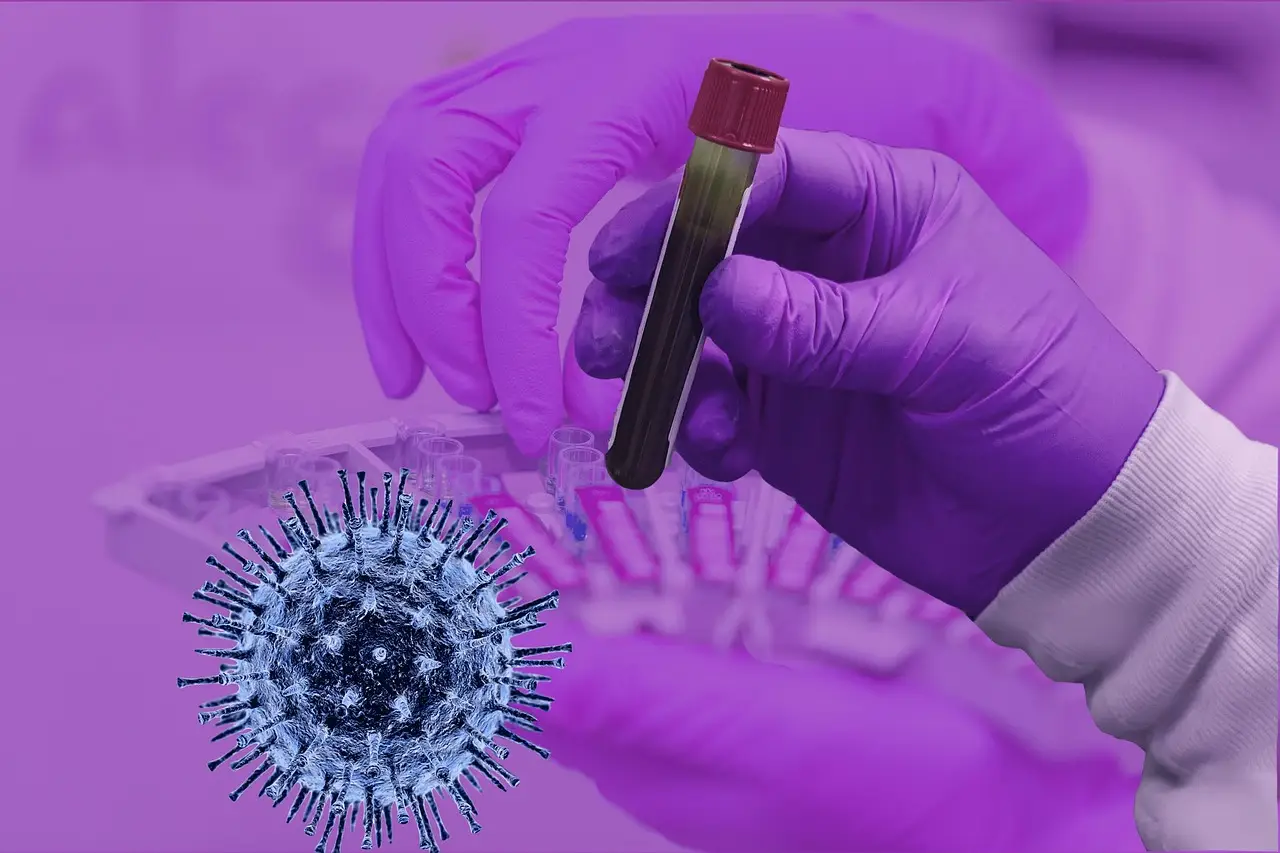
The European Society for Medical Oncology has given its 2026 ESMO Award for Translational Research to Dan A. Landau, Professor of Computational Systems and Biomedicine at Weill Cornell Medicine in New York, recognising work that aims to detect cancer relapse from a blood test long before conventional tests can.
Landau's pitch is disarmingly simple. He wants oncologists to track tumour progression the way a person with diabetes tracks blood sugar: a repeatable measurement, taken from blood, that shows whether disease is present, whether treatment is working, and whether a relapse is coming. The model he invokes is a "cancer glucose meter."
What would the tool actually decide?
The clinical stakes are concrete. After surgery, doctors often cannot tell whether a patient is truly tumour-free or still carries cells capable of triggering a recurrence. That uncertainty shapes the decision to give adjuvant chemotherapy — treatment delivered after surgery.
Without a reliable readout, many patients end up receiving demanding treatments of uncertain benefit. A validated blood-based assay would give clinicians three decision points: when to intervene, when to adjust a treatment course, and, just as important, when to avoid unnecessary therapy altogether.
That last point matters for R&D portfolio thinking. A tool that spares patients from unneeded chemotherapy changes the economics of adjuvant trials, the design of post-surgical monitoring protocols, and how payers value companion diagnostics.
Why the biology resists
Landau's own framing acknowledges the difficulty. Cancer is a moving target: it constantly changes and evolves in order to survive. That lesson has been learned the hard way across years of research in the field.
The problem goes deeper than DNA. Cancer cells can shift their behaviour without any change in their genetic sequence, through epigenetic mechanisms that regulate gene activity while leaving the molecular sequence intact. This plasticity gives tumours another survival weapon, and it parallels a familiar pattern in infectious disease: just as bacteria develop antibiotic resistance, cancer cells can become resistant to treatment through these evolutionary mechanisms.
Any monitoring assay has to track not just one molecular layer but several at once.
The enabling technology is already here
The tools to do that exist today, according to the award citation's context. New molecular analysis technologies can now study genetic mutations, gene activity and certain epigenetic characteristics simultaneously within a single cell.
They also let researchers reconstruct the disease's evolutionary history. Landau describes the effect as a sort of biological time machine — one that traces a tumour's origins and, in the long term, supports predictions about its future behaviour. That is the mechanism behind the shift he is arguing for: moving oncology from chasing relapses after they appear to anticipating the tumour's next moves in advance.
For lab directors, the significance is practical rather than speculative. Single-cell multi-omic profiling — mutations, transcriptional activity and epigenetic marks in one workflow — is no longer a proof-of-concept capability. It is the instrument base on which minimal residual disease (MRD) assays would have to be built.
What stands between the vision and the clinic
The award itself is a signal, not a product. ESMO honoured Landau this year at its annual Congress, and the society's translational research prize typically goes to work with demonstrated momentum. But the source is explicit that large-scale implementation remains an uphill struggle.
The open questions are the ones R&D managers will recognise. The field still lacks tools that can definitively resolve whether a post-surgical patient is disease-free, which is precisely the gap an MRD blood test would need to close before it can guide adjuvant chemotherapy decisions.
The road ahead
Landau's research agenda now points at turning multi-omic, single-cell measurement into a routine, repeatable blood test — one capable of flagging invisible tumour traces, monitoring treatment response and predicting recurrence ahead of traditional imaging. The destination is defined; the remaining work is validation at scale.
via Google News: Translational research (Source)
Filed under
- cancer-monitoring
- minimal-residual-disease
- single-cell-multi-omics
- liquid-biopsy
- translational-research
More from Tom Whitfield
Show full bio
Senior reporter covering technology and product news in research and development at Hypothesis Wire.
243 articles
References
- Galleri Wins FDA Panel Nod After Missing 140,000-Person Endpoint
- Half of digital health products now in production, Jabil survey finds
- Oncology NGS Standardization Takes Aim at Biomarker-Ready Research
- IMU targets 100 million data points per sample across 80,000 UK Biobank donors
- Antibody access gaps stall translational research, report finds