Proceedings
Corporate & Industrial R&DSession paper
Boom's supersonic engine core lights off at 6,500 rpm on second try
Boom's Sprint Core hit 6,500 rpm with 2,000 sensors on its second ignition attempt, feeding both the Mach 1.7 Overture airliner and a 42-MW data center turbine — though Crusoe's $1.25B order has already collapsed.
By Rebecca Stone3 min read656 words
Summary
- Boom's prototype engine core reached 6,500 rpm on November 21 after ignition on the second attempt, with ~2,000 sensors recording data.
- The core is shared between Symphony (40,000 lb thrust fan engine for Overture) and Superpower (42-MW turbine); over 75% of parts are common.
- Crusoe's US$1.25 billion order for 29 Superpower turbines fell apart in September; Boom targets first deliveries in mid-2027.
- Overture holds 130 orders and pre-orders from United, American Airlines and Japan Airlines, but United's CEO says the 2029 target will slip.
- Complete engine testing is planned for around mid-2027.
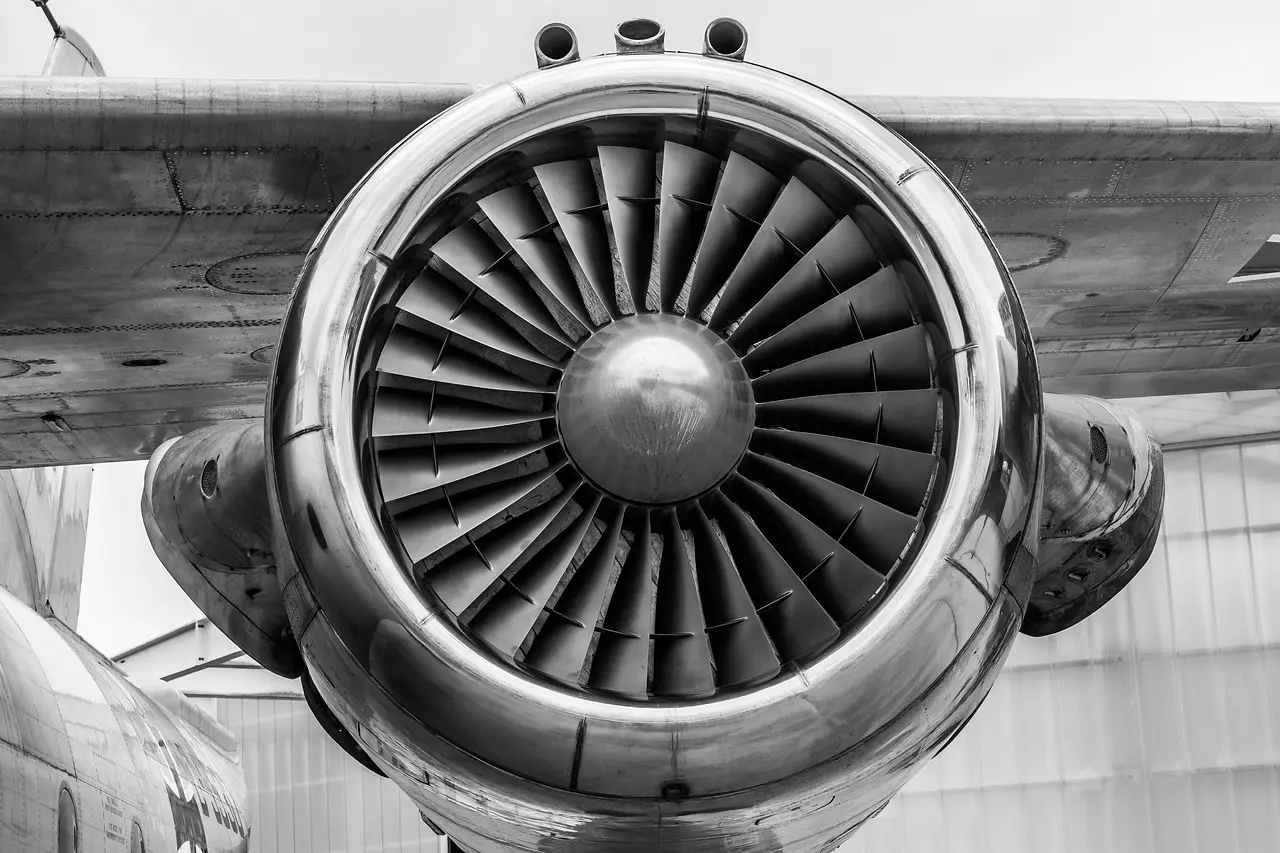
Boom Supersonic ran the prototype core of its Symphony engine at 6,500 rpm on November 21, achieving ignition on the second attempt after the company put the odds of success below 50%. The test, conducted at Colorado Air and Space Port east of Denver, gathered real-time data from nearly 2,000 sensors during a deliberately short run that Boom intends to extend over the coming months.
"Prometheus would be proud, we thought there was less than a 50% chance it would work, but on the second try overall we got light off," founder and CEO Blake Scholl told Aviation Week. He added that extremely few companies have built both an engine and an airplane, and none has produced a supersonic aircraft plus a supersonic engine of its own.
Why the core matters to two products at once
Boom calls the hardware the Sprint Core, and it sits at the center of a two-track strategy. In Symphony, the engine intended for the Mach 1.7 Overture airliner, the core will sit behind a fan producing about 40,000 lb (178 kN) of thrust. In Superpower, a 42-MW gas turbine for AI data centers, the fan is removed and the hot gases spin a separate turbine coupled to an electric generator. Boom says the two machines share more than 75% of their parts.
Mechanically, the core is conventional in layout: a six-stage compressor squeezes incoming air, fuel burns in it, and the hot gases drive a turbine that in turn drives the compressor. Boom plans to test the complete engine around mid-2027 and will manufacture its own single-crystal turbine blades — the components exposed to the highest heat — at a new factory in Centennial, Colorado. "When we bet on suppliers, we tend to be disappointed," Scholl said.
What pushed Boom into engine-making
The company decided to build its own engine in 2022 after Rolls-Royce, a partner since 2020, exited the program. GE and Safran declined interest; Pratt & Whitney said supersonic engines were not in its plans. Boom's XB-1 demonstrator broke the sound barrier in January 2025 and repeated the feat weeks later without an audible boom on the ground — but it flew on secondhand military engines, not Boom hardware.
No passenger aircraft has flown supersonic since Concorde retired in 2003. In 1977 Concorde crossed from New York to London in just under 3.5 hours at Mach 2.02; the same route takes about 7 hours today. Boom claims Overture will cruise at Mach 1.7 (roughly 1,100 mph / 1,770 km/h) at 60,000 ft, carrying 60–80 passengers at business-class-comparable fares. The company holds 130 orders and pre-orders from United, American Airlines and Japan Airlines.
The data-center bet and its first setback
AI data centers are short of generation capacity, and many operators want dedicated gas turbines. Boom positioned Superpower as the business that pays for the airliner. In December 2025 it unveiled the turbine with Crusoe as launch customer, holding an order for 29 units worth US$1.25 billion. That deal collapsed in September; Crusoe told TechCrunch it would keep using turbines, "just not Boom's." Scholl says unnamed customers will receive about 250 MW of turbines next year.
Boom's production targets stand at 25 turbines a year by 2028 and 50 by 2029, with first deliveries in mid-2027 — the same window as full engine testing. The airliner schedule is less firm. The official target was 2029, but United CEO Scott Kirby said in October that "it's not going to happen in '29 – it's going to take longer." Scholl subsequently conceded on X that Overture "might be a year or two later than we hoped."
The company frames the coupling as an engineering advantage rather than a risk concentration: once Superpower enters service, its operating experience and reliability data will inform Symphony's development.
via newatlas.com (Source)
Filed under
More from Rebecca Stone
Show full bio
Market editor covering regulation, policy and their impact on research and development at Hypothesis Wire.
288 articles
References
- Maxwell's M1 Hybrid Amphibian Targets 1,150-Mile Hauls on Diesel and Six Electric Minutes
- ZF's 30,000-rpm motor halves rare-earth magnet mass in EV axles
- AI Workloads Push Silicon Past Monolithic Limits: The Case for Co-Design
- Europe's AI Compute Footprint Jumps 800 Exaflops in One Year, NVIDIA Says
- Deuterium fusion in foils plateau at rates 10^18 above theory