Proceedings · Session S-739 · filed November 19, 2026
AI & Emerging Tech in R&DSession paper
250,000 Nigerian Farmers Get Data-Driven Climate Insurance
Pula, Leadway Assurance and Bayer Foundation are extending data-driven agricultural insurance to roughly 250,000 smallholder farmers across eight Nigerian states, as AI forecasting and local-language delivery gaps remain the binding constraint.
By Amara Osei4 min read721 words
Summary
- Pula, Leadway Assurance, Bayer Foundation and government partners cover roughly 250,000 smallholder farmers across eight Nigerian states.
- Microsoft Research's probabilistic bias correction uses machine learning to fix recurring errors in existing weather models.
- LINGUA Africa, backed by Microsoft's AI for Good Lab, supports AI tools in Hausa, Yoruba and Igbo.
- Nigeria's Digital Climate Advisory Services initiative pairs NiMet and MTN Nigeria to deliver location-specific weather guidance by mobile.
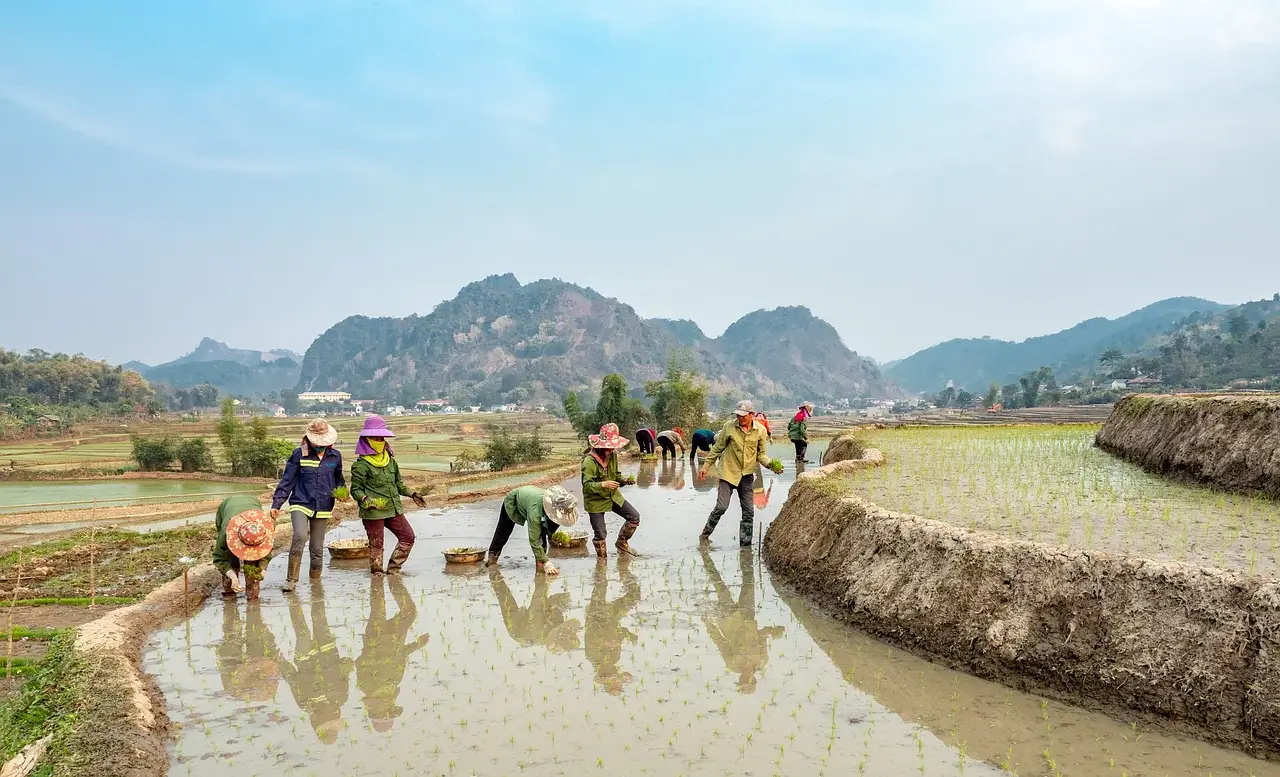
Roughly 250,000 smallholder farmers across eight Nigerian states are receiving data-driven agricultural insurance and climate-risk management through a coalition of Pula, Leadway Assurance, the Bayer Foundation and government partners. The figure, cited by Dr Girmaw Abebe Tadesse, who leads Microsoft's AI for Good Lab in Nairobi, is one of the few quantified outcomes in a field where claims about AI-assisted agriculture routinely run ahead of measured results.
The context is a planting calendar under stress. In Nigeria and across much of the continent, increasingly erratic rainfall, prolonged dry spells and recurrent flooding are disrupting sowing windows and depressing yields. For a smallholder household, a single mistimed planting decision can shape a season's income, food security and capacity to invest in the next cycle. The article, published ahead of COP31, argues the binding constraint is no longer access to climate information but the translation of forecasts into decisions.
What does the technology actually deliver?
The technical claim rests on probabilistic bias correction, a Microsoft Research method that applies machine learning to correct recurring errors in existing weather models. No accuracy figures, validation datasets or peer-reviewed results accompany the description, so R&D managers should treat the improvement as asserted rather than demonstrated. The method's value proposition is narrow: better probabilistic forecasts during the pre-planting window, when farmers decide when to sow and how to allocate inputs.
Tadesse is explicit that forecasting is only the beginning. "What works in one region may not work elsewhere," he writes, calling for context-aware guidance that accounts for soil conditions, crop varieties, water availability, costs and farmers' own knowledge.
How is climate intelligence reaching farmers?
Nigeria's Digital Climate Advisory Services initiative, involving the Nigerian Meteorological Agency (NiMet) and MTN Nigeria, delivers location-specific weather guidance through mobile channels to inform decisions on planting, irrigation and harvesting. The article offers no uptake numbers, farmer outcomes or independent evaluation of the programme.
Two further Nigerian cases illustrate adjacent models:
- Farmcrowdy, a digital platform connecting farmers with financing and agricultural support. Tadesse notes it is an example of digital agricultural finance, not AI forecasting, but shows technology can close the finance gap facing smallholders.
- The Pula-led insurance effort, the only initiative with a beneficiary count attached.
Where do the delivery gaps remain?
The author identifies language, connectivity costs, digital literacy and thin agricultural extension services as the filters determining whether advice arrives usefully. "Accurate information has little value if it arrives too late or cannot be understood," Tadesse writes.
LINGUA Africa, supported by Microsoft's AI for Good Lab and partners, addresses the language dimension. Within Nigeria, AgroLingua Africa is exploring AI delivery of agricultural information in Hausa, Yoruba and Igbo, while HausaNLP's DialectBridge targets AI performance across regional Hausa dialects. No benchmarks or deployment figures appear for either project. The stated principle: "agricultural AI must listen before it advises," strengthening farmers' decision-making rather than overriding their experience.
Institutional constraints sit above the technology. Agricultural records are fragmented, public agencies often lack specialist capacity, and the institutions responsible for agriculture, meteorology and disaster management struggle to share information. Tadesse is direct that AI cannot overcome these constraints alone.
What should governments do at COP31?
The article's policy ask is that African governments and development partners treat agricultural data systems as essential climate adaptation infrastructure. Adaptation finance, Tadesse argues, should fund linkages across crop surveys, interoperable databases, affordable connectivity and ongoing training for government analysts and extension workers, with responsible data-sharing and national ownership to keep systems useful beyond individual project cycles.
The framing carries caveats worth noting. Microsoft funds the AI for Good Lab, and the article highlights Microsoft Research methods and Microsoft-backed initiatives without independent assessment of their performance. The 250,000-farmer insurance figure is the sole hard number; everything else — forecast improvements, mobile advisory reach, local-language tooling — remains at the pilot or described-capability stage.
The boundary of the claim is clearly drawn: AI cannot prevent droughts, replace irrigation or eliminate farmers' financial pressures. Its contribution, in the author's framing, is anticipatory — helping farmers and governments act before climate risks become crises. As COP31 convenes, the test will be whether adaptation finance turns the described data infrastructure into measured outcomes for the smallholders it is meant to serve.
via businessday.ng (Source)
Filed under
- agricultural-ai
- climate-adaptation
- agricultural-insurance
- digital-agriculture
- weather-forecasting
More from Amara Osei
Show full bio
News editor covering money, funding and market shifts around research and development at Hypothesis Wire.
261 articles
References
- India and Ghana sign crop research and technology agreement
- USDA NIFA Puts $300,000 Behind Virtual Greenhouse Training Tool
- AI trained on 30 years of Pingtan weather data selects hybrid storage mix
- AI's Climate Payoff Stays Mostly on Paper, Sector Review Finds
- Ghana offers Africa an Article 6 model built on 34,705 ITMOs