Proceedings · Session S-356 · filed September 30, 2026
Translational ScienceSession paper
20-Micron Hydrogel Cloak Keeps Transplanted Islets Alive 100 Days
Penn State's 20-µm biomimetic coating kept diabetic mice glucose-normal for 100+ days without immunosuppressants, cutting polymer volume 71-fold versus standard capsules.
By Amara Osei3 min read657 words
Summary
- BZP-U-coated islets restored normal blood glucose in diabetic mice within 7 days; the majority stayed diabetes-free for over 100 days without systemic immunosuppression.
- The 20-µm coating uses 1/71 of the polymer volume of a 500-µm microcapsule and forms spontaneously with 100% encapsulation efficiency under physiological conditions.
- Only 24% of recipients of the Edmonton protocol were insulin-independent at 28 months; Lantidra, the sole FDA-cleared islet therapy, requires lifelong immunosuppression.
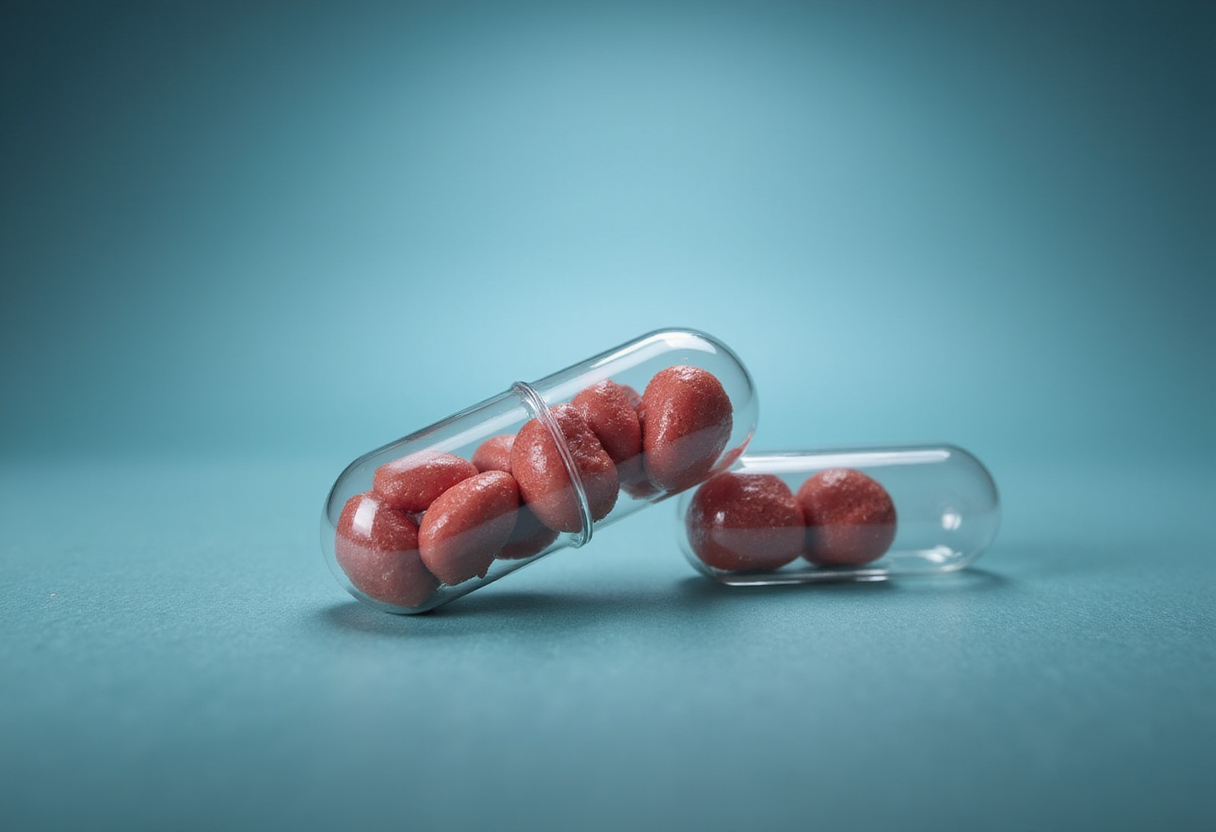
Diabetic mice receiving donor islets wrapped in a 20-micrometre biomimetic hydrogel maintained normal blood glucose for more than 100 days without systemic immunosuppression — a result that outlasts conventional coated-cell therapies by a wide margin and points toward a cheaper, safer path to islet transplantation.
Yong Wang, professor of biomedical engineering at The Pennsylvania State University, and colleagues published the work in Nature Biomedical Engineering. The team spent eight years developing what it calls biomimetic zona pellucida (BZP) encapsulation, a process that reproduces, on the surface of living islets, the calcium-ion-driven glycoprotein cleavage, assembly and crosslinking that hardens the zona pellucida — the membrane surrounding a mammalian egg — after fertilization.
The engineering choice that distinguishes the work is scale. Most encapsulation programs use semi-permeable capsules roughly 1.5 mm in diameter to admit oxygen and nutrients while excluding immune cells. The Penn State group went the other way: a film roughly 20 µm thick that forms spontaneously on the cell surface in aqueous solution under physiological conditions, with 100% encapsulation efficiency and no exposure to harsh physical, chemical or biological processing. The researchers report the coating preserves cell viability and function.
Thinness translates directly into transplant logistics. Coating a 100-µm islet with a 20-µm BZP layer consumes 1/71 of the polymer volume required by a 500-µm microcapsule. That reduction shrinks the total transplantation volume, making it easier for a target organ — in clinical islet therapy, typically the liver — to accommodate the large islet mass needed for efficacy. The authors also argue that less implanted polymer is a safety advantage over larger capsules, though this remains a hypothesis until tested beyond mice.
The in vivo data come in two tiers. First, the team injected BZP-coated polystyrene microparticles into the peritoneal cavities of mice and measured a lower foreign-body response than with uncoated particles. They tested two formulations — BZP-U, built on chemically modified ultrapure alginate, and BZP-R, using regular alginate — and found BZP-U significantly mitigated the immune response relative to BZP-R, implicating alginate purity as a process variable.
Second, in immunocompetent diabetic mice, BZP-U-coated islets restored blood sugar to healthy levels within seven days. The majority of the animals stayed diabetes-free for over 100 days without continuous systemic immunosuppression. Control mice receiving uncoated islets could not sustain healthy glucose levels beyond seven days.
The benchmark here matters for anyone weighing the commercial landscape. Islet transplantation entered the clinic in 1974, and the University of Alberta's Edmonton protocol of 2000 — higher islet mass, steroid-free immunosuppression — raised expectations of a cure. In practice, only 24% of Edmonton-protocol recipients were insulin-independent at 28 months. Lantidra, the only islet therapy cleared by the US Food and Drug Administration for type 1 diabetes, still requires continuous immunosuppressants, which carry risks of infection and cancer. An encapsulation approach that eliminates that drug burden would change the value proposition of allogeneic islet products — and, potentially, of stem-cell-derived beta-cell programs that face the same rejection problem.
The mouse data carry familiar caveats. The study does not yet establish how long BZP protection lasts beyond the 100-day window, and mice are not humans: islet doses, implantation sites and immune kinetics differ substantially. The authors themselves flag the open questions. "Large animal studies will be necessary to fully demonstrate their potential in cell transplantation," they write. "When large animals are used, one needs to examine not only glucose levels but also other key biomarkers. Moreover, the long-term immune responses to BZP and BZP-encapsulated cells warrant further investigation to yield deeper insights into BZP optimization and improvement."
Wang's group plans to measure the effective duration of protection per transplant and to move the platform into large-animal models — the step that will determine whether a 20-µm coating can do in a pig, and eventually a patient, what it did in a mouse.
via psu.edu (Original)
Filed under
- islet-transplantation
- hydrogel-encapsulation
- immunoisolation
- biomaterials
- diabetes-research
More from Amara Osei
References
- JNC Reports 91% Virus Recovery with Large-Pore Cellulose Resin at BPI 2026
- CAR-T in Bladder Cancer and Misread Spectra: This Week's Two Big R&D Stories
- Novo Nordisk Commits Up to $1.3 Billion for Long-Acting Delivery Tech
- Peptide Screens Should Build Knowledge, Not Just Hit Lists
- Sterile Injectables to Hit $984B by 2031, Raising Transfer Stakes