Proceedings · Session S-690 · filed November 6, 2026
AI & Emerging Tech in R&DSession paper
10x Genomics CTO: AI will leave parts of biomedical R&D 'painfully slow'
10x Genomics launched Sentira Single Cell on Nov. 2, a Claude-powered agent for Chromium data. CTO Michael Schnall-Levin expects split outcomes for biomedical R&D speed.
By Rebecca Stone4 min read759 words
Summary
- 10x Genomics launched Sentira Single Cell on Nov. 2, built on Anthropic's Claude
- CTO Michael Schnall-Levin spoke to R&D World in a Nov. 4 interview
- The 'vast majority' of 10x coders and coding customers have adopted AI tools
- Lab automation in actual experimentation remains 'extremely niche'
- 10x validated Sentira against hand-done analyses by a computational biologist
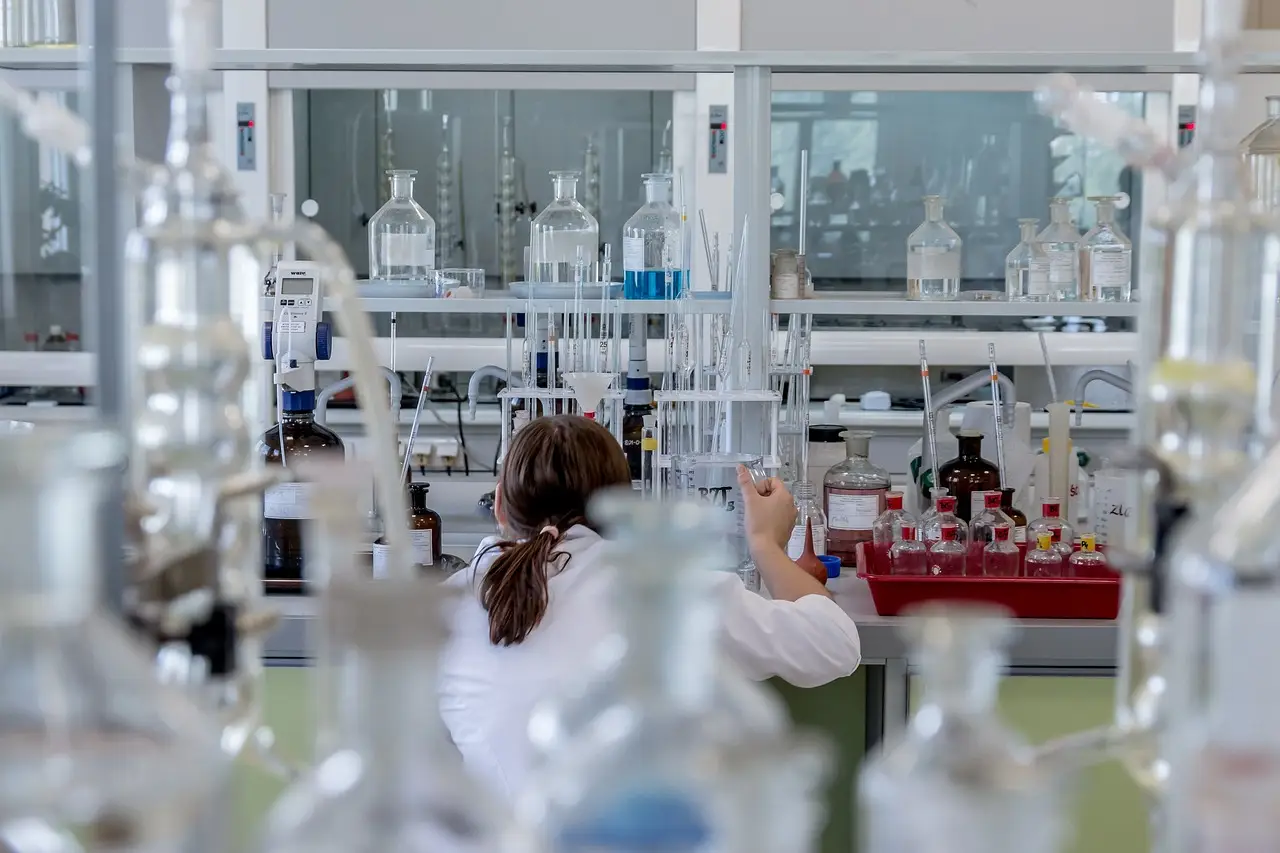
10x Genomics launched Sentira Single Cell on Nov. 2, a cloud application that uses an agent built on Anthropic's Claude to run custom analyses of data from the company's Chromium single-cell platform. Chief technology officer Michael Schnall-Levin says the tool attacks the "last mile problem" in single-cell research, where a specific biological question usually requires a bioinformatician to write custom code.
10x, based in Pleasanton, California, makes single-cell and spatial biology instruments; its partners include NVIDIA and Anthropic. In a Nov. 4 interview with R&D World, Schnall-Levin said the "vast majority" of 10x employees and customers who write code have already adopted AI tools.
His forecast for biomedical R&D overall is deliberately split: some parts of developing therapies and diagnostics "will get massively accelerated" while others "will still be really painfully slow." He is still working out which parts land where. "I don't have all the answers yet," he said.
Where does AI actually work in the lab today?
Schnall-Levin draws a sharp line between virtual work and physical work. On the data-analysis and software side, he says, AI is "incredibly powerful and enabling," with only a minority of skeptics holding out.
Inside the laboratory itself, the picture is thinner. "In the lab, literally in the lab, it's not helpful yet," he said. Heavy AI use now clusters around the experiment rather than in it:
- Planning experiments and writing up modified protocols
- Analyzing data
- Preparing presentation slides for team review
Lab automation in actual experimentation remains "extremely niche," in his words, and he called AI-driven automation demos "more of a PowerPoint." On the Waymo-style ambition of robots running any procedure, he noted that AI for the physical world lags AI for fully virtual work by years.
Who gains from Sentira Single Cell?
The tool lets bench scientists ask questions of Chromium data in plain English, review the agent's proposed analysis plan, and examine the code behind the results. Two groups benefit, according to Schnall-Levin.
For experimentalists without bioinformatics training, independence is the gain: they can ask more questions without waiting on a bioinformatician. For bioinformaticians, the gain is relief from "plumbing together different packages" — finding software tools, connecting them, verifying they work — so they can spend their time on genuinely novel capabilities.
Adoption friction, he argued, is lower because the tool sits on a continuum. Users can export intermediate results and continue with their own code. "You don't have to suddenly flip everything over," he said. That stands in contrast to systems that demand heavy up-front switching costs.
How does 10x build trust in the agent?
Sentira uses what Schnall-Levin calls a harness — structured calls to the large language model (the AI system generating the analysis) with carefully designed prompting. Some internal agents propose a workflow; other agents criticize it skeptically.
The application also exposes every choice it makes, so scientists can review the reasoning rather than receive a bare answer. "Ultimately a human being is responsible for the work," he said, comparing the accountability to a researcher who relies on an intern. He cautioned against copying chatbot output directly into publications without confirmation in multiple ways, noting that "AI is not perfect yet."
10x tested Sentira against analyses a computational biologist had already done by hand before launch.
What comes next?
10x has also shipped an agentic customer-support workflow that answers product questions around the clock, such as which products suit an unusual sample type. Schnall-Levin sketched a longer-term unified experience spanning product selection, experiment planning, reagent ordering, data analysis, and sharing experimental setups with collaborators. "We're starting to build the different building blocks there, and then we'll figure out how to put it all together," he said.
The Anthropic relationship is technical and philosophical, he said, citing Anthropic leadership's interest in biology — Dario Amodei's background in the field — and Claude's fit for the workload.
On timelines, Schnall-Levin called himself "a very long-term bull" on curing disease, describing AI as possibly the most important technological wave in decades. He warned that arrivals from the pure AI world can be naive about bottlenecks — "We're just going to cure every disease in six months" — and said the real gains lie in targeting clearly stated pain points such as trial success rates, cost, and speed, worked backward from the people who face them. Many diseases may be cured in decades, in his view; just not in six or twelve months.
via R&D World (Source)
Filed under
- artificial-intelligence
- single-cell-analysis
- biomedical-r-d
- bioinformatics
- 10x-genomics
More from Rebecca Stone
Show full bio
Market editor covering regulation, policy and their impact on research and development at Hypothesis Wire.
232 articles
References
- 10x Genomics ships Claude agent for single-cell analysis 'last mile'
- 10x Genomics Launches Sentira Single Cell, an Agentic Claude Analysis App
- OpenAI and PerturbAI's Agent Fleet Analyzes Brain Atlas in 32 Minutes
- Anthropic's AI Lab Sparks Biology Backlash Over Discovery Claim
- Anthropic and Novo Nordisk expand Claude work into drug discovery