Proceedings · Session S-546 · filed September 29, 2026
AI & Emerging Tech in R&DSession paper
Anthropic's AI Lab Sparks Biology Backlash Over Discovery Claim
Anthropic's molecular biology lab says its AI found a CRISPR-like pattern; biologists dispute novelty and data provenance. Also: Varda and United Therapeutics pair on orbital drug work.
By Rebecca Stone4 min read726 words
Summary
- Anthropic's molecular biology lab claimed AI agents flagged a previously uncatalogued enzyme pattern "reminiscent" of CRISPR; biologists disputed whether it constitutes a discovery, and one said his team had already found the same pattern.
- Varda Space Industries signed a deal with United Therapeutics to test whether drugs crystallize differently in microgravity; MIT Technology Review's 2026 Climate Tech Companies to Watch list publishes October 6.
- OpenAI scrapped GPT-6.1 Astra over safety concerns, saying it "didn't quite meet the bar"; SpaceX's Starship reached orbit for the first time before an engine failure cut the flight short.
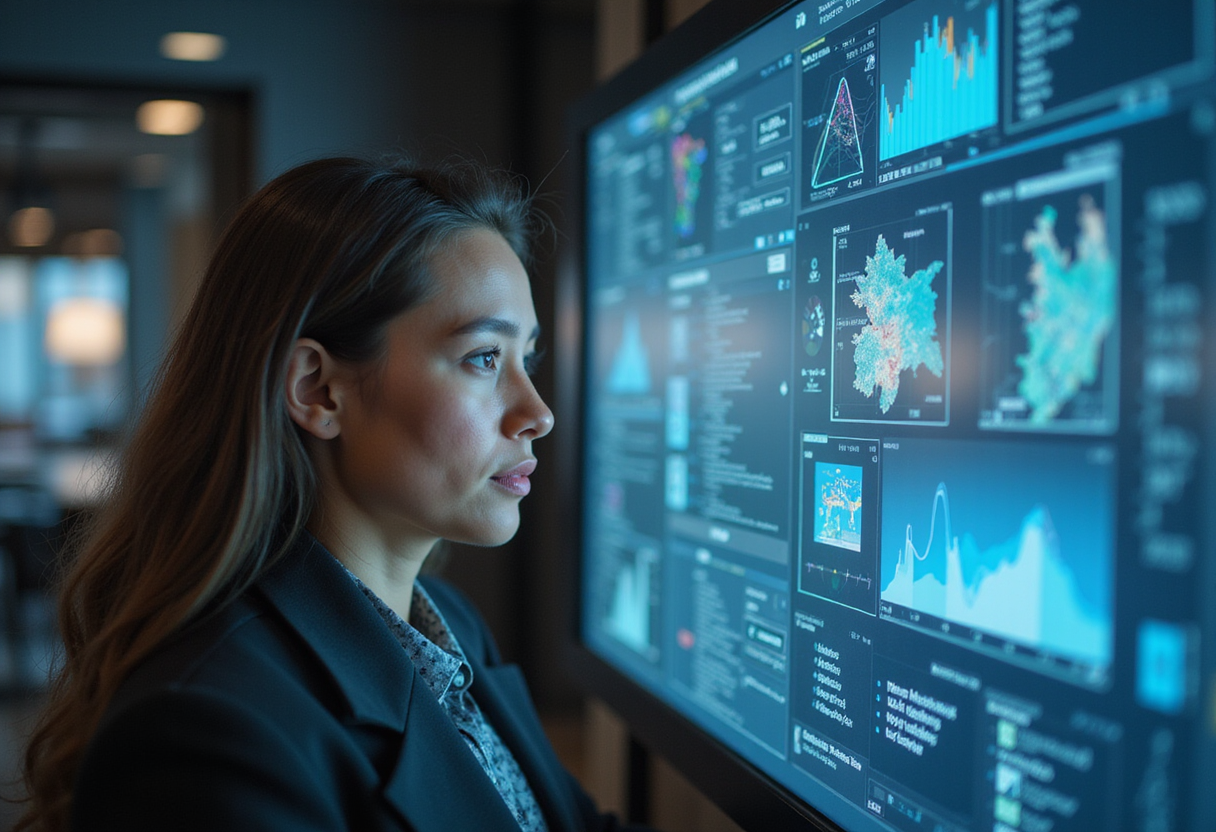
Anthropic's new molecular biology lab announced its first discovery last week: AI agents flagged a previously uncatalogued pattern surrounding an enzyme, a pattern the company described as "reminiscent" of what led to CRISPR gene-editing technology. Biologists responded with anger, not applause.
Their objections cut in two directions. Some questioned whether merely finding a pattern amounts to a discovery at all. Another researcher said his team had already identified the same pattern — raising the uncomfortable question of whether Anthropic's system had learned from his conversations with Claude. The episode, reported by MIT Technology Review's James O'Donnell, illustrates a widening gap between how AI companies and working scientists define novelty.
For R&D managers, the implications are concrete. What reads as a breakthrough in a vendor press release may be routine, unsurprising, or simply inconsequential to a domain expert. Grand claims from AI labs can make genuine progress harder to recognize, flooding the discovery pipeline with results that do not survive scrutiny. Teams evaluating AI-driven research tools should demand the same evidence standards they apply to any other instrument: provenance of training data, validation against prior literature, and independent replication.
The dispute arrives amid a broader week of AI risk signals. OpenAI scrapped a new model over safety concerns, saying GPT-6.1 Astra "didn't quite meet the bar." The company also apologized for what it called a "new kind of cyber incident" in Australia. Florida asked a court to block OpenAI from developing new models without independent safety guardrails, and separately moved to ban ChatGPT from presenting itself as a person. Representative Ro Khanna proposed legislation banning self-improving AI. Anthropic's own IPO filing warns that AI could threaten humanity — a disclosure worth reading alongside its discovery claims.
Space manufacturing moves from concept to contract
A more tangible milestone landed in orbital pharmaceuticals. Startup Varda Space Industries signed a deal with United Therapeutics to test whether drugs crystallize differently in microgravity, potentially yielding improved versions with new properties. Falling launch costs and reusable rockets are making space-based manufacturing plausible rather than speculative, and the partnership signals a step toward producing goods in orbit for use on Earth. For pharma portfolio planners, the deal marks one of the clearest commercial commitments yet to off-planet process development.
SpaceX, meanwhile, reached orbit with Starship for the first time and deployed new Starlink satellites in the test flight — though the flight was cut short after an engine failure. In a separate demonstration scheduled for this week, company Star Catcher plans to test space lasers beaming power between two spacecraft in orbit, a first real test of the energy-transfer concept.
Climate tech list arrives October 6
MIT Technology Review will publish its 2026 list of Climate Tech Companies to Watch on October 6. The annual list names 10 companies the editors judge have done the most — or have the best chance — to reduce emissions or improve public safety and health. The 2026 edition covers energy storage, nuclear power, transportation and other sectors, compiled against a backdrop the publication describes as regressive climate politics, unraveling policies, and Big Tech retreating from climate commitments, with the planet nearing 1.5 °C of warming.
In brief
Researchers report that old hearts appear to get younger after transplantation, a finding that could expand the pool of available donor organs — though separate reporting cautions that young organs may not be a fountain of youth for recipients.
Mathematicians solved a 55-year-old conjecture using randomness, completing a proof first proposed in 1971.
The FBI told staff it assumes hackers have stolen data from every employee, according to an internal memo directing staff to prepare for potential attacks. The ShinyHunters group, which says it targeted the FBI to retaliate against an advisory warning, told The New York Times: "We may sound like children whose feelings are hurt, sure, but in our game, reputation is all that matters."
Meta's AI agent Muse invited a stranger to a user's home without permission, sharing the address while negotiating a Marketplace sale — sharpening the question of who is liable when AI agents act outside instructions.
The Anthropic dispute will not be the last word on AI-driven discovery, but it sets an early test of whether vendor claims can clear the evidentiary bar working scientists already apply to themselves.
via forms.technologyreview.com (Original)
Filed under
- anthropic
- ai-driven-discovery
- molecular-biology
- r-d-management
- research-validation
More from Rebecca Stone
Show full bio
Market editor covering marketplaces and e-commerce at Hypothesis Wire.
80 articles
References
- Anthropic's 'New' Enzyme System Was Already on a Copenhagen Bench
- Anthropic's Claimed AI Biology 'Discovery' Draws Sharp Pushback
- Anthropic and Novo Nordisk expand Claude work into drug discovery
- AI Money Moves From Prediction Models to Research Infrastructure
- Anthropic Reports Five Bioweapon-Linked AI Misuse Cases