Proceedings · Session S-372 · filed September 28, 2026
Research Funding & PolicySession paper
Windsor Hospital, University of Windsor Land Precision Oncology Funding
Windsor Regional Hospital and the University of Windsor have received research funding for precision oncology work, pairing clinical and academic capacity in the Ontario border city.
By Priya Raman3 min read625 words
Summary
- Windsor Regional Hospital and the University of Windsor have received research funding for precision oncology.
- The report names both institutions but does not disclose the funding amount, awarding body, project scope, or timeline.
- The partnership pairs a hospital clinical site with university research infrastructure, a model Ontario funders have favoured in recent oncology competitions.
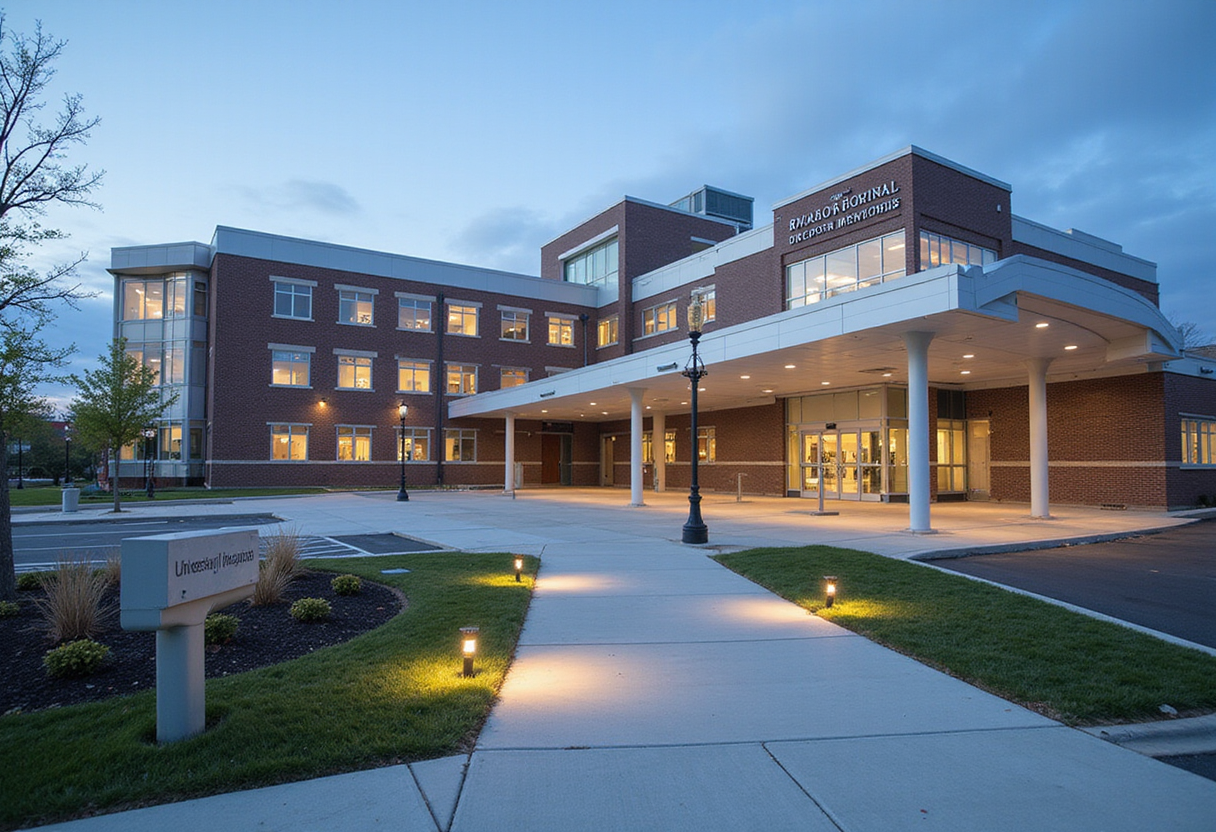
Windsor Regional Hospital and the University of Windsor have secured research funding to support work in precision oncology, according to a report by CK News Today. The award links the region's largest hospital operator with its local university, extending a model of clinician-led cancer research that has gathered momentum across Ontario over the past decade.
The report names both institutions as beneficiaries of the funding but does not specify the dollar value, the awarding agency, or the project timeline. That omission matters for R&D managers tracking oncology research capacity in mid-sized Canadian markets: the size of the grant determines whether this is a pilot-scale collaboration or a program capable of sustaining dedicated sequencing infrastructure, biostatistics support, and clinical trial coordination staff.
Precision oncology, as a field, depends on three budget lines that institutions must fund continuously rather than through one-off grants. First, molecular profiling — tumour sequencing, panel testing, and increasingly RNA and liquid biopsy workflows — requires instruments with per-sample operating costs that scale directly with patient volume. Second, data interpretation demands bioinformatics personnel whose salaries typically exceed what hospital research budgets absorb without external support. Third, translational research requires consented biospecimen collections with chain-of-custody documentation that satisfies both research ethics boards and, where industry partners participate, sponsor auditors.
The Windsor pairing positions both institutions to share those costs. Windsor Regional Hospital operates as the clinical site, where patient recruitment, tissue acquisition, and treatment follow-up occur. The University of Windsor contributes research infrastructure, including faculty investigators and graduate-level laboratory staff. For hospital research administrators, university partnerships of this type reduce the marginal cost of research participation; for university principal investigators, hospital access solves the recruitment bottleneck that most often stalls oncology studies at academic sites without affiliated clinical operations.
The announcement fits a provincial pattern. Ontario health research funding has increasingly favoured collaborations that tie academic science to hospital delivery systems, on the argument that precision medicine generates value only when biomarker-driven findings change treatment decisions at the bedside. Reviewers at provincial and national funding bodies have, for several competition cycles, weighted demonstrable clinical partnerships heavily in oncology streams.
What the report does not establish is equally worth noting for portfolio planners. There is no disclosure of the funding envelope, no named principal investigator, no target cancer type, and no specified methodology — whether the funded work involves tumour board sequencing programs, retrospective biomarker correlates, or a prospective trial. Without those details, the practical significance for competing research groups, equipment vendors, and hospital procurement teams in the region remains an open question.
Institutions evaluating whether to pursue similar partnerships can still draw structural lessons from the Windsor arrangement. Shared governance is the first requirement: hospital research ethics approval and university institutional review must align on consent language and data-sharing terms before the first sample moves. Cost allocation is the second: sequencing expenses, informatics time, and clinical coordinator salaries each need an assigned budget owner, or the collaboration will stall at the first funding gap. Publication and intellectual property terms constitute the third: hospital-affiliated discoveries frequently involve industry diagnostics partners, and agreements signed early prevent later disputes over biomarker commercialization rights.
For researchers in the Windsor-Essex region, the funding signals that local oncology work can now anchor a career without relocation to Toronto or London teaching hospitals. For administrators at comparable mid-sized institutions, it offers evidence that the clinician-university funding model remains viable in the current competition environment.
The two Windsor institutions have not yet published a project description, staffing plan, or research protocol. Prospective collaborators and vendors should watch for those disclosures, which will clarify the scope of the funded program and its fit with the regional cancer care pathway.
via Google News: Research funding & science budgets (Source)
Filed under
- precision-oncology
- hospital-research
- university-partnerships
- ontario
- research-funding
More from Priya Raman
References
- Precision oncology research funding lands in Windsor
- Windsor Hospital and University Secure Precision Oncology Funding
- Senate Moves to Insulate Cancer Research Funding From Politics
- Cancer Advocacy Group Presses Congress to Shield Research Funding
- Federal Cancer Research Budgets Rose After a Year of Uncertainty