Proceedings · Session S-832 · filed October 10, 2026
Technology Transfer & IPSession paper
Vietnam and Germany open talks on high-speed rail technology transfer
Vietnam and Germany have opened exploratory discussions on high-speed rail technology transfer, Vietnam News reported. The brief announcement carries no funding figure, timeline or named participants.
By Priya Raman3 min read652 words
Summary
- Vietnam and Germany have opened exploratory talks on high-speed railway technology transfer, per Vietnam News
- The Vietnam News item carries no funding figure, delivery timeline or named participants
- Vietnamese authorities have discussed a North-South high-speed line for roughly two decades, with National Assembly review of revised options in 2024
- Siemens Mobility's Velaro platform operates high-speed services in China, Spain, Turkey and Russia
- Rail technology transfer typically spans four layers: rolling stock, signalling, civil engineering, and operations and maintenance
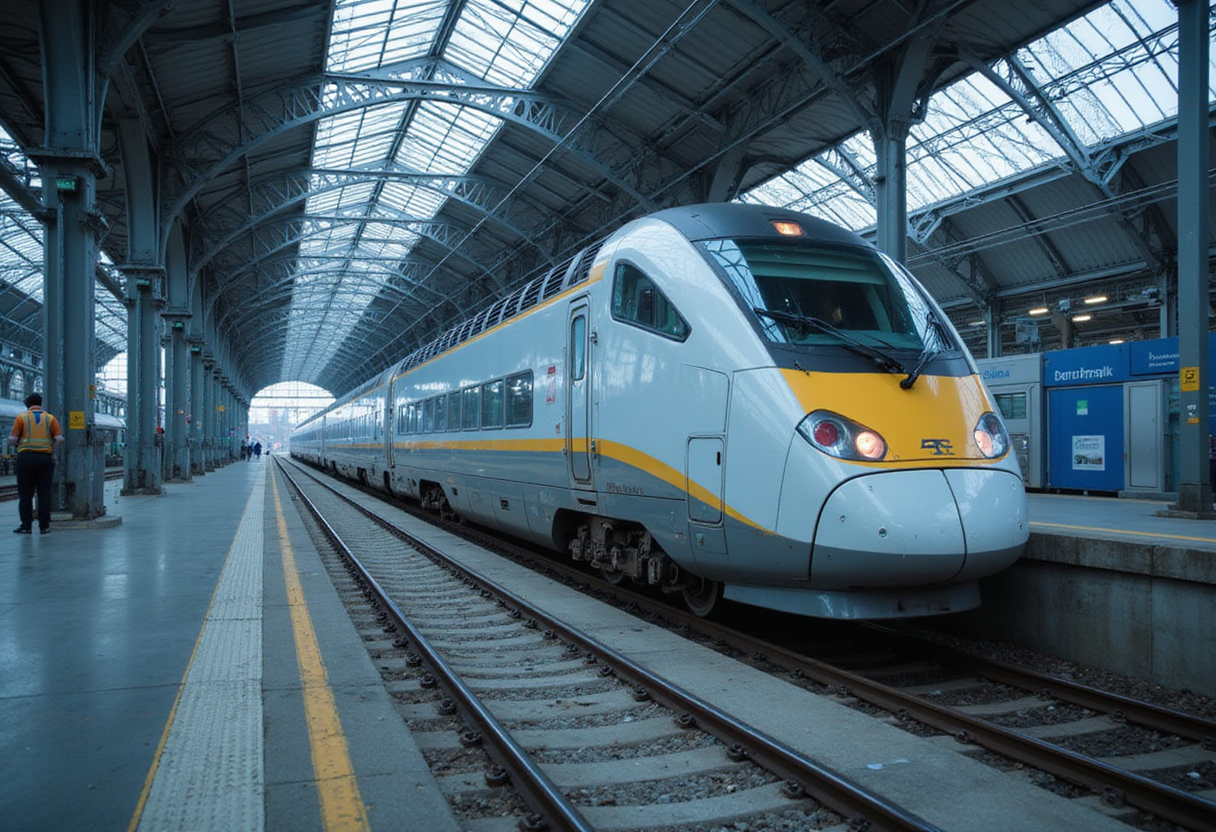
Vietnam and Germany have opened exploratory discussions on transferring high-speed railway technology, Vietnam News reported this week, signalling Hanoi's continued outreach to European rail majors as it weighs options for a long-planned North-South express corridor.
The brief announcement carries no funding figure, no delivery timeline and no named participants. Vietnam News identified the subject of the talks only as "high-speed railway technology transfer" between the two governments. R&D managers tracking the file should treat the item as scope-setting, not procurement.
What the announcement does — and does not — say
The Vietnam News piece provides no detail on which German ministries, agencies or companies are at the table, nor on which Vietnamese counterparts are leading the talks. It does not specify whether the cooperation targets rolling stock, signalling, civil engineering or operations. Nor does it indicate whether the framework will produce a binding memorandum, a feasibility study, or simply a continuing dialogue.
That thin disclosure is itself the story for procurement and R&D offices. A cooperation announcement with named institutions and a budget line would be budgetable; an announcement without those elements is not.
Background on Vietnam's rail planning
Vietnamese authorities have discussed a North-South high-speed line for roughly two decades. The project returned to public debate in 2024 when the National Assembly reviewed revised route and cost options. Press reporting at that time cited estimates in the tens of billions of US dollars for the full corridor, though the Vietnam News item carries none of those figures, and any transfer agreement announced now would feed into, rather than replace, those broader cost and route decisions.
For research managers in Vietnam, the open question is whether the partnership carries an R&D component — joint laboratories, engineer training programmes, or local-content rules that move assembly into Vietnamese facilities.
What technology transfer in rail typically covers
Transfer frameworks in this domain typically span four technical layers:
- Rolling stock design and manufacturing, including bogies, traction systems and crashworthy car bodies
- Signalling and train control, including ETCS and interlocking logic
- Track and civil engineering standards, including slab-track specifications and bridge design loads
- Operations and maintenance regimes, covering depot layouts, predictive maintenance and crew certification
Which of these layers the Vietnam-Germany talks cover will determine where R&D money flows. A signalling-focused deal pushes budget into software validation and certification. A rolling-stock deal pulls capital into manufacturing tooling, test rigs and homologation work.
What German vendors typically bring
German rail engineering groups have shipped trainsets and signalling systems across multiple continents. Siemens Mobility's Velaro platform operates in China, Spain, Turkey and Russia, with ongoing work in Egypt and the United States. Deutsche Bahn Engineering & Consulting has run overseas consultancy on alignment planning and station design. Any transfer arrangement that draws on this base would give Vietnam access to existing hardware platforms and a body of operational data — both of which shorten the typical learning curve for a new high-speed network.
Two scenarios for R&D planners
Until terms are published, R&D leads at state agencies and suppliers should plan for two divergent cases:
- A training-and-licensing package, with budgets absorbed into existing technical-cooperation lines and minimal new lab build-out
- A deeper industrial package, requiring capital expenditure for assembly plants, test tracks and certification facilities
The choice depends on whether Hanoi wants a buyer-supplier relationship or a domestic industry. Until the parties publish terms, procurement teams should hold off on firm commitments.
What to watch next
The signal worth tracking is the next official disclosure: which German institutions are named, whether Vietnam's Ministry of Transport or Ministry of Science and Technology leads on the Vietnamese side, and whether the talks convert into a signed memorandum before year-end. A formal MOU with named institutions would move this from exploration into something budget officers can plan against.
via Google News: Technology transfer (Source)
Filed under
- high-speed-rail
- technology-transfer
- vietnam
- germany
- rail-engineering
More from Priya Raman
References
- Viet Nam and Germany Open Talks on High-Speed Rail Technology Transfer
- Vietnam and Germany Open Talks on High-Speed Rail Tech Transfer
- Vietnam Moves to Reinforce Research Infrastructure for Strategic Tech
- Cardiff University sets transatlantic technology transfer framing
- China's New Investment Rules Target Strategic Tech Transfer