Proceedings · Session S-135 · filed October 10, 2026
Corporate & Industrial R&DSession paper
Trina Solar, Microquanta field-test perovskite tandems at UNSW
Trina Solar and Microquanta have begun outdoor testing of perovskite tandem modules at a UNSW field site, per pv magazine Global. The notice confirms a deployment but not a measured result.
By Amara Osei3 min read643 words
Summary
- Trina Solar and Microquanta are testing perovskite tandem modules at a UNSW field site (pv magazine Global).
- The pv magazine Global report names only the two manufacturers and the host university.
- Module count, rated power, efficiency, and deployment date are not specified in the source.
- UNSW's outdoor test bed has historically driven 12–24 month commercial delays following negative findings.
- No measured efficiency figure has been published as of the pv magazine Global report.
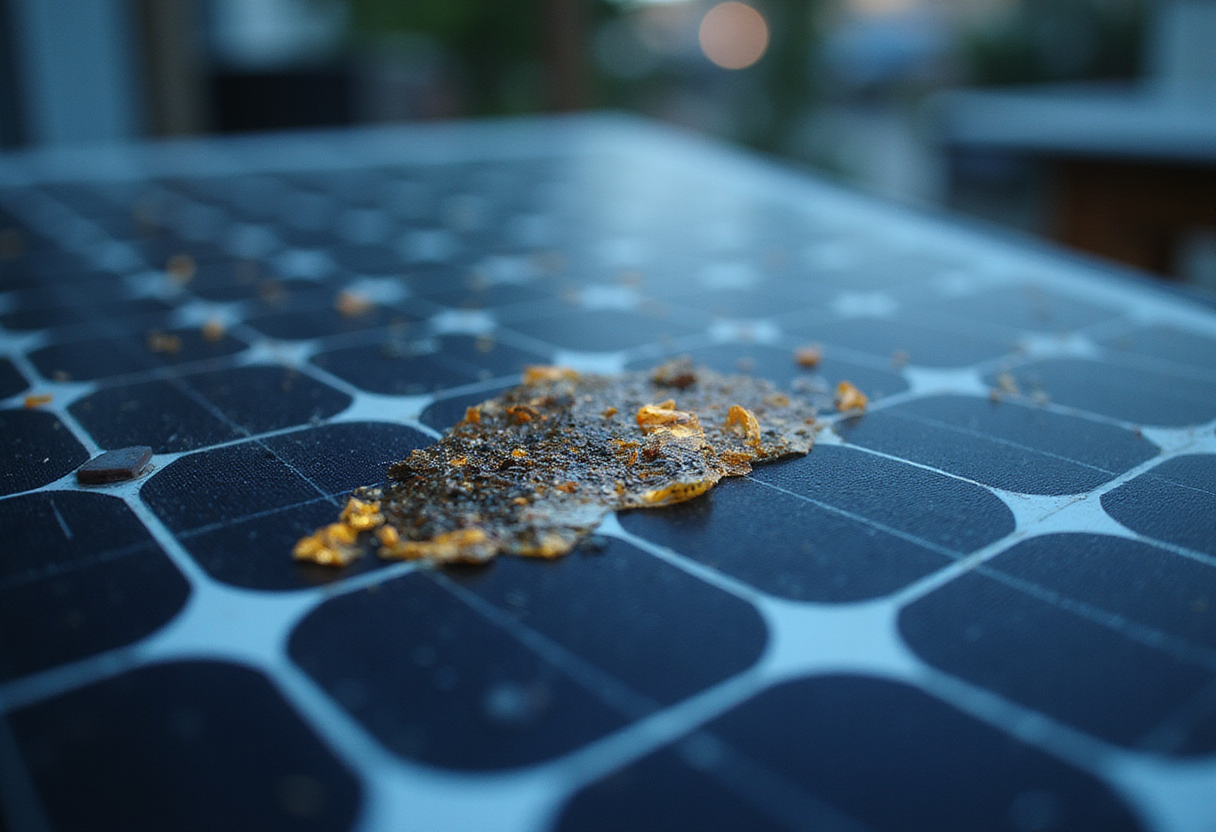
Trina Solar and Microquanta have begun outdoor testing of perovskite-based tandem photovoltaic modules at a University of New South Wales (UNSW) field site, according to a pv magazine Global notice. The pilot places a silicon-market incumbent and a perovskite specialist under the same independent monitoring conditions — a configuration R&D managers should read as a procurement signal rather than a measured result.
The pv magazine Global item, as published, identifies the two manufacturers and the host university only. Module count, rated power, expected efficiency, deployment date, certification status, and funding arrangement all remain unspecified. That thinness of detail is unusual for a tandem announcement and worth flagging up front.
What does the source confirm?
Three elements appear in the pv magazine Global report:
- Trina Solar as one participating manufacturer
- Microquanta as the other
- UNSW as the host institution
The pairing itself is the data point. Two Chinese manufacturers with overlapping perovskite roadmaps choosing the same independent Australian validator, rather than running tests at their own pilot lines, signals a procurement-grade strategy. Domestic Chinese outdoor test beds exist; the deliberate choice of UNSW places the resulting data in front of utility procurement teams that treat Australian field reports as a global reference.
What does the source leave unspecified?
The pv magazine Global notice does not state:
- Module count and nameplate capacity per unit
- Start date of outdoor exposure
- IEC 61215 or IEC 61730 certification status
- Funding or commercial arrangement between manufacturers and UNSW
- Target customer segment — residential, commercial, or utility-scale
- Expected duration before the first public performance report
Each gap carries decision weight. A 12-month commitment of two manufacturers to UNSW implies serious commercial intent; a 90-day commitment implies a marketing data point. R&D managers reviewing the headline should withhold portfolio decisions until at least the start date and planned exposure duration are confirmed.
Why does UNSW's outdoor test rig carry weight?
UNSW runs one of the longest-standing publicly accessible outdoor photovoltaic test beds in the world. Its published field efficiency, temperature coefficient, and degradation data have appeared in Nature Energy, Progress in Photovoltaics, and IEEE Journal of Photovoltaics, which utility procurement teams treat as independent third-party validation. A negative result — accelerated degradation, thermal instability, light-induced hysteresis — has historically delayed commercial rollouts by 12 to 24 months while the issue is investigated.
The site exposes modules to high-irradiance Australian conditions that stress perovskite absorbers differently than the lower-irradiance test environments common in East Asian pilot lines. A tandem that holds up at UNSW in southern-hemisphere summer has a stronger claim on Middle Eastern and Australian utility buyers than one validated only at lower insolation.
How should R&D managers read the announcement?
A tandem module field test at an independent site qualifies as a procurement-grade signal, not a lab result. R&D managers evaluating perovskite-supplier partnerships should track the following indicators across the next two reporting cycles:
- First public efficiency figure from UNSW versus each company's indoor record
- Degradation curve slope after the first 1,000 outdoor hours
- Any IEC-equivalent interim certification filings
- Whether Trina and Microquanta disclose identical module counts or comparable architectures
Until those data points appear, the pv magazine Global notice confirms a deployment, not a result. Treat vendor claims about tandem readiness as projections pending independent field data.
What is the forward read?
The commercial weight of this announcement depends on whether UNSW publishes performance data within the next 6 to 12 months. A confirmed publication would create a reference benchmark that rival perovskite suppliers and Tier-1 silicon makers would have to match in independent field conditions. Silence or indefinite delay would return the deployment to the category of pilot marketing exercises that have shaped the field for the past decade without resolving the central reliability question for perovskite-silicon tandems.
via Google News: R&D funding (Source)
Filed under
- perovskite
- tandem-photovoltaics
- field-testing
- trina-solar
- microquanta
More from Amara Osei
References
- UNSW Lands AUD 18M for Perovskite Module Field Test, Targets 2031
- Q/C Technologies Partners with Sandia National Laboratories
- Q/C Technologies signs research collaboration with Sandia National Laboratories
- Q/C Technologies Announces Partnership with Sandia National Laboratories
- US National Labs Coordinate Multi-Agency Solar Cybersecurity Standards