Proceedings · Session S-544 · filed October 10, 2026
Research Funding & PolicySession paper
Six tensions in the 'new republic of science,' per a Vienna workshop
Researchers at a FORWIT, TU Wien, and UC Irvine workshop on science policy identified six structural tensions shaping R&D portfolio decisions, including compliance drift, partisan drift, and a 28-year gap in bipartisan congressional review.
By Amara Osei4 min read824 words
Summary
- Confidence among Hispanic Americans in scientists fell from 82% to 61% between 2019 and 2023
- Confidence among Black Americans in scientists fell from 85% to 69% over the same period
- The 1998 Ehlers report 'Unlocking Our Future' remains the last bipartisan U.S. congressional review of science policy, 28 years ago
- Michael Polanyi published 'The Republic of Science' in Minerva in 1962
- The Vienna 'Disruption:Research' workshop was organized by FORWIT, TU Wien, and the University of California, Irvine
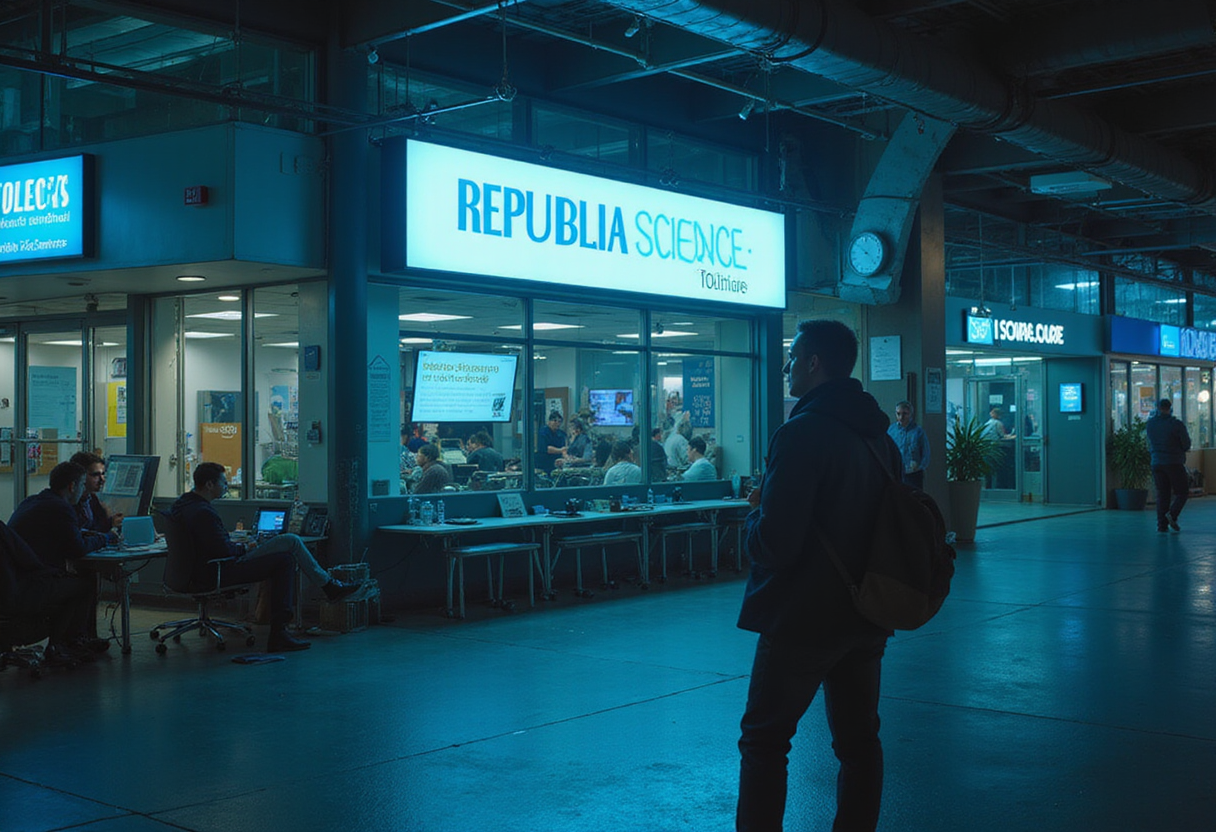
Confidence among Hispanic Americans in scientists fell from 82% to 61% between 2019 and 2023; among Black Americans, from 85% to 69%, according to figures Roger Pielke Jr. presented at a closed Vienna workshop last month. The numbers anchor six structural tensions that researchers at the meeting say now shape every R&D portfolio decision — from compliance overhead to talent flows.
The two-day "Disruption:Research" meeting convened scholars from Europe and the United States working in AI, genomics, medical research, research ethics, and science policy. FORWIT, TU Wien, and the University of California, Irvine organized it.
Pielke, a University of Colorado political scientist who advises on research policy, used the meeting to sketch what he calls "the new republic of science" and to propose three design principles for a rebuilt compact between researchers and funders.
What did Polanyi's 1962 framework get right?
The phrase "republic of science" dates to Michael Polanyi's 1962 essay in Minerva, which framed the post-war scientific community as a self-governing polity: peer review settled disputes, errors self-corrected, researchers pursued knowledge with minimal political interference. Polanyi argued public benefits flowed as a by-product.
A 1998 congressional review captured the political bargain bluntly: "The exigencies of the Cold War made science politically unassailable." That agreement has collapsed.
What is the procedural drift in research ethics?
Ethics review has become compliance rather than scrutiny, Pielke argued. Investigators clear correct forms, signatures, and legal requirements while harm questions go unexamined.
Practical impact on R&D operations:
- Studies combining genetic data with facial-recognition systems can pass institutional review while raising consent questions.
- Large AI operations train on shared scientific corpora without contributing back.
- Technology deployment cycles measured in months outpace review built around multi-year projects.
The pressure pushes compliance costs upward without strengthening substantive oversight.
Why is the political bargain breaking now?
Federal research faces pressure from two directions. The Trump administration has moved against agencies through DOGE-driven cuts, advisory-panel purges, and a proposed OMB rule redefining federal research in partisan terms. Pielke argues the Biden administration also damaged the compact by treating the scientific community as a partisan constituency and "weaponizing scientific authority to foreclose debate."
Internationally, the same pressures reshape R&D location decisions. Export controls now serve as instruments of statecraft. Some leading European scientists conduct advanced AI and semiconductor work inside Chinese technology firms.
Where is this tension visible in actual lab decisions?
The SRY gene-testing debate in elite women's sport offers a concrete case. Proponents frame a single genetic marker as an objective criterion for sex-based eligibility. Pielke noted that SRY "neither reliably determines sex development nor predicts athletic performance." The "science" label forecloses political deliberation over eligibility rules that working researchers and sports federations must implement.
AI presents a wider version of the same pattern. Contemporary discourse positions humans as "powerless and flawed — in essence, outdated software in dire need of a technological fix," a framing that closes off democratic scrutiny of the technologies labs and companies now deploy at scale.
How much has public trust actually eroded?
Pielke shared data showing decline extends beyond the U.S. figures cited above. Trust in science now varies more sharply by political ideology than by education, a pattern visible in multiple European countries. The highly educated have moved further left over recent decades, according to work by Gethin et al. published in the Quarterly Journal of Economics, and university faculty self-describe as politically left at rates far exceeding the general public.
The trust gap now constrains the political space R&D budget negotiators operate in.
What three principles should anchor the new compact?
Pielke proposed the following:
- Science serves everyone regardless of who they vote for. Once the community becomes a partisan constituency, it forfeits authority with at least half the public.
- Science answers to the public democratically. Claims on public funding and trust carry accountability as their grounding, not as a threat.
- Science and technology produce both benefits and risks. Suppressing risk assessments to win political arguments corrodes the trust research depends on.
What happens next for research funders and managers?
The 1998 Ehlers report — "Unlocking Our Future: Toward a New National Science Policy," led by Republican physicist Vern Ehlers of Michigan — remains the last bipartisan U.S. congressional review of science policy. Its closing paragraph reads:
"The United States of America must maintain and improve its pre-eminent position in science and technology in order to advance human understanding of the universe and all it contains, and to improve the lives, health, and freedom of all peoples."
The report recommended congressional review of science policy at least every five years. Twenty-eight years later, none has occurred. Whether the 2026 budget cycle produces a renegotiated compact — or whether institutional responses to current disruptions substitute for the longer conversation Pielke is calling for — will determine which version of the republic researchers and funders operate inside.
via substackcdn.com (Original)
Filed under
- science-policy
- public-trust-in-science
- r-d-funding
- research-ethics
- republic-of-science
More from Amara Osei
References
- White House 'Golden Age' Science Plan Sidesteps US Research Strengths
- White House Would Shift Research Dollars to AI, Away From Universities
- White House 'Golden Age' Report Would Shift R&D From Universities
- Trump Moves to Bring Health-Research Funding Under Direct White House Control
- Trump Science Policy Is Factional Power Struggle, Not Strategy