Proceedings · Session S-685 · filed October 26, 2026
Translational ScienceSession paper
Six-Gene PHFScore Predicts AML Survival, CRG Team Reports
A CRG team's six-gene PHFScore separates AML patients by survival; low PHF19 meant remission in under half of younger adults versus up to 85% with high levels.
By Sophie Lindqvist4 min read728 words
Summary
- CRG researchers identified six genes (PHF19, CALR, STAR, CARMIL1, HOPX, ALDH1A1) forming the PHFScore prognostic signature for AML.
- Fewer than half of younger AML patients with the lowest PHF19 levels reached remission, versus up to 85% of those with the highest levels.
- The study was published in Science Advances, senior-authored by Luciano Di Croce, PhD, with Gianni Gamarra Figueroa, PhD, as first author.
- Mouse cells lacking PHF19 showed stemlike features and reduced response to differentiation-inducing AML therapies.
- The PHF19-based score was validated across multiple human AML patient datasets after cross-checking with mouse models.
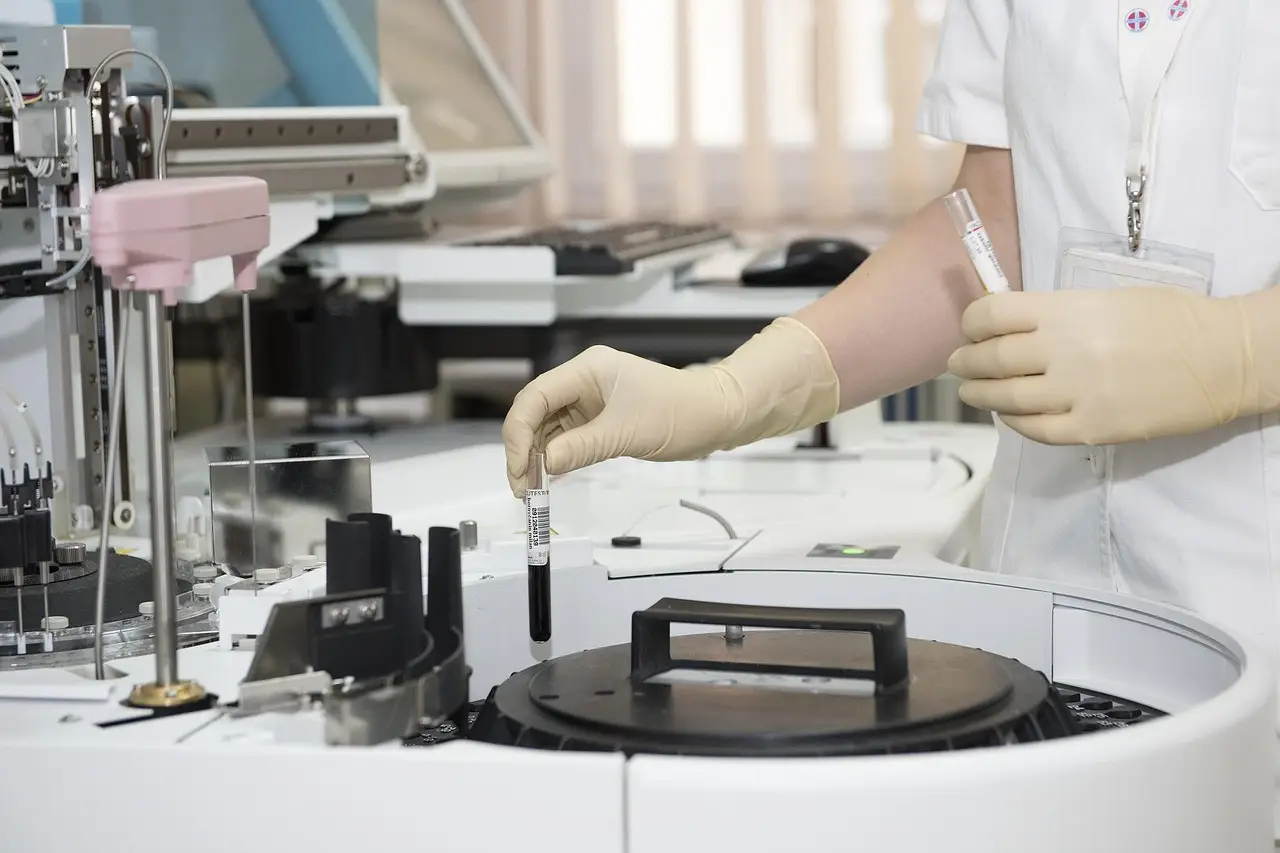
A six-gene expression score built at the Centre for Genomic Regulation (CRG) in Barcelona separates acute myeloid leukemia (AML) patients into groups with sharply different survival prospects, according to a study published in Science Advances (doi: 10.1126/sciadv.aed6757).
The signature, called the PHFScore, combines PHF19, CALR and STAR — genes less active in patients with poor outcomes — with CARMIL1, HOPX and ALDH1A1, which were more active in those patients. The paper's senior author is ICREA Research Professor Luciano Di Croce, PhD; first author is Gianni Gamarra Figueroa, PhD.
For R&D managers in diagnostics, the practical claim is cost: patients suspected of AML already provide a bone marrow sample for laboratory analysis, and the researchers note that measuring six genes is simpler and cheaper than reading a broader genetic profile. The findings could feed future prognostic tests and point to new therapeutic targets.
How was the signature built?
The team worked by moving repeatedly between mouse experiments and patient records, crossing the two to find genes that behaved consistently in both. The starting point was PHF19, which the Di Croce lab has studied for more than a decade. The gene belongs to a Polycomb family that keeps other genes switched off as cells mature from immature to mature states.
Earlier work in the lab showed that mice lacking PHF19 develop a condition resembling myelodysplastic syndrome, in which blood cells fail to mature and accumulate without becoming cancerous. The new study asked what happens when leukemia originates in cells with similar starting conditions — not cancerous, but not quite healthy.
The researchers introduced a leukemia-causing gene into mouse blood cells with and without PHF19. Cells lacking the gene formed more colonies in the lab, took hold more easily after transplantation into mice, and stayed locked in an immature, stem-cell-like state. They also largely ignored chemotherapeutic drugs commonly used to push leukemia cells into a mature state. "Phf19 deletion promoted acquisition of stemlike features and reduced responsiveness to differentiation-inducing AML therapies," the team wrote.
"Leukemia develops in stages, as a cell gradually accumulates defects," Gamarra Figueroa said. "Losing PHF19 doesn't cause leukemia on its own, but it is already a push down that road."
What did the human data show?
The validation rests on cross-species comparison. The researchers matched gene activity in their mouse cells against human AML datasets and found the same pattern. "Patient data from different AML datasets allowed us to determine that patients with low levels of PHF19 expression had a stemlike transcriptomic profile, which, according to the literature, is linked to more chemoresistant leukemias," they reported.
The measured clinical difference is substantial. Among younger adults treated for AML, those with the lowest PHF19 levels survived for less time than those with the highest, and fewer than half reached remission after standard chemotherapy — compared with up to 85% of patients with the highest levels.
Gamarra Figueroa acknowledged the model's limits: "The patients have advanced leukemia, so we are comparing mice and humans at very different stages of the disease, yet the molecular data point in the same direction, which gives our model a great deal of strength."
Why does PHFScore matter beyond prognosis?
"PHF19 on its own already tells us something about how patients will fare, but combining it with five other genes is a dramatic improvement which gives us more accurate information for AML prognosis," Di Croce said.
Gamarra Figueroa flagged the target-discovery angle. "Some of the genes have never been linked to blood cancer before and could also be potential new therapeutic targets. These genes haven't been described in leukemia or even in how blood forms. We don't yet know what they are doing there, which is exactly what makes them worth exploring," he said.
AML, which the authors describe as "a heterogeneous malignancy characterized by diverse genetic and epigenetic alterations," has highly variable outcomes between patients — the gap the PHFScore is designed to close. In their paper the authors concluded: "By integrating our in vitro multiomic data with the molecular and clinical data from various AML datasets, we successfully identified a molecular signature — the PHFScore — to identify patient prognosis."
Whether the six-gene panel moves toward a validated clinical assay will depend on prospective testing in independent cohorts, work the Barcelona team's mouse-to-human pipeline now positions it to pursue.
via dx.doi.org (Original)
Filed under
- acute-myeloid-leukemia
- phfscore
- gene-expression-signature
- prognostic-biomarkers
- mouse-to-human-translation
More from Sophie Lindqvist
Show full bio
Correspondent covering money, funding and market shifts around research and development at Hypothesis Wire.
202 articles
References
- Spatial Biology Vendors Push From Discovery Bench to Clinical Assay
- Multiomic Map of 2,000 Colorectal Tumors Exposes Druggable Vulnerabilities
- UniQure's AMT-130 shows 44% slowing at four-year Huntington's checkup
- MIT Team Shows T-Cell Buoyant Mass Beats TMB at Predicting Immunotherapy Response
- UK Biobank Immune Atlas to Generate 100 Million Data Points Per Sample