Proceedings · Session S-991 · filed October 14, 2026
AI & Emerging Tech in R&DSession paper
Sandia field-tests AI voltage control at two Texas grid sites
Sandia National Laboratories reports measurable grid stability gains from AI-driven voltage control field tests at two Texas sites, per Energies Media.
By Tom Whitfield3 min read516 words
Summary
- Sandia National Laboratories field-tested an AI-driven voltage control system at two Texas grid sites.
- The tests showed measurable improvements in grid stability, Energies Media reports.
- The trial ran in live grid conditions rather than simulation.
- The source item did not disclose site names, test dates or the magnitude of the stability gains.
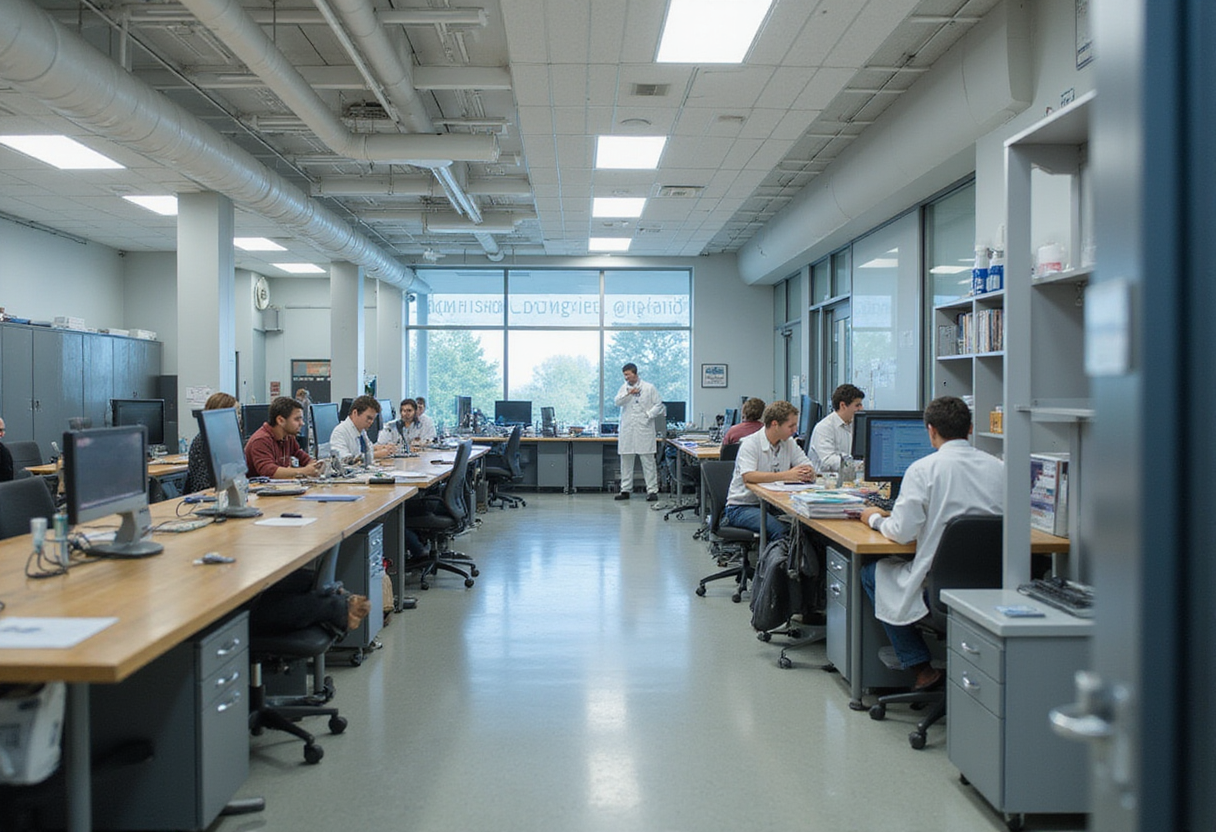
Sandia National Laboratories has completed field tests of an AI-driven voltage control system at two Texas grid sites, reporting measurable improvements in stability, according to Energies Media.
That is the headline fact, and it matters for a specific reason. Voltage regulation on distribution grids has traditionally relied on fixed settings and slow, rule-based equipment — tap changers, capacitor banks, voltage regulators. Those methods predate the era of distributed solar, and their limits are showing up as penetration rises.
Sandia's tests put an AI-based controller into live grid conditions rather than simulation. Two sites in Texas hosted the trials. The system demonstrated measurable stability improvements, the outlet reports.
What the source does — and doesn't — say
Hypothesis Wire could not independently verify the details from the source item, which consists of the outlet's headline and attribution. Energies Media did not publish, in the item we received:
- The names of the two Texas host sites
- The magnitude of the stability improvement, in volts, percent or any benchmark
- The test duration or dates
- The size of the datasets used to train the controller
- Whether an independent party validated the results
Those gaps matter. "Measurable" is a claim, not a specification. For R&D managers weighing grid-edge AI investments, the difference between a 2 percent and a 20 percent improvement in voltage deviation is the difference between a pilot and a procurement.
Why voltage control is a live problem
Distribution feeders in Texas carry some of the highest rooftop-solar density in the United States. When solar output swings — cloud transients, evening ramp-downs — voltage on the feeder moves with it. Legacy control hardware reacts on delays measured in tens of seconds to minutes. AI-based schemes promise faster, predictive dispatch of the same physical assets.
Sandia, a Department of Energy national laboratory operated by Honeywell's NTESS subsidiary, has run grid-modernization programs for years. Voltage optimization sits squarely inside that portfolio. Field validation at live sites, rather than in hardware-in-the-loop simulation, is the step most vendor claims skip.
What R&D and portfolio managers should watch
For utilities and grid-technology vendors tracking this space, the open questions are concrete:
- Did the controller beat the incumbent scheme, or just hold stability under conditions that would have degraded the baseline?
- How did it handle faults and communication loss — the failure modes that keep distribution engineers skeptical of learning-based control?
- What was the compute footprint, and can it run on substation hardware already in the field?
- Who funded the work, and does Sandia plan to publish the trial data?
The stability result, if confirmed in peer-reviewed output, would add a national-lab datapoint to a field where most evidence comes from vendor pilots with small sample counts and no published baselines.
What comes next
Expect Sandia to present fuller trial details — site parameters, control architecture, measured deviations — through its publications channel or a DOE grid-modernization report. Until those numbers surface, treat "measurable stability improvements" as a directional signal from a credible tester, not a validated specification.
By Tom Whitfield
via Google News: Research infrastructure & national labs (Source)
Filed under
- sandia-national-laboratories
- ai-grid-control
- grid-modernization
- distribution-grid
- field-testing
More from Tom Whitfield
Show full bio
Senior reporter covering technology and product news in research and development at Hypothesis Wire.
213 articles
References
- Sandia field-tests AI voltage control at two Texas grid sites
- Sandia advances real-time AI voltage controls as data-center load rises
- Sandia compressed a six-month field test setup into one month
- Sandia National Laboratories Appoints Rob Leland Chief AI Officer
- Sandia Picks EEI to Lead National LDES Commercialization Push