Proceedings · Session S-449 · filed September 30, 2026
Corporate & Industrial R&DSession paper
PerkinElmer consolidates global lab instrument production in Singapore
PerkinElmer will centralize global laboratory equipment manufacturing at a Singapore hub, consolidating its production footprint. Timelines, investment figures and affected product lines remain undisclosed.
By Sophie Lindqvist2 min read478 words
Summary
- PerkinElmer will centralize global lab equipment production at a hub in Singapore.
- The report specifies no investment figure, timeline, or affected product lines.
- A single-site strategy concentrates supply-chain risk while tightening process control.
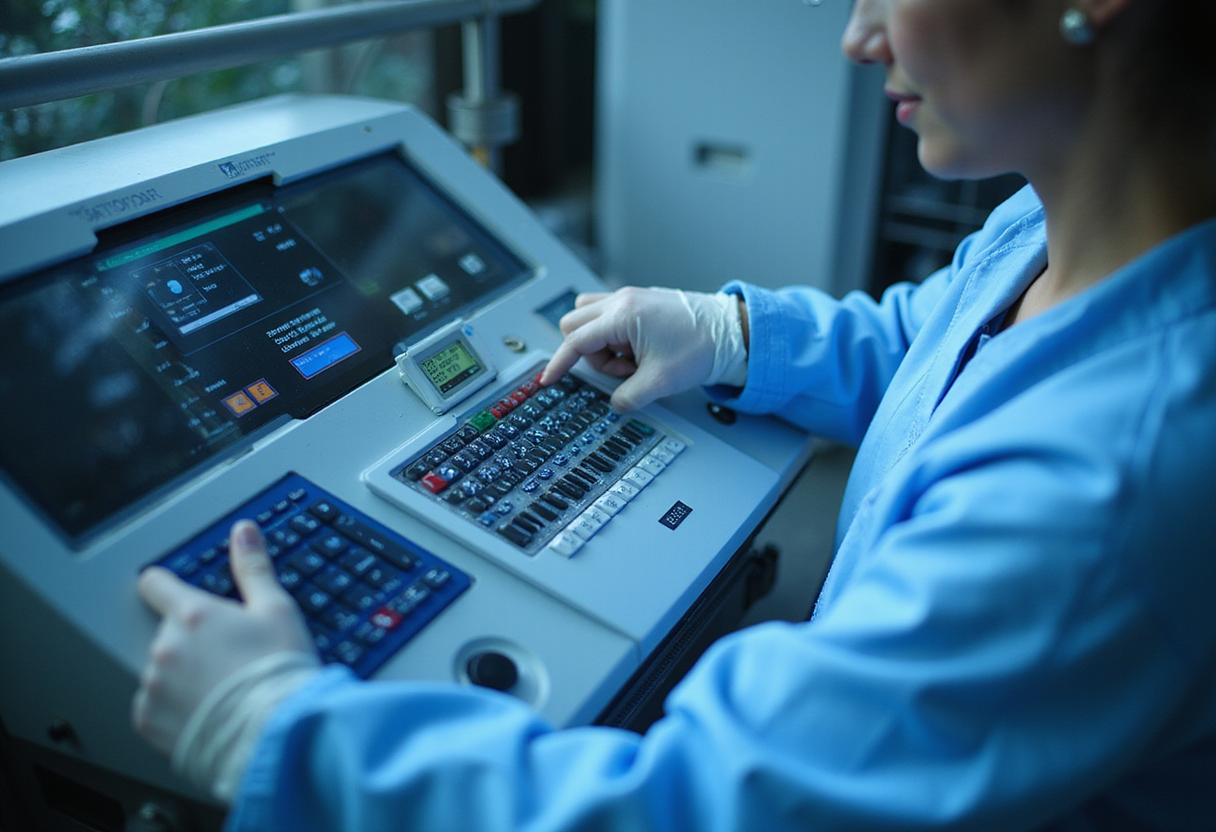
PerkinElmer will centralize production of its laboratory equipment at a manufacturing hub in Singapore, consolidating what the company had previously spread across a more distributed global production footprint.
The plan, reported by South Korean business outlet Chosunbiz, positions the city-state as the single manufacturing center for the company's laboratory instrument lines. The report did not specify which product families — the company's portfolio spans spectroscopy, chromatography, mass spectrometry and life-science instrumentation — will transfer to Singapore, nor did it publish a timeline for the consolidation or an investment figure.
For R&D managers and lab procurement teams, a single-site manufacturing strategy cuts in two directions. Consolidation typically gives a vendor tighter process control, standardized quality assurance and faster engineering-to-production cycles on a single line. It also concentrates supply-chain risk: one disrupted site — whether by pandemic restrictions, component shortages or a regional logistics bottleneck — can affect instrument availability worldwide, a lesson several instrumentation buyers drew from 2020–2022 delivery delays.
Singapore has spent more than a decade building the credentials that attract this kind of decision. The city-state hosts significant manufacturing operations for major instrument and semiconductor equipment makers, offers skilled technical labor, and sits astride shipping lanes that shorten lead times to both Asian growth markets and European and North American buyers. For a vendor like PerkinElmer, whose customer base increasingly includes Asian pharma, biotech and materials R&D organizations, co-locating production near demand is a defensible portfolio move.
The company has not disclosed in the reported announcement whether the Singapore hub will absorb existing lines from other plants or primarily host new capacity. That distinction matters for buyers: a transfer of mature product lines usually carries transitional risk of short-term stockouts, while new capacity added in Singapore alongside legacy sites would leave current fulfillment largely untouched. Procurement leads with instruments on order, or with service contracts tied to specific manufacturing sites, may want to confirm delivery schedules with their PerkinElmer representatives as details firm up.
Chosunbiz's report also leaves open the question of workforce implications at the company's other manufacturing locations. Manufacturing consolidations of this type commonly shift assembly, testing and final quality-control roles to the designated hub over several years rather than in a single cutover.
The announcement fits a broader pattern among instrument makers of rationalizing production footprints after the supply-chain disruptions of the early 2020s, with several vendors consolidating final assembly and calibration at sites that combine tax advantages, trade-treaty access and technical talent.
PerkinElmer has not yet published the investment value, headcount targets or commissioning dates for the Singapore operation. Those numbers, when they arrive, will determine whether this reads as a modest logistics optimization or a structural repositioning of the company's manufacturing strategy — and how quickly lab managers should expect any changes to reach their order books.
via Google News: Laboratory technology (Source)
Filed under
- perkinelmer
- laboratory-instruments
- manufacturing
- singapore
- supply-chain
More from Sophie Lindqvist
Show full bio
Correspondent covering business strategy at Hypothesis Wire.
86 articles
References
- Daihan Scientific Localizes Lab Equipment, Now Exports to 70+ Countries
- Siemens Healthineers Puts €10m Into Lab Equipment R&D Centre in Ireland
- Nearly 300 Lab Equipment Lots From Former Haleon Site Hit Auction Block
- Tariffs and Tight Budgets Push Labs Toward Refurbished Equipment
- Waters Raises Annual Forecast on Lab Equipment, Diagnostics Demand