Proceedings · Session S-616 · filed November 4, 2026
Lab Technology & MethodsSession paper
MIT Suspends Vials on Wires to Advance Continuous Freeze-Drying
MIT researchers suspend vials on magnetically moved wires for continuous lyophilization, pairing the hardware with a digital twin to optimize drying uniformity.
By Rebecca Stone3 min read633 words
Summary
- MIT researchers suspend vials on wires moved by magnets for continuous freeze-drying (lyophilization)
- The team developed a digital twin of the continuous lyophilizer to optimize the process
- Suspended vials avoid friction-generated particles that occur when shelf-stored vials are moved
- Prakitr Srisuma, PhD, formerly of MIT's Argonne National Laboratory, led the description of the technology
- Next steps include advanced predictive control strategies and possible microwave lyophilization
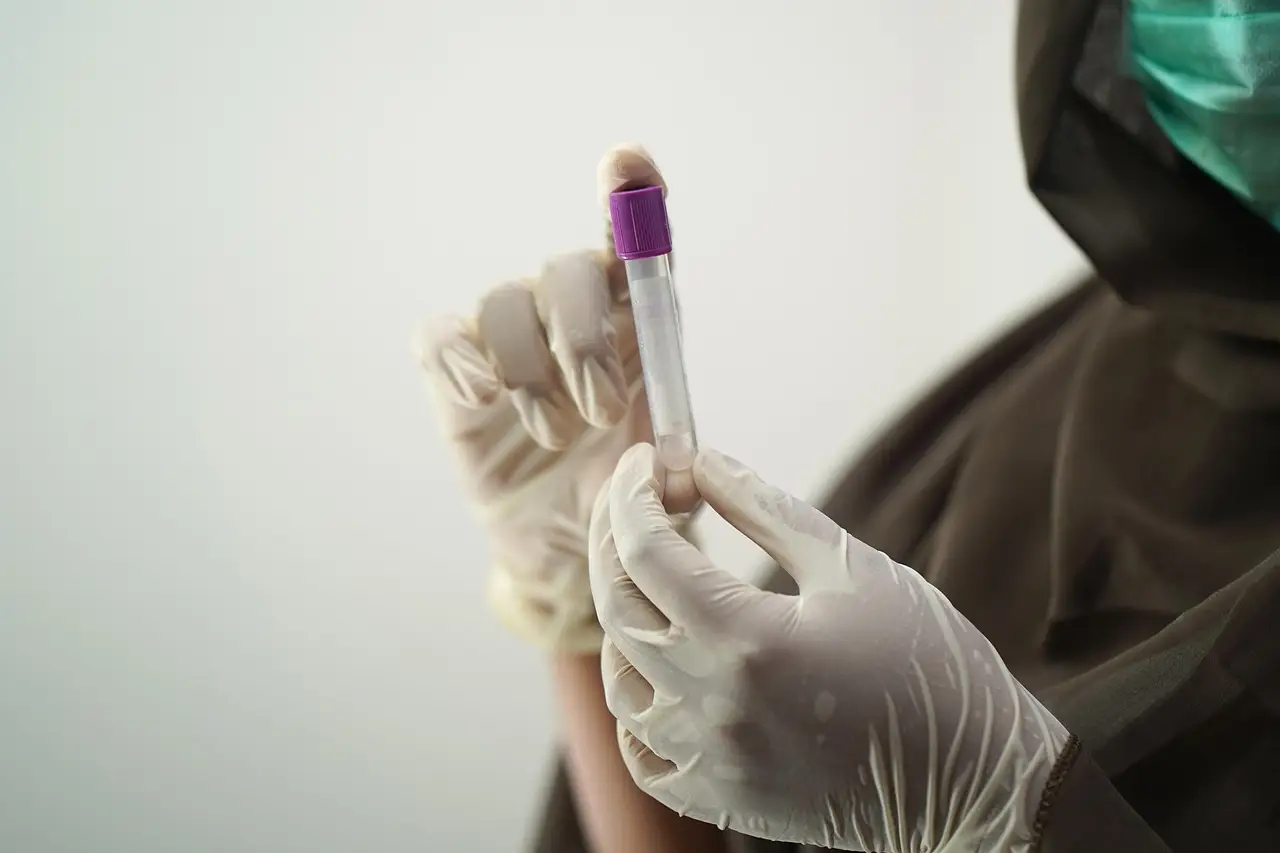
MIT researchers have built a continuous freeze-drying process around vials suspended on wires and moved by magnets, and they have paired it with a digital twin — a computational replica of the physical process used to test and tune operating conditions — to optimize the system before it runs on real product.
The work addresses a specific weakness in pharmaceutical freeze-drying, the process known as lyophilization (the removal of water from a frozen product under vacuum to stabilize it for storage). Vials dried in conventional equipment sit on shelves inside what the researchers describe, in effect, as a cupboard, where operators occasionally move them around. Each movement disturbs the contents. Vials sitting at different positions also see different conditions, so the finished product varies from vial to vial.
Suspending each vial on a wire changes the geometry of the problem. Because magnetic actuation moves the wires rather than hands or tools, every vial travels the same path and receives the same exposure to drying conditions, and the passage through the process is smooth.
What problem does the suspended wire solve?
Friction is the concrete enemy. "If a vial has been sitting on a shelf and you try to move it, there's going to be friction, which will generate small particles, but, with suspended vials, we avoid those issues," said Prakitr Srisuma, PhD, formerly a researcher at MIT's Argonne National Laboratory. Particle generation matters directly to pharma quality teams: particulates in an injectable product are a defect class that batch release testing is designed to catch, and eliminating their generation at the source is cheaper than rejecting product after the fact.
The uniformity claim is the second half of the value proposition. "But we have the unique benefit with the suspended wire technology of [more] uniformity of the [final] product," Srisuma said. Uniform drying means less vial-to-vial variance in residual moisture, which in turn tightens the stability profile of the batch — a parameter that formulation and analytical groups spend considerable effort measuring.
How does the digital twin fit in?
The hardware is only half of the program. The MIT team had previously published on modeling lyophilization processes, and it has since converted that modeling work into a digital twin of the continuous lyophilizer itself. The twin lets the researchers probe how the suspended-vial system responds to changes in conditions without spending product or machine time on trial runs.
For process development groups, this is where the economics shift. Lyophilization cycle development is conventionally a slow, instrument-heavy activity; a validated process model that mirrors the continuous machine compresses the number of physical experiments needed to set a cycle. The team's stated next step is to use the twin for advanced predictive control and optimization strategies — moving from a descriptive model to one that drives real-time control decisions.
What changes for manufacturing decisions?
Continuous processing carries a well-established set of advantages over batch manufacturing, and the suspended-wire design inherits them. "Because this is a continuous lyophilization technology, you get all the benefits of continuous versus batch manufacturing," Srisuma explained — higher production capacity and improved quality control among them.
For R&D managers weighing freeze-drying capacity investments, the MIT work is an early-stage research development rather than a commercial offering, and the reported claims — uniformity gains and particle reduction — come from the research team itself rather than from third-party validation. No scale, throughput figure, or regulatory pathway appears in the published account. The mechanism, however, is concrete and testable: replace shelf contact with suspension, and remove both the friction and the position-dependent variability that shelf drying implies.
The team's forward agenda also includes microwave lyophilization (using microwave energy to drive sublimation instead of, or alongside, conductive heating) as a possible next exploration.
via Genetic Engineering & Biotechnology News (Source)
Filed under
- continuous-freeze-drying
- lyophilization
- digital-twins
- pharmaceutical-manufacturing
- process-development
More from Rebecca Stone
Show full bio
Market editor covering regulation, policy and their impact on research and development at Hypothesis Wire.
230 articles
References
- Biologics Fill-Finish Tech Transfer Draws Operational Scrutiny
- U-M Swap Shop Passes $1 Million in Savings as Lab Reuse Programs Grow
- DARPA Bets $73 Million on Shelf-Stable Blood for 2029 Deployment
- Chemistry World highlights accessibility gap in lab equipment design
- GAO Findings Turn Scrutiny Toward Lab Equipment Resale Practices